

Daily Dose Of Jazz…
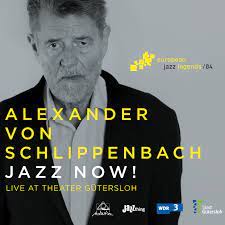
Alexander von Schlippenbach was born into the Schlippenbach noble family on April 7, 1938 in Berlin, Germany. He started to play piano from the age of eight and went on to study composition at Cologne under Bernd Alois Zimmermann. While studying he started to play with Manfred Schoof.
At the age of 28 he founded the Globe Unity Orchestra. In 1988, he founded the Berlin Contemporary Jazz Orchestra, a big band that has over the years had, among others, Willem Breuker, Paul Lovens, Misha Mengelberg, Evan Parker, Schlippenbach’s wife Aki Takase and Kenny Wheeler.
Alexander has produced various recordings and worked for German radio channels. He played in a free jazz trio with saxophonist Evan Parker and drummer Paul Lovens with many players of the European free jazz community.
In 1994, he was awarded the Albert Mangelsdorff prize. He recorded 43 albums as a leader, eighteen with Globe Unity Orchestra, and another thirty-three with numerous others. Since the 1990s, pianist Alexander Von Schlippenbach has explored the work of more traditional jazz composers such as Jelly Roll Morton or Thelonious Monk, recording the latter’s complete works which were released on CD as Monk’s Casino.
More Posts: bandleader,history,instrumental,jazz,music,piano
Daily Dose Of Jazz…
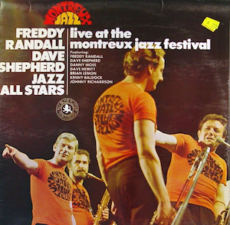
Kenny Baldock, was born on April 5, 1932 in the affluent district of Chiswick in London, England. Having studied both piano and bass, he continued on the instruments at the Guildhall School of Music and Drama in London. By the early ’60s he began showing up on jazz bandstands as a bassist in the company of players such as Peter King and the John Dankworth Orchestra, with whom he continued to be associated into the mid Seventies.
In 1972 he joined pianist Oscar Peterson at the Montreux Jazz Festival, and his performance opened opportunities to collaborate with Freddy Randall’s all-star caravan, and many more engagements with Peterson.
Summer in Montreux presented recording circumstances with guitarist Barney Kessel and the following year Baldock was leading own band projects featuring some of Britain’s heavy hitters. He worked in the Ronnie Scott Quartet that led to backup stints at Scott’s club behind many visiting American jazz performers.
By the early 1980s, Kenny seemed most interested in intimacy and stuck to a small group, often using electric guitarists as sidemen. Throughout his career he performed with among others, the Bobby Wellins Quartet, Freddy Randall~DAve Shepherd Jazz All Stars, Gordon Beck + Two, and the Laurie Holloway Quartet.
Active as an educator, bassist Kenny Baldock, whose composition Kosen Rufu garnered him an Arts Council award in 1983, transitioned from cancer on March 22, 2010.
More Posts: bandleader,bass,history,instrumental,jazz,music
Daily Dose Of Jazz…
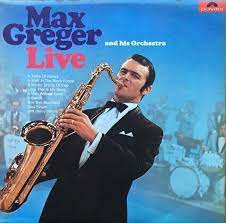
Max Greger was born on April 2, 1926 in Munich, Germany. In 1948 at 22 he founded his first sextet with acclaimed musicians, including Hugo Strasser. By 1959 he became the first western orchestra to tour the Soviet Union.
1963 saw Max putting together a top orchestra for ZDF, which for years supported all the major TV shows. He was honored with the Officers Cross of the Order of Merit of the Federal Republic of Germany, the Bavarian Order of Merit, and has a memorial plaque with his handprints and signature in Berlin-Mitte.
Saxophonist, conductor and big bandleader Max Greger, who recorded over 150 records in jazz and pop music, transitioned on August 15, 2015 in his hometown.
More Posts: bandleader,conductor,history,instrumental,jazz,music,saxophone
Daily Dose Of Jazz…
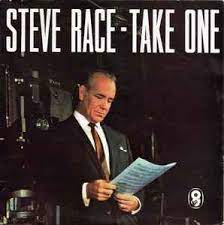
Stephen Russell Race was born April 1, 1921 in Lincoln, England and learned the piano from the age of five. His education from 1932 to 1937 was at Lincoln School, where he formed his first jazz group. At sixteen, he attended the Royal Academy of Music, studying composition under Harry Farjeon and William Alwyn. After leaving the academy, he wrote occasional dance band reviews for Melody Maker and, in 1939, joined the Harry Leader dance band as pianist, succeeding Norrie Paramor.
Race joined the Royal Air Force in 1941, and formed a jazz/dance quintet. After World War II, he began a long and productive career with the BBC, where his ready wit, musicianship and broad musical knowledge made him a much sought after musical accompanist for panel games and magazine shows, such as Whirligig and Many a Slip.
Simultaneously he played in the Lew Stone and Cyril Stapleton bands, and arranged material for Ted Heath. By 1949 The Steve Race Bop Group recorded some of the first British bebop records for the Paxton label. These included four sides with Leon Calvert, Johnny Dankworth, Peter Chilver, Norman Burns, Jack Fulton. He also developed a sideline arranging player piano rolls for the Artona company.
the 1950s to the 1980s, he presented numerous music programs on radio and television. Steve was the chairman of the long-running light-hearted radio and TV panel game My Music which ran for 520 episodes from 1967 to 1994. He also presented Jazz For Moderns and Jazz 625 for the BBC in the 1960s.
As a composer, he produced a number of pieces in the jazz, classical and popular idioms. Blue Acara, Esteban Cera, Faraway Music, Nicola, Ring Ding and Pied Piper aer just a few of his well known compositions. He appeared as pianist/bandleader in the 1948 film Calling Paul Temple and with Sid Colin wrote two of the songs performed by Celia Lipton. He also wrote other scores for films. His autobiography, Musician at Large, was published in 1979, and was inducted into the Order of the British Empire (OBE). Pianist, composer, radio and television presenter Steve Race had his first heart attack in 1965 and transitioned from a second attack at his home in Great Missenden, Buckinghamshire, on June 22, 2009.
More Posts: bandleader,composer,history,instrumental,jazz,music,piano
Daily Dose Of Jazz…
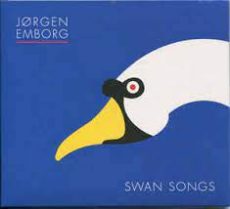
Jørgen Emborg was born in Copenhagen, Denmark on March 29, 1953 and was influenced by Bill Evans, Herbie Hancock and Keith Jarrett.
He has played at international festivals since 1975, releasing his first album, Sargasso in 1979 on the Kong Pære label. In the following years he belonged to Six Winds with Marilyn Mazur, Uffe Markussen and Alex Riel and formed with Palle Mikkelborg, Bjarne Roupé, Bo Stief and Ole Theill the ensemble Alpha Centauri.
By1986 he recorded with Bjarne Rostvold and through the Nineties he performed and/or recorded with Thomas Hass and Tomas Franck. Emborg teamed up with Alex Riel again and recorded Over The Rainbow on the Storyville label, with the saxophonist Fredrik Lundin, the bassist Steve Swallow. He played in the Tolvan Big Band and the Per Carsten Quintet.
Jørgen has also composed music for children, rhythmic choir music, big band, a cappella work, ironworks and piano quizzes. He taught piano, theory and composition at the Rytmisk Conservatory of Music from 1988 to 2016.
In 1981, his LP en 20:33 with Alpha Centauri received an award from Statens Kunstfond, the State Art Foundation. He received the Ben Webster Prize with the Frontline Fusion Group as well as others.
Pianist and composer Jørgen Emborg, who ensures there is a Nordic feel to his compositions, continues to perform and compose.

More Posts: bandleader,composer,history,instrumental,jazz,music,piano