

Daily Dose Of Jazz…
Jackie Mills was born on March 11, 1922 in New York City and he first learned guitar before picking up drums when he was ten years old. He played in the swing groups of Charlie Barnet and Boyd Raeburn in the 1940s. He followed with gigs with Jazz at the Philharmonic, Gene Norman, Babe Russin, Mannie Klein, Dizzy Gillespie, Benny Goodman, Rene Touzet, Sonny Criss, Andre Previn, Lionel Hampton, Stan Getz, Woody Herman, and Red Norvo.
In the late 1940s Jackie became interested in bebop and began playing in a style influenced by Max Roach. He began playing with Harry James in 1949, working with him through the late 1950s.
Mills recorded as a session musician during the 50s, working with artists such as Gerry Wiggins and Anita O’Day. In his later career, Mills recorded occasionally, including with Freddie Roach in 1966 and Dodo Marmarosa in 1978, but was chiefly active as a record producer and co-founder of Choreo Records, doing production work for Columbia, MGM, Mainstream, Capitol and Liberty Records.
In 1969, Mills acquired Larrabee Sound Studios from its co-founders Gerry Goffin and Carole King. As owner and operator through the mid-1980s, the studio was acquired by his son Kevin.
Drummer Jackie Mills transitioned on March 22, 2010 in Beaumont, California.


Daily Dose Of Jazz…
Jean-Claude Naude was born on March 7, 1933 in Amiens, France. He attended the Amiens conservatory and played early in his career as a trumpeter for Raymond Fonsèque’s orchestra and with Georges Arvanitas.
By 1955 Naude was working with Maxim Saury, an association that would last a decade. He also played piano with Raymond Fonsèque in a trio with trombonist Luis Fuentes.
In the second half of the 1960s Jean~Claude led his own big bands and played with Gerard Badini, Jacky Samson, and Andre Paquinet. The 1970s saw him playing with Claude Bolling and in the 1980s with Bob Quibel.
Pianist and trumpeter Jean~Claude Naude transitioned on January 9, 2008.
More Posts: bandleader,history,instrumental,jazz,music,piano,trumpet
Daily Dose Of Jazz…
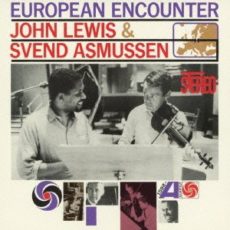
Svend Asmussen was born on February 28, 1916 in Copenhagen, Denmark into a musical family. He started taking violin lessons at the age of seven and by 16 he first heard recordings by jazz violinist Joe Venuti and began to emulate his style. He started working professionally as a violinist, vibraphonist, and singer at 17, leaving his formal training behind for good.
Early in his career he worked in Denmark and on cruise ships, with artists such as Josephine Baker and Fats Waller. Asmussen later was greatly influenced by Stuff Smith, whom he met in Denmark. During World War II he played with Valdemar Eiberg and Kjeld Bonfils, during which time jazz had moved to the underground and served as a form of political protest.
The late 1950s saw Svend forming the successful trio Swe-Danes with singer Alice Babs and guitarist Ulrik Neumann. The group gained a dance hall reputation and toured the United States. He worked with Benny Goodman, Lionel Hampton, and Duke Ellington. Asmussen was invited by Ellington to play on his Jazz Violin Session recording in 1963 with Stéphane Grappelli and Ray Nance.
In 1966, Asmussen performed alongside Grappelli, Stuff Smith, and Jean-Luc Ponty in a jazz Violin Summit in Switzerland, appeared at the ‘67 Monterey Jazz Festival,and guested on Snakes in a Hole, an album by the jazz-rock band, Made in Sweden.
Actively playing violin at the age of 94, he became a centenarian in 2016, and his collection of jazz music, photographs, posters and other material is held in the jazz collections at the University Library of Southern Denmark. Violinist Svend Asmussen transitioned peacefully in his sleep on February 7, 2017.

More Posts: bandleader,history,instrumental,jazz,music,violin
Daily Dose Of Jazz…
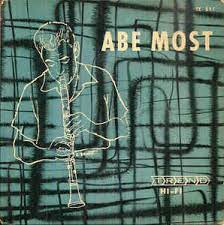
Abe Most was born on February 27, 1920 in New York City, New York. He began his career in 1939 as a member of Les Brown’s Big Band. After serving three years in the Army during World War II beginning in 1942, he became a member of Tommy Dorsey’s Big Band.
Most made a few albums with smaller labels between 1946 and 1984, including Superior, Trend, Annunciata and Camard. His last two albums were Abe Most Live! and I Love You Much Too Much.
He was a studio musician for seven decades, recording on albums by Ted Gärdestad, Dick Haymes, Randy Newman, Dory Previn, Laurindo Almeida, Dominic Frontiere, Henry Mancini, Peggy Lee, Carmen McRae, Ray Conniff, and George Shearing, as well as Joni Mitchell, Cher, Earth, Wind & Fire, and B. B. King among others. He can also be heard playing on the soundtrack of the film How to Marry a Millionaire.
Clarinetist Abe Most, the older brother of flautist Sam Most, recorded three albums as a leader and thirty-one as a sideman, transitioned on October 10, 2002.
More Posts: bandleader,clarinet,history,instrumental,jazz,music

Daily Dose Of Jazz…
Åke Persson was born on February 25, 1932 in Hässleholm, Sweden and started his music career by playing valve trumper in school. Known as The Comet, he moved to Stockholm, Sweden in 1951, where he played in Simon Brehm’s quintet until 1954. During the Fifties he led several sessions for labels such as Metronome, Philips, and EmArcy.
Following this Persson worked through the Sixties and into the 1970s with Arne Domnérus, Hacke Björksten, Harry Arnold’s Radio Band, Quincy Jones, Lars Gullin, the RIAS Berlin Band, and the Kenny Clarke-Francy Boland Big Band.
Persson played with many American musicians, including George Wallington, Roy Haynes, Benny Bailey, Count Basie, Duke Ellington, and Dizzy Gillespie.
He drowned in the Djurgården canal as a result of him driving his car into the canal either accidentally or deliberately. A biography was written, Trombonist Åke Persson, authored by Bo Carlsson.
Trombonist Åke Persson, who flourished in the bebop and big band tradition, transitioned on February 5, 1975.
More Posts: bandleader,history,instrumental,jazz,music,trombone