

Daily Dose Of Jazz…
Harold “Money” Johnson was born in Tyler, Texas on February 23, 1918 and didn’t start playing trumpet until he was fifteen. Moving to Oklahoma City, Oklahoma in 1936, he jammed with Charlie Christian and Henry Bridges before joining Nat Towles’s band.
He played with Horace Henderson and Bob Dorsey before returning to Towles’s band in 1944 in Chicago, Illinois. He also played with Count Basie, Cootie Williams, Lucky Millinder, and Bull Moose Jackson during the decade.
In the 1950s Money’s associations included Louis Jordan, Lucky Thompson, Sy Oliver, Buddy Johnson, Cozy Cole, Mercer Ellington, Little Esther, and Panama Francis.
The Sixties saw Johnson played in the house band at the Apollo Theater in Harlem, and recorded with King Curtis in 1962. He toured the USSR with Earl Hines in 1966. From 1968 he played in the Duke Ellington Orchestra and also worked again with Hines and Oliver.
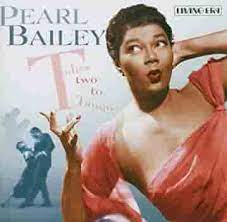
He recorded with Buck Clayton, Pearl Bailey, Red Prysock, Barbara Lews, Jack McDuff, Houston Person, and Jesse Stone. Trumpeter Money Johnson, whose last performance was on the night before, transitioned from a heart attack on March 28, 1978 in New York City.

More Posts: history,instrumental,jazz,music,trumpet
Daily Dose Of Jazz…
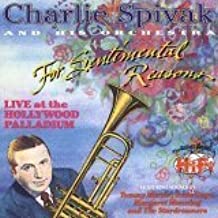
Charlie Spivak was born on February 17, 1905 in Kyiv, Ukraine and learned to play trumpet when he was ten years old. He played in his high school band, going on to work with local groups before joining the Johnny Cavallaro Orchestra.
He went on to play with Paul Specht’s band for most of 1924 to 1930, then spent time with Ben Pollack early Thirties, and the Doresy Brothers to the middle of the decade. Ray Noble was his next stop prior to the Glenn Miller Orchestra in 1935. He spent the next two years working mostly as a studio musician with Gus Arnheim, Glenn Miller, Raymond Scott’s radio orchestra, and others, followed by periods with Bob Crosby, Tommy Dorsey, and Jack Teagarden to the end of the Thirties.
Finally, with the encouragement and financial backing of Glenn Miller, he formed his own band in late 1939. His first attempt was a failure within a year, but his second proved successful, one of the most successful bands in the 1940s, and survived until 1959. He scouted top trumpeter Paul Fredricks (formerly of Alvino Rey’s Orchestra) just as Fredricks left the service at the end of World War II, in 1946. Trumpeter Paul Fredricks was recruited after WWII service and became instrumental in the band’s success in the coming years as it reached its peak.
Spivak’s experience playing with jazz musicians had little effect on his own band’s style, which was straight dance music, made up mainly of ballads and popular tunes. Trombonist Nelson Riddle, saxophonist Manny Albam and Sonny Burke arranged for the band. When the orchestra broke up he went to live in Florida, where he continued to lead a band until illness led to his temporary retirement in 1963. On his recovery, he continued to lead large and small bands, first in Las Vegas, Nevada and then moved to Greenville, South Carolina in 1967, where he led a small group featuring his wife as vocalist.
Trumpeter and bandleader Chalie Spivak, known during his heyday as The Man Who Plays The Sweetest Trumpet In The World, continued to play and record until his transition on March 1, 1982 in Greenville.
More Posts: bandleader,history,instrumental,jazz,music,trumpet

Daily Dose Of Jazz…
Buddy Deppenschmidt was born William Henry Deppenschmidt on February 16, 1936 in Philadelphia, Pennsylvania. His father was a saxophonist and bandleader under the name Buddy Williams, but his mother moved him to Richmond, Virginia when he was four.
Self-taught, he started playing drums professionally while in his teens and then went on the road in the western U.S. with the territory band Ronnie Bartley Orchestra. Returning home, he played with local bands and became the drummer for the Newton Thomas Trio through the mid to late Fifties, which was also the touring rhythm section for the Billy Butterfield Quintet. When the Newton Thomas Trio played the Virginia Beach Jazz Festival, it received rave reviews on a bill that included the Dave Brubeck Quartet and the Charlie Byrd Trio. Two nights later, Charlie Byrd came into the Jolly Roger jazz club where Buddy was playing, and offered him the job as drummer with his trio. He played with the trio at the Showboat Lounge in Washington, D.C. from 1959–62.
In February 1961, while on a goodwill tour sponsored by the U.S. State Department, the Charlie Byrd Trio with Byrd on guitar, Keter Betts on bass, and Buddy on drums, they visited 18 countries throughout South and Central Americas, and Mexico. While in Brazil, he spent his free time with local musicians, teaching them jazz and learning bossa nova. It was his idea to record an album combining jazz and bossa nova with Stan Getz.
After Byrd, Deppenschmidt joined the Tee Carson Trio in the early Sixties, then moved to Pennsylvania and formed the Jazz Renaissance, was also the drummer with the John Coates Trio, toured the midwest and west coast with the Bernard Peiffer Trio and studied with drummer Joe Morello.
He’s worked on A Thousand Clowns, Wall Street, Bossa Nova, The Lake House, and Whatever Works movie soundtracks. He’s played with a who’s who list of jazz musicians from Mose Allison and Chet Baker to Coleman Hawkins and Shirley Horn, Phil Woods and more.
Drummer Buddy Deppenschmidt, biographies are in The Encyclopedia of Jazz in the Sixties and The New Grove Dictionary of Jazz, transitioned on March 20, 2021 in Pennsylvania from complications of COVID-19. He was 85 years old.
More Posts: bandleader,drums,history,instrumental,jazz,music

Daily Dose Of Jazz…
Ferdinand Povel was born on February 13, 1947 in Haarlem, Netherlands. Coming from an artistic family, his father was a cineaste (filmmaker) and his mother a pianist. At an early age, he developed a taste for jazz, when first introduced to as a gift on his twelfth birthday, he received a ticket to a late-night concert by the Duke Ellington Orchestra at the Amsterdam Concertgebouw.
In 1961 he began studying clarinet with Theo Loevendie and teaching himself saxophone because jazz was not yet taught formally in the Netherlands. Ferdinand learned by playing with experienced musicians, such as pianists Rob Madna and Frans Elsen, picking up knowledge of harmony and arrangement as a young member of the orchestras of Kurt Edelhagen and Peter Herbolzheimer, and of the Skymasters.
In 1964 at 17, Povel won the Loosdrecht Jazz Concours with the Martin Haak Quartet. This was the start of his career as a professional musician. 1966 saw him playing with The New Sound Incorporated, giving school concerts and radio and TV broadcasts for Tros and Avro broadcasting companies. He went on to be a finalist at the 1966 International Modern Jazz Festival in Vienna, Austria where the judges included Cannonball Adderley and Mel Lewis.
In the same year, the Netherlands Jazz Orchestra invited Povel to join them as a saxophonist and flutist. Three years later he was in Munich, Germany playing with trumpet player Dusko Goykovich in his Summit Quintet, starring drummer Philly Joe Jones and touring Europe several times.
Ferdinand would go on to play with the Kenny Clarke/Francy Boland Big Band, the Kurt Edelhagen Orchestra, tour the United States of America with the Maynard Ferguson Big Band, and the Peter Herbolzheimer’s Rhythm Combination and Brass from 1971 to 1985. He was a member of George Grunz’s band, Jiggs Whigham Sextet, and the bands of Rob Madna, Frans Elsen, and Cees Slinger. He has played in the front line with jazz icons such as Art Farmer, Bennie Bailey, Woody Shaw, and Jimmy Knepper.
Throughout his career he was never far from playing in various occasional orchestras for radio and television. As an educator he taught jazz improvisation at the Rotterdam Conservatory and at conservatoriums in Zwolle, Hilversum and The Hague. Since 1990 he has taught exclusively at the Hilversum Music Academy, now named the Conservatory of Amsterdam, as part of Amsterdam School of the Arts.
Saxophonist Ferdinand Povel has a discography that includes over one hundred record and CD albums to which he has contributed as a soloist. He has received several honors and continues to perform and educate.
More Posts: bandleader,educator,flute,history,instrumental,jazz,music,saxophone
Daily Dose Of Jazz…
Le Roy Watts Harris Jr. was born on February 12, 1916 in St. Louis, Missouri. He played violin while young, then learned saxophone and clarinet. By age 13 he was playing with pianist Chick Finney.
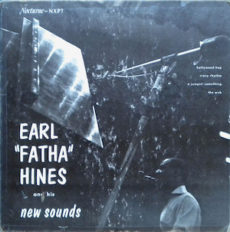
Relocating to Chicago, Illinois around 1930 he played with Ray Nance from 1931 to 1936. Following this stint he worked with Earl Hines from 1937 to 1943. He joined the United States Navy during World War II and played in a band from 1943 to 1944. After his discharge he played with Bill Doggett, Ben Thigpen, Tadd Dameron, Sarah Vaughan, Singleton Palmer, and Wynonie Harris, then returned to play with Hines once more.
In the early 1950s he led his own band at the Kit Kat club in New York. He resettled in St. Louis again in 1957 and played with Eddie Johnson from 1960 to 1971.
Saxophonist and clarinetist Le Roy Harris Jr., whose father and uncle were both jazz musicians, transitioned on February 16, 2005 in his hometown of St. Louis.
More Posts: bandleader,clarinet,history,instrumental,jazz,music,saxophone