

Daily Dose Of Jazz…
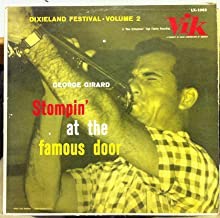
George Girard was born October 7, 1930 in Jefferson Parish, Louisiana and in high school he studied music under Johnny Wiggs and immediately after graduating in 1946 he became a professional musician. He played and toured with the bands of Johnny Archer and Phil Zito before co~founding the band The Basin Street Six, made up mostly of friends he had grown up with, including clarinetist Pete Fountain.
The band got a regular gig at L’Enfant’s Restaurant in New Orleans, as well as regular television broadcasts over WWL. The band started receiving favorable national attention, but being dissatisfied with it, broke up the band in 1954 and founded his own band, George Girard & the New Orleans Five. Landing a residency at the Famous Door in the French Quarter, he recorded for several labels, and got a weekly broadcast on CBS’s affiliated local radio station WWL.
His ambitions to make a national name for himself were thwarted when he became ill and had to give up playing in 1956. Trumpeter George Girard, known for his great technical ability, passed away from colon cancer in New Orleans, Louisiana on January 18, 1957. He was twenty-six.

More Posts: bandleader,history,instrumental,jazz,music,trumpet
Daily Dose Of Jazz…
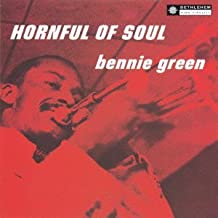
Archie “Skip” Hall was born in Portsmouth, Virginia on September 27, 1909 and studied piano under his father. From the age of eight he lived in New York City and in the late 1920s he relocated to Cleveland, Ohio where he led his own band for most of the 1930s.
He worked as an arranger on contract and arranged for Jay McShann from 1940 to 1944 and during World War II played with Don Redman. In 1943 he entered military service and played in a band while stationed in England. Around 1945 Skip worked with Hot Lips Page and then joined the Sy Oliver band, who was his brother-in-law. Following this he worked with Wynonie Harris, Thelma Houston, and Jimmy Rushing before joining Buddy Tate’s group in 1948.
Hall went on to work with Tate for twenty years both as a performer and arranger. He also played in the 1950s and 1960s with Dicky Wells, Emmett Berry, and George James, as well as solo and with his own small groups. Arranger, pianist, and organist Skip Hall, who never recorded as a leader, passed away in November 1980 in Ottawa, Canada.

More Posts: arranger,bandleader,history,instrumental,jazz,music,piano
Daily Dose Of Jazz…
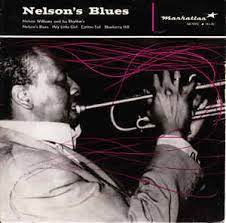
Nelson “Cadillac” Williams was born on September 26, 1917 in Montgomery, Alabama and began playing piano at age 13, however, he settled on the trumpet soon afterwards. It has been speculated that while still a teenager he may have played with blues pianist/singer Cow Cow Davenport.
In the 1930s, he played in the territory bands Trianon Crackerjacks and Brown Skin Models, and acted as musical director for the Dixie Rhythm Girls. Around 1940, he left Alabama for Philadelphia, Pennsylvania where he played with Tiny Bradshaw’s band before joining the U.S. Army during World War II.
After the war, Billy Eckstine hired Williams, before working with John Kirby and pianist Billy Kyle. In 1949, he began the first of several stints with Duke Ellington, who bestowed upon him the nickname “Cadillac”.
In 1951, he left Ellington’s employ and moving to Paris, France he led his own bands and recorded for French labels. He returned to Ellington in 1956, and played with him again in 1969 on a tour of Europe. Trumpeter Nelson “Cadillac” Williams settled in the Netherlands and passed away in 1973 in Voorburg.
More Posts: bandleader,history,instrumental,jazz,music,trumpet
Daily Dose Of Jazz…
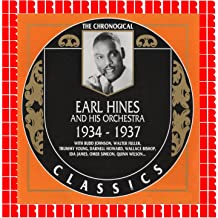
Charlie Allen was born in Jackson, Mississippi on September 25, 1908 and grew up in Chicago, Illinois. He began playing in the early 1920s just out of high school and through the decade worked as a member of the bands of Hugh Swift, Dave Peyton, Doc Cook, Clifford King, and Johnny Long.
Allen worked with Earl Hines from 1931 to 1934, then did a short stint in Duke Ellington’s orchestra in 1935, though he never recorded any solos with Ellington. He played with Fletcher Butler in 1936 and then returned to play with Hines again in 1937.
He played in various groups in Chicago in the 1940s and 1950s. Later in his life he became a music educator, worked in the Chicago Musicians’ Union, and designed custom trumpet mouthpieces, used by Cat Anderson, among others.
Trumpeter Charlie Allen passed away on November 19, 1972 in Chicago.
More Posts: history,instrumental,jazz,music,trumpet
Daily Dose Of Jazz…
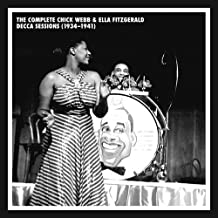
Bardu Ali was born September 23, 1906 in Mississippi. His mother, Ella, moved to the Bronx, New York, with her children and her sister Fanny. He moved into New York City in the 1920s and became leader of the Napoleon Zyas band. He was master of ceremonies for this band and for the bands of Leroy Tibbs and Chick Webb. He is credited with persuading Webb to hire singer Ella Fitzgerald.
Ali got involved with black cinema in the late 1920s and 1930s. He went on tour in England with Lew Leslie’s Blackbirds revue. Returning to the States, he replaced Webb as bandleader after Webb died.
1940 saw him move to California, where he became the business partner of Johnny Otis, performed as a singer in Otis’s band, and opened The Barrelhouse club with him in 1947. He played an important role in the early career of Charles Brown and was Redd Foxx’s business manager.
Guitarist, singer and promoter Bardu Ali, who performed in both jazz and R&B genres, passed away on October 29, 1981.
More Posts: guitar