

Daily Dose Of Jazz…
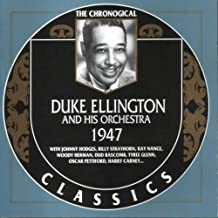
Francis Williams was born September 20, 1910 in McConnell’s Mill, Pennsylvania. His first gigs were with Frank Terry’s Chicago Nightingales in the 1930s.
In 1940 he moved to New York City, and in the first half of the decade played in the bands of Fats Waller, Claude Hopkins, Edgar Hayes, Ella Fitzgerald, Sabby Lewis, and Machito. From 1945 to 1949, and again in 1951, he played and recorded extensively as a member of Duke Ellington’s orchestra.
Williams worked primarily with Latin jazz ensembles and New York theater bands in the 1950s and 1960s, and played with Clyde Bernhardt and the Harlem Blues and Jazz Band. In addition to working with his own quartet, near the end of his life he worked with Panama Francis.
Trumpeter Francis Williams, who was a single father of two, had one son, actor Greg Morris, passed away on October 2, 1983 in Houston, Texas.

More Posts: bandleader,history,instrumental,jazz,music,trumpet
Daily Dose Of Jazz…
Larry Binyon was born on September 16, 1908 in Urbana, Illinois and his mother shared some of her musical knowledge. By age eighteen he was at the University of Illinois at Urbana-Champaign,playing E flat soprano flute in the school’s concert band as well as flute and piccolo in its first regimental band during the 1926-27 school year.
After spending one year at college by 1927 he was already playing professionally in Chicago as part of Beasley Smith’s band, which also included drummer Ray McKinley and clarinetist Matty Matlock. Flute may have been his first instrument, or his primary one at school, but tenor saxophone became his main instrument for dance bands.
Later that year Binyon joined bandleader Ben Pollack when he returned to Victor’s Chicago studio after a five-month hiatus. History does not reveal him as a bandleader as there is little evidence of him having led his own bands, and no recordings were ever issued under his own name. He certainly has a load of credits as a band member, however, and was adept in both big band and small group settings.
Working a variety of radio jobs during the day, one eye glued open to help recover from the previous night’s late-ending gig.During the 1920s he worked with Irving Mills’ Hotsy-Totsy Gang, Roger Wolfe Kahn & His Orchestra, and Mildred Bailey with the Tommy Dorsey Orchestra to name a few.
His widest exposure on recording is his backup work on records by the Boswell Sisters, Bing Crosby, Billie Holiday, Fats Waller & His Buddies sessions, Henry “Red” Allen, Eddie Condon, Toby Hardwicke, Gene Krupa. Saxophonist, clarinetist, and flutist Larry Binyon passed away on February 10, 1974.
More Posts: clarinet,flute,history,instrumental,jazz,music,saxophone
Daily Dose Of Jazz…
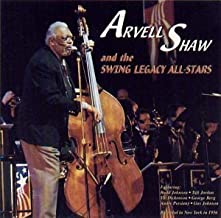
Arvell Shaw was born on September 15, 1923 in St. Louis, Missouri and learned to play tuba in high school, but switched to bass soon after. In 1942 he worked with Fate Marable on the Mississippi riverboats before serving in the Navy from 1942 to 1945. After his discharge he played with Louis Armstrong in his last big band, from 1945 to 1947. He and Sid Catlett then joined the Louis Armstrong All-Stars until 1950, then he broke off to study music. Returning to play with Armstrong in 1952, he performed with vocalist Velma Middleton, and in the 1956 musical, High Society.
He then worked at CBS with Russ Case, did sometime in Teddy Wilson’s trio, and played with Benny Goodman at the 1958 Brussels World’s Fair. After a few years in Europe, he played again with Goodman on a tour of Central America in 1962. From 1962–64 Arvell again joined Armstrong, and occasionally accompanied him through the end of the decade. The Seventies saw him mostly freelancing in New York City.
Bassist Arvell Shaw, who recorded only once as a leader, a live 1991 concert of his Satchmo Legacy Band, kept playing until he passed away on December 5, 2002 in Roosevelt, New York.
More Posts: bandleader,bass,history,instrumental,jazz,music
Daily Dose Of Jazz…
William Richard Berry was born on September 14, 1930 in Benton Harbor, Michigan. The son of a bass player in a touring dance band, he spent his early years traveling with his parents sleeping in the bass case under the bandstand when he was only a few months old. From the age of five, he took piano lessons at home in South Bend, Indiana. In high school in Cincinnati, Ohio he switched to trumpet, and played in a Midwest band led by Don Strickland, after which he served four years in the Air Force.
He studied at the Cincinnati College of Music and Berklee College of Music in Boston, Massachusetts then played trumpet with the Woody Herman and Maynard Ferguson orchestra. In 1961, he became one of the Duke Ellington orchestra’s first white members. After his working with Ellington, he played with the Thad Jones-Mel Lewis Jazz Orchestra and led his own big band in New York.
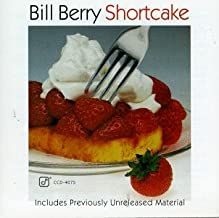
In 1965 he joined The Merv Griffin Show, where he remained for fifteen years, moving to Los Angeles, California with Griffin and reforming his group as the L.A. Big Band in 1971. Among the most successful of his own 1978 recording Shortcake, an album of jazz for small groups in the Ellington style. He appeared on many albums by other musicians, including Rosemary Clooney, Scott Hamilton, Jake Hanna, and Coleman Hawkins.
He recorded four albums as a leader and fifty-five as a sideman with Frank Capp, Duke Ellington, Maynard Ferguson, Thad Jones/Mel Lewis, Ruth Brown, Benny Carter, Ray Charles, Chris Connor, Randy Crawford, Bing Crosby, Dave Frishberg, Woody Herman, Earl Hines, Johnny Hodges, Milt Jackson, Irene Kral, Trini Lopez, Johnny Mathis, Gary McFarland, Dave Pell, Herb Pomeroy, Jimmy Rowles, Jack Sheldon, Patty Weaver, and Joe Williams.
Trumpeter Bill Berry passed away on November 13, 2002.
More Posts: bandleader,history,instrumental,jazz,music,trumpet
Daily Dose Of Jazz…
Cliff Leeman was born in Portland, Maine on September 10, 1913. At age 13 he played percussion with the Portland Symphony Orchestra and toured as a xylophonist on the vaudeville circuit late in the 1920s. He first made his name in the jazz world during the Thirties and Forties working in the swing bands of Artie Shaw, Glenn Miller, Tommy Dorsey, Charlie Barnet, Johnny Long, and Woody Herman.
After a stint in the Army in 1944, he worked with Don Byas, John Kirby, Raymond Scott, Jimmy Dorsey, and Ben Webster. He briefly left the music industry before joining the Casa Loma Orchestra in 1947, later moving on to the Charlie Barnet Orchestra and closing out the decade in Bob Chester’s big band ensemble.
He played on radio and television in the 1950s, in addition to playing live often with Eddie Condon and Bobby Hackett. His later associations include Pee Wee Erwin, Yank Lawson/Bob Haggart, Ralph Sutton, Billy Butterfield. During the 1960s he performed with Bob Crosby, Wild Bill Davison, Dukes of Dixieland, Peanuts Hucko and Joe Venuti. The Seventies saw Cliff with The Kings of Jazz, Bud Freeman, Don Ewell, the World’s Greatest Jazz Band, and Jimmy McPartland.
He recorded several albums for Fat Cat Jazz in the 1970s. Drummer Cliff Leeman, whose nickname is Mr. Time, passed away on April 26, 1986.
More Posts: drums,history,instrumental,jazz,music