


Daily Dose Of Jazz…
Marc Steckar was born on June 1, 1935 in Cherbourg, France. He began learning the cello from age eight, then played the trumpet. During his studies at the Paris National Conservatory, he switched to the trombone in 1953, which he studied with André Lafosse. After an interruption due to his military service in the Algerian War, he completed his training and in 1959 he received the second prize for trombone.
In the next few years he worked in the big band of Benny Bennet, in the Aimé Barelli orchestra in the Monte Carlo casinos and in Olympia where he played Marlene Dietrich and Nat King Cole, with whom he toured Europe. He played in the orchestra of Paul Mauriat accompanying Charles Aznavour, then in the big band of Daniel Janin who played behind Édith Piaf, Jacques Brel, Gilbert Bécaud and Sammy Davis Jr. in 1961.
Over the next few years he worked as a studio musician, among others for Michel Legrand , Vladimir Cosma and for various television shows, but also again at the Olympia for Roland Petit and Zizi Jeanmaire. Between 1973 and 1983, Marc accompanied Claude Nougaro with Eddy Louiss and Maurice Vander before becoming a member of Martial Solal’s big band. He recorded film music with Vander.
He went on to form Steckar TUBAPACK, and the Elephant Tuba Horde Big Band. Steckar is also on albums by François Jeanneau, Illinois Jacquet and Sonny Rhodes. Tubist Marc Stekar, who played trombone, bass trombone, euphonium, and was a composer, passed away on June 27, 2015 in Bessancourt, Val-d’Oise, France.

More Posts: bandleader,composer,euphonium,history,instrumental,jazz,music,trombone,tuba
Daily Dose Of Jazz…
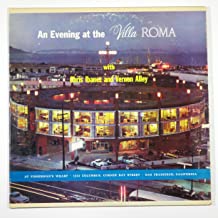
Vernon Alley was born on May 26, 1915 in Winnemucca, Nevada and played football in high school and college. His brother Eddie was a drummer and they played together often. He played with Wes People in 1937 and with the interracial Saunders King band until the end of the decade. He briefly led his own band in 1940.
Around 1940, while in Lionel Hampton’s band, Alley switched from double bass to electric upright bass, one of the first musicians to do so. In 1942 he moved to Count Basie’s ensemble, where he played only for a few months and appeared in the film Reveille with Beverly.
Enlisting in the Navy as a musician in 1942, after training at Camp Robert Smalls, he was assigned as part of a 45-piece regimental band to the Navy’s PreFlight School located at St. Mary’s College, in Moraga, California. Others who served in this band included Ernie and Marshal Royal, Jackie Kelso, Wilbert Baranco, Earl Watkins, and Buddy Collette.
After returning to civilian life, Alley put together an ensemble in San Francisco, California. He continued to play there and was an active member on local radio and in civic arts into the 1990s. Bassist Vernon Alley passed away on October 3, 2004 having become the most distinguished jazz musician in San Francisco history.

More Posts: bass,instrumental,jazz,music
Daily Dose Of Jazz…
Kitty Kallen, born Katie Kallen on May 25, 1921 in Philadelphia, Pennsylvania, was one of seven children. As a child, she won an amateur contest by imitating popular singers. Returning home with her prize camera, her father punished her for stealing it. Only when neighbors subsequently visited to congratulate her did her father realize she had actually won it.
As a young girl, she sang on The Children’s Hour, a radio program sponsored by Horn & Hardart, an automat chain. As a preteen, Kallen had a radio program on Philadelphia’s WCAU and sang with the big bands of Jan Savitt in 1936, Artie Shaw in 1938, and Jack Teagarden in 1939. At twenty she sang the vocals for Moonlight Becomes You with Bobby Sherwood and His Orchestra at the second ever session for what was then still called Liberty Records but would soon be renamed Capitol Records. It was her only session for the label.
She joined the Jimmy Dorsey band when she was twenty-one replacing Helen O’Connell. Her recording with Dorsey, They’re Either Too Young or Too Old, was a favorite of American servicemen. She followed this with Dorsey’s #1 hit Besame Mucho. Singing duets with Bob Eberly, when he left to go into the service in 1943, she joined Harry James’s band.
With James she went on to have many hits in the top twenty with two hitting #1. In 1954 she was voted the most popular female singer in Billboard and Variety polls. She followed up with the song, In the Chapel in the Moonlight, which was another million seller. Kittty performed live at numerous prominent venues, as well as popular television shows like the Tonight Show, American Banstand and The Big Beat.
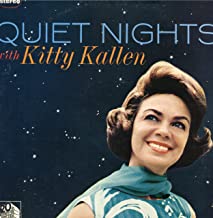
Her final album was Quiet Nights, a bossa nova–flavored release for 20th Century Fox Records. Subsequently, she retired owing to a lung ailment. On February 8, 1960, Kallen received a star on the Hollywood Walk of Fame A compilation of her hits on various labels remains available on the Sony CD set The Kitty Kallen Story. Vocalist Kitty Kallen passed away on January 7, 2016.
More Posts: history,instrumental,jazz,music,vocal
Daily Dose Of Jazz…
Robert C. Plater was born May 13, 1914 in Newark, New Jersey and began playing alto sax at age 12. He played locally in Newark with Donald Lambert and the Savoy Dictators in the 1930s. From 1940-42 he played with Tiny Bradshaw before spending 1942-45 serving in the U.S. military during World War II. After his discharge he worked briefly with Cootie Williams, then played intermittently with Lionel Hampton between 1946 and 1964, recording eleven albums with the band.
He also arranged with Hampton, as well as doing some freelance work on the side. In 1964 he took Frank Wess’s place in the Count Basie Orchestra, where he recorded thirty-nine albums and played until his death. His only recordings as a leader were four songs for Bullet Records in 1950.
He was the co-composer of Jersey Bounce, a popular dance number in the 1940s, recorded by various musicians including Glenn Miller and Ella Fitzgerald. Alto saxophonist Bobby Plater passed away on November 20, 1982 in Lake Tahoe, Nevada.
More Posts: arranger,history,instrumental,music,saxophone
Daily Dose Of Jazz…
Billy Munn was born William on May 12, 1911 in Glasgow, Scotland. He studied at the Athenaeum School of Music before moving to London, England and joining the band of Jack Hylton from 1929 to 1936.
During the Thirties he played on recordings with Spike Hughes and Benny Carter. Following these engagements Billy then played with Sydney Lipton from 1936 to 1940, and concomitantly played with Louis Armstrong and Coleman Hawkins on their tours of England, as well as with Wingy Manone in the United States.
He played with Stephane Grappelli in 1943 and George Chisholm in 1944, then led his own ensemble at the Orchid Room in Mayfair from 1945 to 1948. He co-founded the BBC program Jazz Club in the 1940s with producer Mark White and clarinettist Harry Parry.
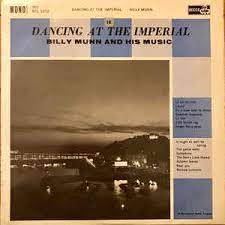
From 1948 to 1949, Munn directed the Maurice Winnick Orchestra at Ciro’s club in London, England and subsequently led the house band at the Imperial Hotel in the seaside resort town of Torquay, England for three decades, from 1949 to 1979. He recorded several times with this group. After 1979 he played solo, mostly locally in Torquay.
Pianist and arranger Billy Munn passed away on May 2, 2000 in Ayrshire, Scotland, a few days shy of his 89th birthday.
More Posts: arranger,bandleader,history,instrumental,jazz,music,piano