

Daily Dose Of Jazz…
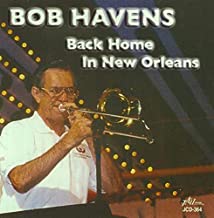
Robert Havens was born May 3, 1930 to a musical family in Quincy, Illinois and began studying violin and trombone at age seven and played both instruments throughout his school years. Landing his first professional job with a local dance band at age 12, by 16 his talent as a trombonist was recognized earning him a scholarship from the Interlochen Music Camp in Michigan and he held the first trombone chair in the school’s 250 piece concert band. He later held the first trombone chair in the Quincy Symphony while also playing in many popular dance groups in Illinois.
Leaving Quincy in 1955 after serving in the Illinois National Guard as a bandsman during the Korean War, Bob toured with the Ralph Flanagan Orchestra. In 1956, he joined George Girard’s Dixieland Band at the Famous Door in New Orleans, Louisiana where he met his idol, Jack Teagarden.
In 1957, Bob joined Al Hirt at Dan’s Pier 600 on Bourbon Street when Hirt formed his very first band. The front line consisted of Hirt, Havens and Pete Fountain. During his time in New Orleans, he recorded albums for Good Times Jazz and Vic labels with the Girard band, and on Verve and Audio Fidelity with Hirt. He also recorded about a dozen albums for the Southland label with many other New Orleans musicians.
Bob stayed with this group until 1960 when he was persuaded to move to the West Coast and join the Lawrence Welk Orchestra as a featured soloist on their weekly TV series. His tenure with this show lasted for 23 years until the show ended in 1982.
Following Welk, he continued as a freelance professional, working often with the Bob Crosby Bob Cats and the Benny Goodman Orchestra, then led by clarinetist Peanuts Hucko. From 1985 to 1995, Havens played with the Great Pacific Jazz Band along with Bob Ringwald (lead vocals/piano), Don Nelson (saxophone), and Zeke Zarchy (trumpet).
In 2005, he performed with the North Carolina Pops Orchestra at Campbell University with fellow Welk star Ava Barber in a benefit concert raising money for victims of Hurricane Katrina. Trombonist Bob Havens returned home to Quincy, and continued to record and appear at jazz festivals and concerts throughout the world.

More Posts: bandleader,history,instrumental,jazz,music,trombone

Daily Dose Of Jazz…
Floyd “Candy” Johnson was born on May 1, 1922 in Madison, Illinois and started on drums before moving to saxophone, with Ben Webster being his biggest influence. His professional career began in St. Louis, Missouri where he was a member of a group led by Chuck Finney. He attended Wilberforce University until the draft intervened but after his service, he played in bands led by Ernie Fields, Tiny Bradshaw, and Andy Kirk. With the Kirk orchestra he recorded for Decca Records.
Johnson preferred candy to alcohol, so a band member started calling him Candy, and the moniker stuck. In Detroit he started a band called the Peppermint Sticks. One musician recalled that the band dressed in candy-striped suits, and sometimes Johnson tossed peppermint sticks to the crowd.
1951 saw him as a member of the Count Basie Orchestra, recording with Basie for Clef Records before working in more of a rhythm and blues vein with Bill Doggett. The band had hits with Blip Blop, Honky Tonk, and Night Train. Leaving Doggett in the 1960s he went on to study music at Bowling Green State University.
By 1974, Candy was playing with the Duke Ellington Orchestra, the Count Basie Orchestra, and his friend Clark Terry. During a visit to New York City, he recorded with Helen Humes and Roy Eldridge. A year later, he accompanied the New McKinney’s Cotton Pickers at the Bix Beiderbecke Festival in Iowa.
Saxophonist Candy Johnson, who retired from performing, moved to Toledo, Ohio and taught at local schools, passed away on June 28, 1981 in Framingham, Massachusetts.
Daily Dose Of Jazz…
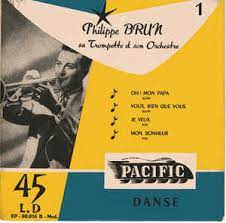
Philippe Brun was born on April 29, 1908 in Paris, France and first began playing professionally in the late 1920s with the bands of Gregor, Danny Polo, and Ray Ventura. In the early 1930s he spent time in London, England working with Bert Ambrose, Jack Hylton, and Fred Waring.
Returning to Paris around 1936, he performed with Jazz du Poste Parisien and with Ventura again, as well as with Django Reinhardt and Alix Combelle. He was recorded as a leader from 1937-1940. During World War II he worked in Switzerland, with Eddie Brunner, André Ekyan, Edmond Cohanier, and Teddy Stauffer.
Brun’s wife, Annie Fratellini, a vocalist and comedian, also performed with Raymond Fol and Kenny Clarke. Trumpeter Philippe Brun passed away on January 15, 1994 in Paris.
More Posts: bandleader,history,instrumental,music,trumpet

Daily Dose Of Jazz…
Raymond Fol was born in Paris, France on April 28, 1928 and along with his brother Hubert was raised in a musical household. He began playing piano at five years of age, and both he and his brother played in Claude Abadie’s ensemble after the end of World War II.
The Fol brothers then formed their own group, the Be Bop Minstrels, however, Raymond worked around this time with musicians such as Pierre Braslavsky, Jean-Claude Fohrenbach, Django Reinhardt, Roy Eldridge, and Johnny Hodges. In 1952, he did a European tour in Dizzy Gillespie’s band, and for several years in the middle of the decade was a regular at Paris’s Club Saint-Germain. He also worked in the 1950s with Sidney Bechet, Claude Luter, Guy Lafitte, and Stephane Grappelli.
He worked briefly in Rome, Italy in 1958, then returned to Paris, playing both piano and celesta at the Club Saint-Germain. In the 1960s and 1970s he worked with Kenny Clarke, Duke Ellington, Paul Gonsalves, Cat Anderson, and Gerard Badini. Raymond also recorded a few times on solo piano in the first half of the 1970s.
Pianist Raymond Fol passed away in the City of Lights on May 1, 1979.
More Posts: bandleader,history,instrumental,jazz,music,piano
Daily Dose Of Jazz…
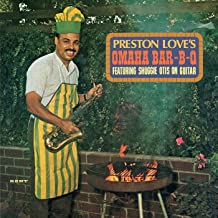
Preston Haynes Love was born on April 26, 1921 in Omaha, Nebraska, grew up in North Omaha and graduated from North High.
He became renowned as a professional sideman and saxophone balladeer in the big band heyday, being a member of the bands of Nat Towles, Lloyd Hunter, Snub Mosley, Lucky Millinder and Fats Waller before getting his big break with the Count Basie Orchestra at age 22. Love played and recorded with the Count Basie band from 1945–1947 and played on Basie’s only #1 hit record, Open The Door Richard.
He eventually became a bandleader himself, playing with Lena Horne, Billie Holiday, his friends Johnny Otis and Wynonie Harris, with whom he had several hits. In 1952, he launched the short-lived Spin Records, as a joint effort with songwriter Otis René (When It’s Sleepy Time Down South). The label released material by the Preston Love Orchestra, among others.
By the early 1960s he was working with Ray Charles in California and Aretha Franklin, eventually becoming Motown’s West Coast house bandleader. He played and toured with The Four Tops, The Temptations, Tammi Terrell, Marvin Gaye, Gladys Knight and others. Preston also recorded with Nichelle Nichols, Janis Joplin, Frank Zappa, Shuggie Otis, T-Bone Walker, Charles Brown, Ruth Brown, Smokey Robinson, Diana Ross and Stevie Wonder, among numerous others.
Love continued touring the U.S. and Europe into the 2000s, additionally lecturing and writing about the history he was part of. In his later years he returned to Omaha, wrote a book, led bands, the last of which featured his daughter vocalist Portia Love, drummer Gary E. Foster, pianist Orville Johnson, and bassist Nate Mickels. He also held down the position of advertising agent for the city’s local newspaper, Omaha Star, a local newspaper serving the city’s Black community. He appeared in the Clint Eastwood film Play Misty For Me with the Johnny Otis band.
Saxophonist, bandleader, and songwriter Preston Love, who was inducted into the Omaha Black Music Hall of Fame, passed away on February 12, 2004 after a battle with prostate cancer.
More Posts: bandleader,history,instrumental,jazz,music,saxophone,songwriter