

Daily Dose Of Jazz…
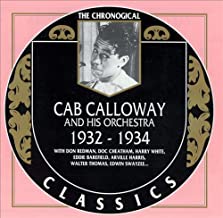
Morris Ellis “Fruit” White was born January 17, 1911 in Nashville, Tennessee and grew up in Peoria, Illinois. During the 1920s he played with Charlie Creath, Dewey Jackson, and Ethel Waters before joining The Missourians in 1928.
In 1930, Cab Calloway became the leader of the ensemble, with White becoming one of his most important sidemen. He remained with Calloway’s band until 1938. He played with Lionel Hampton in 1941, then left the music industry for good.
Banjoist and guitarist Morris White passed away In November 1986.
Daily Dose Of Jazz…
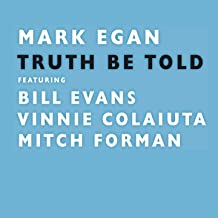
Mark Egan was born on January 14, 1951 in Brockton, Massachusetts and was influenced by his father, studying trumpet at age 10. Playing the trumpet throughout high school, he began playing the bass when he was fifteen. While attending the University of Miami’s Frost School of Music, initially a trumpet student, he studied with Jerry Coker. He switched from trumpet to bass part way through the program. His teachers included Jaco Pastorius, Dave Holland, and Andy LaVerne. While in Miami he became friends and performed with Ira Sullivan, Pat Metheny, Danny Gottlieb, Clifford Carter.
After graduate school, in 1975 Egan went on tour with Eumir Deodato and the Pointer Sisters and recorded with David Sanborn. Two years later, working as a studio musician in New York City, he met Joe Beck and Steve Khan. He then joined the Pat Metheny Group until 1981, before starting the jazz fusion band Elements with the Group’s drummer, Danny Gottlieb. They were joined by saxophonist Bill Evans and keyboardist Clifford Carter. They recorded and toured through the 1990s. During the 1980s and Nineties, he was a member of the Gil Evans Orchestra.
He founded his own record label, Wavetone Records and has made three music videos: Om Yoga & Meditation, Music on the Edge, and Bass Workshop. He has appeared on the soundtracks of movies including Two Moon Junction, The Object of My Affection, You’ve Got Mail, The Color of Money, Rollover, Quick Change, Blown Away, and A Chorus Line. He recorded an album, Urge, with trumpeter Forrest Buchtel, Jr., featuring, among other things, the theme from CNN Headline News.
Egan has toured and recorded with jazz artists including Stan Getz, Gil Evans, John McLaughlin, Larry Coryell, Pat Martino, Pat Metheny, Michael Franks, Jim Hall, Bill Evans, Lew Soloff, Paul Shaffer, rock and pop musicians and The Pointer Sisters, Sting, Arcadia, Roger Daltrey, Joan Osborne, Marianne Faithfull, Carly Simon, Art Garfunkel, Judy Collins, Sophie B. Hawkins, Bryan Ferry, Joe Beck, as well as Brazilians Airto Moreira, Flora Purim, and Toninho Horta.
Bassist and trumpeter Mark Egan continues to perform and record.
More Posts: bandleader,bass,history,instrumental,jazz,music,trumpet
Daily Dose Of Jazz…
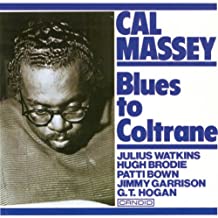
Calvin “Cal” Massey was born in Philadelphia, Pennsylvania on January 11, 1928 and studied trumpet under Freddie Webster. Following his studies, he played in the big bands of Jay McShann, Jimmy Heath, and Billie Holiday.
In the late 1950s Cal headed an ensemble with Jimmy Garrison, McCoy Tyner, and Tootie Heath. Occasionally John Coltrane and Donald Byrd would play with Massey’s group and in the 1950s he gradually receded from active performance and concentrated on composition.
His works were recorded by Coltrane, Tyner, Freddie Hubbard, Jackie McLean, Lee Morgan, Philly Joe Jones, Horace Tapscott and Archie Shepp. Massey played and toured with Shepp from 1969 until 1972 and also performed in The Romas Orchestra with Romulus Franceschini.
Massey’s political standpoint was radical and his work was strongly connected with the Civil Rights Movement of the 1960s and ’70s. The Black Panther Party was an inspiration for The Black Liberation Movement Suite which he created with Franceschini and was performed three times at Black Panther benefit concerts. His ideology resulted in him getting whitelisted from major recording companies and only one album was recorded under his name.
Trumpeter and composer Cal Massey passed away from a heart attack on October 25, 1972 at the age of 44 in New York City, New York.
Daily Dose Of Jazz…
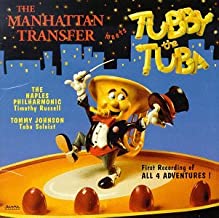
Tommy Johnson was born John Thomas Johnson on January 7, 1935 in Los Angeles, California. He had a musical upbringing as his father was a baritone soloist in the choir at the Angelus Temple in Echo Park.
He attended the University of Southern California Thornton School of Music and received a bachelor’s degree in music in 1956. He played his first film in 1958, the score for Al Capone and went on to become Hollywood’s first-call tuba player.
Known mostly for playing for television series and commercials, he also was a prolific player in film scores such as Jaws, The Godfather, the Indiana Jones series, the Star Trek film series, The Lion King, Titanic, and over another 120 film scores, working wth the likes of John Williams, James Horner, and Alan Silvestri..
He ventured into playing jazz backing such artists as Frank Sinatra, The Manhattan Transfer and performing with the American Jazz Philharmonic,, as well as rock and roll and pop artists like Weird Al Yankovic and Elvis Presley.
As an educator he taught junior high school music in the Los Angeles Unified School District for nearly 20 years, but for most of his career, he taught advanced tuba players in private lessons and at USC and UCLA.
On October 16, 2006, tubist Tommy Johnson passed away from complications of cancer and kidney failure at the UCLA Medical Center in Los Angeles at the age of 71.
More Posts: history,instrumental,jazz,music,tuba
Daily Dose Of Jazz…
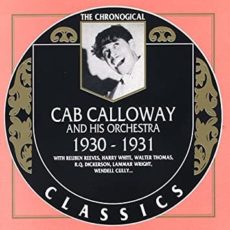
Roger Quincey Dickerson was born in 1898 in Paducah, Kentucky and raised in St. Louis, Missouri, where he worked in local theaters in the late 1910s. After touring with Wilson Robinson’s Bostonians in 1923, he then worked in Andrew Preer’s group at the Cotton Club in New York City, remaining in the group after Preer’s death in 1927.
From the mid to late 1920s he recorded in small groups with Harry Cooper and Jasper Taylor, with a latter session also featuring Johnny Dodds. When Cab Calloway took over the Preer band in 1930 Dickerson was still in the group, and he recorded several times under the new leader.
Leaving Calloway’s employ in 1931 he quit music but recorded again in 1949 accompanying a singer named Ray Cully. Trumpeter Roger Dickerson passed away on January 21, 1951 in Glens Falls, New York.
More Posts: history,instrumental,jazz,music,trumpet