

Daily Dose Of Jazz…
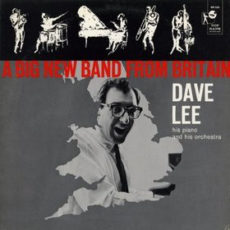
Dave Lee was born on August 12, 1926 in Newington, London, England and took lessons as a child. When his photographer father was transferred during the war to the North East to work on camouflaging military equipment, it was here that he started to perform in local groups. His big break came in 1942 when he won the Melody Maker poll for Best New Jazz Pianist.
A move to South Africa in 1947 had him working as a resident musician for night clubs in Port Elizabeth and Johannesburg. He went on to study at the Johannesburg Conservatory of Music gaining a Mus.Bac. By 1954 Lee invited Johnny Dankworth to perform in South Africa, and it was Dankworth who persuaded him to return to England as a pianist/arranger for the Johnny Dankworth band. From 1955 to 1959 he played on all of the recordings made by the Johnny Dankworth Orchestra.
David performed with Terry and McGhee, the Buddy Tate Quartet and Jack Parnell. He also arranged for Norman Wisdom, Benny Hill, Cleo Laine and Judy Garland. From 1959 he led a trio who recorded a number of successful albums, including A Big New Band from Britain, which was in The Cashbox Top Ten for six weeks. The trio also produced music for the 1960s TV series The Avengers, for which John Dankworth had written the original theme music, and the Trio features prominently in the 1962 episodes The Removal Men. They would go on to appear in several other episodes.
With his composing career beginning in the 1950s, he was writing jingles for television ads, then teamed up with lyricist Herbert Kretzmer and wrote hit songs Bangers and Mash, Goodness Gracious Me, and Kinky Boots and music for the West End stage musical Our Man Crichton in 1964.
His film music career began in 1960 with low-budget features, but gradually he progressed to fine orchestral scores for important movies. In 1983, Lee was elected BBC Jazz Society Musician of the Year, and in 1990 was one of the founders of jazz-only radio station 102.2 Jazz FM. Still busy in his 90s, pianist, arranger, orchestra leader, songwriter and film composer David Lee’s novel Nothing Rhymes with Silver about a fictional jazz pianist was published in 2007.

More Posts: arranger,bandleader,history,instrumental,jazz,music,piano
Daily Dose Of Jazz…
Max Abrams was born on August 11, 1907 in Glasgow, Scotland and began playing drums with dance bands in his teens, often in his hometown area. In the late Twenties, he headed to London, England and was soon active with a number of bands there.
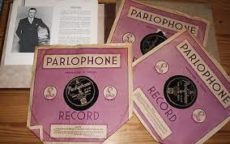
Touring South Africa before returning to London, in 1932, he joined Jack Hylton’s orchestra. During the next few years, Max played with several leading UK dance bands, including Sydney Lipton’s and Carroll Gibbons’ Savoy Orpheans. He was in demand for numerous recording sessions with many leaders as well as recording with his own band in 1935. He also made a series of tuition records for aspiring drummers.
In the early 40s, Abrams drummed with Ambrose, Jack Payne, and Stéphane Grappelli, then, in 1945, joined Sid Phillips for an engagement that lasted well into the next decade. During this period he often worked with small bands, including Humphrey Lyttelton’s, and appeared regularly on the radio. Technically gifted as a percussionist, he played several instruments including vibraphone, xylophone, and timpani.
As an educator, he was much sought after and founded his own School for Drum Tuition. His admired ability drew many eager and gifted drummers to him, among them Jack Parnell. Drummer Max Abrams, who actively performed from the 1930s through the 1950s, passed away on November 5, 1995.
More Posts: bandleader,drums,history,instrumental,jazz,music
Daily Dose Of Jazz…
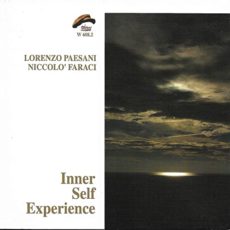
Lorenzo Paesani was born on August 9, 1977 in Teramo, Abruzzo, Italy and studied piano since childhood. He graduated Summa Cum Laude at 21 from the Niccolò Piccinni Conservatory of Bari. He studied improvisational music all over Europe and the U.S. with John Taylor, Fabrizio Puglisi, Franco D’Andrea, Ralph Alessi, Tim Berne, Marc Ducret, among others.
He collaborated with Norma Winston, Massimo Manzi, Claudio Fasoli, Sound Sketches Orchestra, Sidma Jazz Orchestra, and the Turin Philharmonic Orchestra among others.
Since 2014 he has performed at a variety of jazz festivals across Europe, recorded with different ensembles but all projects have a particular blend of jazz, original compositions and open improvisation, spanning from modern jazz to contemporary music. In his role as a composer, he collaborates with Kairostudio, a cultural association that produces documentaries and movies about the safeguard of the environment. Pianist and bandleader Lorenzo Paesani continues to perform, record and explore the realm of music
More Posts: bandleader,composer,history,instrumental,jazz,music,piano

Daily Dose Of Jazz…
Charlie H. “Devil” Gaines was born on August 8, 1900 in Philadelphia, Pennsylvania. As a teenager, Gaine played in brass bands in his hometown before moving to New York City in 1920. It was there that he joined the orchestra of Wilbur Sweatman.
Signing on with Clarence Williams’s house band, he went on to play with Sam Wooding, Earl Walton, Leroy Smith, Fats Waller, Charlie Johnson, and the Hot Chocolates.
In the 1930s Gaines launched his own band in Philadelphia, recorded occasionally, including once with Williams in 1934. Simultaneously he continued playing with Smith while playing in Louis Armstrong’s orchestra. He continued to lead bands in Philadelphia into the 1950s, especially at the jazz venue Carroll’s.
The 1960s saw him performing in a trio at the Hangover Club until he went into retirement in the 1970s. Trumpeter and bandleader Charlie Gaines passed away on November 23, 1986.
More Posts: bandleader,history,instrumental,jazz,music,trumpet
Daily Dose Of Jazz…
Harry Arnold Persson was born on August 7, 1920, in Helsingborg, Sweden and led his first big band in 1942, playing the saxophone initially but eventually ceased to perform, concentrating on arranging.
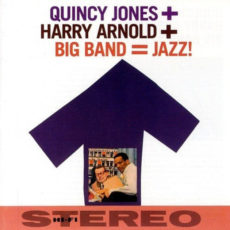
From 1949-52 he played and arranged for Thore Ehrling’s band and worked extensively as a studio musician, particularly writing film scores through much of the 1950s. From 1956 to 1965 Arnold led the Swedish Radio Big Band, which included Arne Domnérus, Bengt Hallberg, and Åke Persson.
American trumpeter Benny Bailey played with the band for a time, Quincy Jones arranged and briefly led the group, and they recorded with Ernestine Anderson, Lucky Thompson, Coleman Hawkins, Toots Thielemans, Tony Scott, and Stan Getz.
Disbanding the group in 1965, Arnold continued working as an arranger and led big bands in Europe. Saxophonist and bandleader Harry Arnold passed away on February 11, 1971 at the age of 51 in Stockholm, Sweden.
More Posts: arranger,bandleader,history,instrumental,jazz,music,saxophone