

Daily Dose Of Jazz…
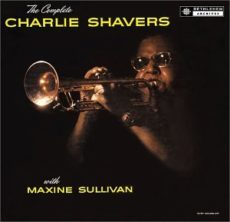
Charles James Shavers was born on August 3, 1920 in New York City and took up piano and banjo before switching to trumpet. In the mid-Thirties he performed with Tiny Bradshaw and Lucky Millinder. In 1935 he joined the trumpet section with Dizzy Gillespie and Carl “Bama” Warwick in Frankie Fairfax’s Campus Club Orchestra.
1936 saw him as a member of John Kirby’s Sextet as trumpet soloist and arranger. Only 16 at the time he gave his birth date as 1917 to avoid child labor laws, Charlie’s arrangements and solos helped make the band one of the most commercially successful and imitated of its day. In 1937, he performed with Midge Williams and her Jazz Jesters. By 1944 he began playing sessions in Raymond Scott’s CBS staff orchestra.
Leaving John Kirby’s band In 1945 he joined Tommy Dorsey’s Orchestra, with whom he toured and recorded, off and on, until Dorsey’s passing in 1956. In 1949, he sang and played the hit The Hucklebuck with Dorsey. He was a member of Dorsey’s Orchestra on numerous Stage Show telecasts for CBS, including early Elvis Presley appearances. During this time he continued to play at CBS while also appearing with the Metronome All-Stars and making a number of recordings as trumpet soloist with Billie Holiday.
From 1953 to 1954 he worked with Benny Goodman and toured Europe with Norman Granz’s popular Jazz at the Philharmonic series, where he was a crowd favorite. He formed his own band with Terry Gibbs and Louie Bellson.
Swing era trumpeter Charlie Shavers passed away from throat cancer in New York City on July 8, 1971 at the age of 50. While on his deathbed his close friend Louis Armstrong passed away, and his last request was that his trumpet mouthpiece be buried with Armstrong.

More Posts: bandleader,composer,history,instrumental,jazz,music,trumpet
Daily Dose Of Jazz…
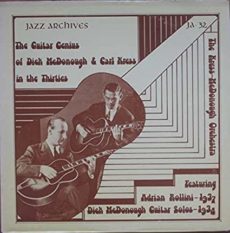
Richard Tobin McDonough was born on July 30, 1904 in New York City and began playing banjo and mandolin in high school. While matriculating through Georgetown University, he performed professionally at weekend dances and two years later started a band. Attending Columbia Law School he played with bands in New York City.
McDonough played with Red Nichols in 1927 as a banjoist, and soon after played with Paul Whiteman. He began studying the guitar and eventually was in demand for session work, recording with The Dorsey Brothers, Red Nichols, and Miff Mole. In the 1930s, he performed in a duo with jazz guitarist Carl Kress and cut several sessions with an orchestra under his own name, in addition to backing numerous other recording artists.
His session work with Mildred Bailey, Smith Ballew, The Boswell Sisters, Rube Bloom, Chick Bullock, The Charleston Chasers, Cliff Edwards, Gene Gifford, Benny Goodman, Adelaide Hall, Annette Hanshaw, Billie Holiday, Baby Rose Marie, Glenn Miller, Irving Mills, Red McKenzie, Johnny Mercer, Red Norvo, Fred Rich, Adrian Rollini, Pee Wee Russell, Ben Selvin, Artie Shaw, Frank Signorelli, Jack Teagarden, Claude Thornhill, Frankie Trumbauer, Joe Venuti, Don Voorhees, and Ethel Waters. He played in the Jam Session at Victor with Fats Waller, Bunny Berigan, and George Wettling.
Struggling with alcohol abuse during his adult life and guitarist Dick McDonough passed away of pneumonia on May 25, 1938 in New York City.

More Posts: bandleader,guitar,history,instrumental,jazz,music,tenor banjo
Daily Dose Of Jazz…
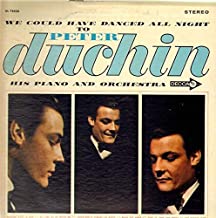
Peter Oelrichs Duchin was born in New York City on July 28, 1937, the son of pianist and bandleader Eddy Duchin and Newport, Rhode Island, and New York City socialite Marjorie Oelrichs, who died unexpectedly when he was just five days old. After the death of both of his parents, he was raised by close family friends, statesman W. Averell Harriman and his wife, Marie Norton Harriman.
Educated at Eaglebrook School, he studied piano with Carrie Barbour Swift and The Hotchkiss School prep schools in New England. He spent time in Paris, France, studied at the Sorbonne, then returned home and graduated from Yale University.
Duchin formed his first professional band, played the St. Regis Hotel in New York City in 1962 thanks in part to his family name and the networking it had made possible. His music was heard on the radio in the late 1960s and early ’70s from albums and singles released on the Decca, Bell, and Capitol labels.
From 1985 to 1989, Peter had a professional partnership with Jimmy Maxwell, leader of the traditional society jazz band in New Orleans, Louisiana. By 2009, his band had played at an estimated 6,000 performances. Duchin has served on a variety of arts boards not limited to Carnegie Hall, Spoleto Festival and the National Jazz Service Organization, the World Policy Institute, and The Center for Arts Education.
In 1996 he published his memoir, Ghost of a Chance. Pianist and bandleader Peter Duchin continues to perform and record at 82.
More Posts: bandleader,history,instrumental,jazz,piano
Daily Dose Of Jazz…
Annie Whitehead was born on July 16, 1955 in Oldham, Lancashire, England and learned the trombone in high school and participated in rock and jazz bands. At 16, she left school and became a member of a female big band led by Ivy Benson, playing with the band for two years before moving to Jersey.
Unhappy with the life of a musician, she quit music for almost six years, only to return in 1979 and start a ska band. Taking an interest in jazz again after moving to London two years later, Whitehead began performing in pubs. During the 1980s she toured with Brotherhood of Breath, a big band led by South African pianist Chris McGregor.
Over the course of her career, Annie has worked with …And the Native Hipsters, Blur, Carla Bley, Charlie Watts Orchestra, Jah Wobble, Jamiroquai, John Stevens, Penguin Cafe Orchestra, Smiley Culture, Spice Girls, and Working Week. She was a member of The Zappatistas, a Frank Zappa tribute band led by guitarist John Etheridge.
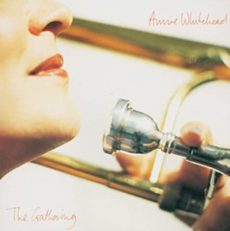
Trombonist Annie Whitehead, who has recorded five albums, her first, Mix Up in 1984 to The Gathering, her last in 2000, continues to compose and perform.
More Posts: bandleader,composer,history,instrumental,jazz,music,trombone
Daily Dose Of Jazz…
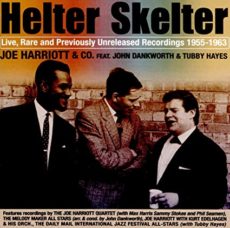
Joseph Arthurlin Harriott was born in Kingston, Jamaica on July 15, 1928. Harriott was educated at Alpha Boys School, an orphanage in the city where he learned to play the clarinet, the instrument that was assigned to him shortly before his tenth birthday. He took up the baritone and tenor saxophone while performing with local dance bands before settling on the alto saxophone.
Moving to London, England as a working musician in the summer of 1951 at the age of 23 as a member of Ossie Da Costa’s band, he initially began as a bebopper, and also became a pioneer of free-form jazz. Harriott was part of a wave of Caribbean jazz musicians who arrived in Britain during the 1950s, including Dizzy Reece, Harold McNair, Harry Beckett and Wilton Gaynair.
Deeply influenced by Charlie Parker, he developed a style that fused Parker with his own Jamaican musical sensibility, most notably the mento and calypso music he grew up with. During the 1950s, he had two long spells with drummer Tony Kinsey’s band, punctuated by the membership of Ronnie Scott’s short-lived big band, occasional spells leading his own quartet and working in the quartets of drummers Phil Seamen and Allan Ganley.
Harriott began recording under his own name in 1954, releasing a handful of E.P. records for Columbia, Pye/Nixa and Melodisc throughout the 1950s. However, the majority of his 1950s recordings were as a sideman with the musicians previously mentioned, also backing a diverse array of performers, from mainstream vocalist Lita Roza to traditional trombonist George Chisholm to the West African sounds of Buddy Pipp’s Highlifers. Harriott also appeared alongside visiting American musicians during this period, including a “guest artist” slot on the Modern Jazz Quartet’s 1959 UK tour.
Forming his own quintet in 1958, Joe’s hard-swinging bebop was noticed in the United States, leading to the release of the Southern Horizons and Free Form albums on the Jazzland label. By now firmly established as a bebop soloist, in 1960 Harriott turned to what he termed “abstract” or “free-form” music. During the late 1960s he and violinist John Mayer developed Indo-Jazz Fusion – an early attempt at building on music from diverse traditions. His work in 1969 was to be the last substantial performance of his career.
While he continued to play around Britain wherever he was welcome, no further recording opportunities arose. He was virtually destitute in his last years and ravaged by illness. Alto saxophonist and composer Joe Harriott passed away from cancer on January 2, 1973.
More Posts: bandleader,composer,history,instrumental,jazz,music,saxophone