

Daily Dose Of Jazz…
Roy Willox was born August 31, 1929 in Welwyn, Hertfordshire, England into a musical family in 1929. At 16 he initially played with Johnny Claes for a short time in 1945 and then worked in other well-known bands before joining the Ted Heath Orchestra for a five-year stint from 1950 to 1955. During this time he also worked in a band with Keith Christie.
A collaboration with Jack Parnell and other bands led to extensive freelance in television, radio and theater. In the field of jazz, he was part of Harry South’s band in the 1960s and 1970s. This period of performing saw him occasionally returning to the Heath band throughout the 1990s and 2000s, playing the Ted Heath Bands farewell concert at London’s Royal Festival Hall in 2000.
In his later years Roy worked with Kenny Baker, the Robert Farnon Orchestra, and Laurie Johnson’s London Big Band. 2009 with the all-star formation The Allan Ganley Jazz Legacy. He was involved in 156 jazz recording sessions between 1951 and 2016 with Cleo Laine, Larry Page, George Chisholm, Beryl Bryden, Johnny Keating, Tubby Hayes, Kenny Clare, Dudley Moore, Louie Bellson, The London Jazz Chamber Group, Michel Legrand, Phil Woods, and the Len Phillips Big Band.
As a session musician, he is also in pictures of Bert Kaempfert, Tiny Tim ~ Live! At the Royal Albert Hall, and Harry Nilsson ~ A Little Touch of Schmilsson in the Night. Alto saxophonist Roy Willox, who also plays clarinet and flute, passed away on November 25, 2019.

More Posts: clarinet,flute,history,instrumental,jazz,music,saxophone
Daily Dose Of Jazz…
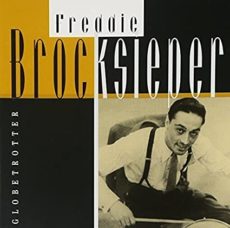
Fritz “Freddie” Brocksieper was born in Istanbul, Turkey on August 24, 1912, the son of a Greek-speaking Jewish woman and a German engineer, who was able to get through National-Socialism as an essential swing musician. His playing style on the drums was influenced above all by Gene Krupa and by 1930, he was playing professionally in Germany working in Nuremberg and Berlin throughout the decade. During World War II he played with the Golden Seven, Benny De Weille, Willy Berking, and the radio orchestra of Lutz Templin.
He recorded with his own ensembles, both large and small, in the later 1940s, and performed for American GIs in Stuttgart, Munich, and Berlin. An essential swing musician, Freddie was considered a leading figure of early European big-band jazz. With his bands, he made it to the front page of Stars and Stripes. Beginning in 1957 Bavarian radio regularly broadcast live concerts from his studio in Munich.
He continued performing in the 1960s and 1970s and was awarded a Deutscher Schallplattenpreis in 1980. From 1964 he played mainly in trios, and often with American soloists in Europe. Drummer Freddie Brocksieper passed away on January 17, 1990.
More Posts: bandleader,drums,history,instrumental,jazz,music
Daily Dose Of Jazz…
Billy Amstell was born on August 20, 1911 in London, England. At ten he played piano and at thirteen was teaching himself how to play the alto saxophone. He performed in Glasgow before moving to London in 1930, working with violinist Jack Harris.
During the next year, Billy recorded with Roy Fox and Spike Hughes and became a member of the Bert Ambrose Orchestra in which he played tenor saxophone. In the 1940s he worked for bandleader Geraldo and in the 1950s for the BBC Dance Orchestra, and in the 1960s while a studio musician he worked with George Chisholm.
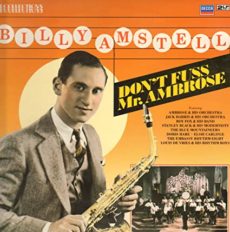
The 1980s saw Amstell playing clarinet, releasing a solo album, Session After Midnight on the Zodiac label, and wrote his autobiography, Don’t Fuss, Mr. Ambrose. Saxophonist and clarinetist Billy Amstell, who continued to perform into his nineties, passed away on December 19, 2005 at the age of 94.
More Posts: bandleader,clarinet,history,instrumental,jazz,music,saxophone
Daily Dose Of Jazz…
Albert Morgan was born on August 19, 1908 in New Orleans, Louisiana into a musical family. He started on clarinet, then learned baritone saxophone, tuba, and bass. After taking lessons with Simon Marrero around 1919, he played with his brother Isaiah. Relocated briefly to Pensacola, Florida he played with Mack Thomas and Lee Collins.
Returning to New Orleans to play on riverboats with Fate Marable and Sidney Desvigne. Al went on to play with Davey Jones and Cecil Scott and recorded with the Jones & Collins Astoria Hot Eight.
In the 1930s, Morgan led his own band and played as a sideman with Fats Waller, Les Hite, Zutty Singleton, Louis Jordan, and Sabby Lewis. This period saw him performing with Otto Hardwick and then spent four years with Cab Calloway from 1932 to 1936.
After leaving the Calloway orchestra, Al settled in California, playing live, on record, and on film. His film appearances include a feature on “Reefer Man” with the Calloway band in International House, Cab Calloway’s Hi-De-Ho, with Louis Armstrong in Going Places, and in The Gene Krupa Story.
From the 1950s to the 1970s, Morgan played extensively with Buddy Banks in a duo. Morgan recorded with Chu Berry, Coleman Hawkins, Don Byas, Jack Teagarden, Jay McShann, Red Allen, and T-Bone Walker.
Double bassist Al Morgan passed away on April 14, 1974 in Los Angeles, California.
More Posts: bandleader,bass,history,instrumental,jazz,music
DAily Dose Of Jazz…
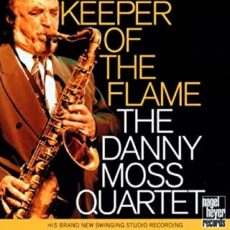
Dennis Moss MBE, known as Danny in the professional world, was born on August 16, 1927 in Redhill, Surrey, England. The son of a toolmaker, his childhood was spent on the south coast, in the Brighton-Worthing area, where he attended Steyning Grammar School. At the age of thirteen, he saw a jazz band appear briefly in a Bowery Boys film, and was so inspired by the clarinet playing that he swapped his most valued possession, his ice skates, for a second-hand instrument of his own. He was self-taught on both this and the tenor saxophone, which he took up at school,
A spell of National Service at the age of eighteen saw Moss performing for three years in a Royal Air Force regional band. After leaving the forces he joined the Vic Lewis Orchestra, then moved around various bands, especially ones with the potential for a soloist. In 1952, he joined Ted Heath’s band, soon discovering novelty numbers and musical reproductions were limiting his skills as an improviser, and he left after three years.
In 1957 Moss joined John Dankworth’s orchestra. Here, with the band’s encouragement, he began to develop his characteristic saxophone sound. He left Dankworth’s band in 1962, and from here, he joined Humphrey Lyttelton’s group, continuing to hone his style for another two years. He formed his own quartet, playing a mix of club gigs, festival appearances and radio broadcasts for the BBC and continued to tour with this quartet throughout the 1970s and 1980s. He also playing and recording with high-profile singers like Tony Bennett, Ella Fitzgerald, Bing Crosby, Sarah Vaughan, and Rosemary Clooney, and appearing with Buck Clayton in the mid-’60s and Louis Armstrong on his last British tour.
Diagnosed in 2005 with pleural mesothelioma, a rare form of lung cancer caused by exposure to asbestos. Saxophonist Danny Moss passed away on May 28, 2008, aged 80.
More Posts: bandleader,clarinet,history,instrumental,jazz,music,saxophone