

Daily Dose Of Jazz…
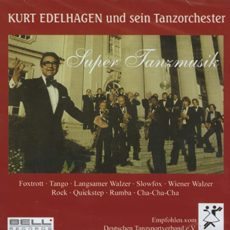
Kurt Edelhagen was born on June 5, 1920 in Herne, Germany. He studied conducting and piano in Essen and b 1945, he started a trio, then a big band a year later. He performed on a Frankfurt radio station, am Main, then for three years beginning in 1949 led the Bayerischer Rundfunk in Nuremberg.
From 1952 to 1957 he led the Südwestfunk big band, and 1954 saw him participating in the concerto for jazz band and orchestra by Rolf Libermann. Three years later he began leading the radio station Westdeutscher Rundfunk Big Band (WDR) in Cologne. Members included Dusko Goykovich and Jiggs Whigham. During the 1960s the band toured East Germany, USSR, Czechoslovakia, and several Arab countries.
His radio orchestra played at the opening ceremony of the 1972 Munich Olympics. Big band leader Kurt Edelhagen passed away on February 8, 1982 in Cologne, Germany.

More Posts: bandleader,history,instrumental,jazz,music
Daily Dose Of Jazz…
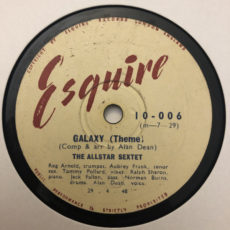
Aubrey Frank was born on June 3, 1921 in London, England. He started playing alto saxophone at fourteen, then switched to tenor the following year. HIs first gig was with Jack Harris, then joined the RAF but continued playing with Ambrose, Johnny Claes, Geraldo, Lew Stone, and George Evans. He was in the first Ted Heath band and the RAF Fighter Command Band. During World War II he played with Sam Donahue and Glenn Miller.
Leaving the RAF, he continued to work with Ambrose until 1947, as well as the Skyrockets and the Squadronnaires. From 1949 to 1954 a member of Jack Nathan’s band alongside Ronnie Scott and Harry Klein. He freelanced and became a staple on early British bebop dates where his adaptability allowed him to play in any type of band, from Dixieland to modern jazz.
He recorded with the George Shearing Sextet, Harry Hayes, Alan Dean All-Star Sextet and had a long career regarded as a first-class session musician but was a jazzman at heart. With the advent of bop, his style changed little, leading the Aubrey Frank Modern Music Sextet consisting of Hank Shaw or Wyatt Forbes, Harry Klein, Andy Denits, Stan Wasser, and Douggie Cooper. Tenor saxophonist Aubrey Frank passed away on his seventy-second birthday in 1993.
More Posts: bandleader,history,instrumental,jazz,music,saxophone
Daily Dose Of Jazz…
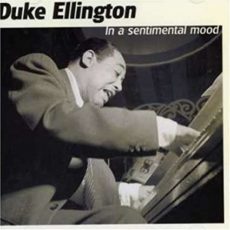
Toby Hardwicke was born Otto James Hardwicke on May 31, 1904 in Washington, D.C., and started on string bass at the age of 14, then moved to C melody saxophone and finally settled on alto saxophone. A childhood friend of Duke Ellington, he joined Ellington’s first D.C. band in 1919. He also worked for banjoist Elmer Snowden at Murray’s Casino.
In 1923, Ellington, Hardwick, Snowden, trumpeter Arthur Whetsol, and drummer Sonny Greer had success as the Washingtonians in New York City. After a disagreement over money, Snowden was forced out of the band and Duke Ellington was elected as the new leader. Booked at a Times Square nightspot called the Kentucky Club for three years, they met Irving Mills, who produced and published Ellington’s music.
Otto left the Duke Ellington band in 1928 to visit Europe, where he played with Noble Sissle, Sidney Bechet and Nekka Shaw’s Orchestra, and led his own orchestra before returning to New York City in 1929. He went on to have a brief stint with Chick Webb that year, then led his own band at the Hot Feet Club, with Fats Waller leading the rhythm section in 1930. He led a group at Small’s before rejoining Duke Ellington in the spring of 1932, following a brief stint with Elmer Snowden.
He played lead alto on most Ellington numbers from 1932 to 1946 and was a soloist on Black and Tan Fantasy, In a Sentimental Mood and Sophisticated Lady. Hardwick, with his creamy tone, was almost always the lead alto in the reed section of the Ellington orchestra except in some situations where Ellington required the more cutting tone of Johnny Hodges’ alto to set the tone of the ensemble. He left the band in 1946 over a disagreement with Ellington about his girlfriend, freelanced for a short time in the following year, and then retired from music.
>Occasionally doubling on violin and string bass in the Twenties, alto saxophonist Toby Hardwicke who also played clarinet and bass, baritone, and soprano saxes, passed away on August 5, 1970.

More Posts: bass,clarinet,history,instrumental,jazz,music,saxophone,violin

Daily Dose Of Jazz…
Reginald Foresythe was born on May 28, 1907 in London, England. He played piano from age eight and by the second half of the 1920s was working as a pianist and accordionist in dance bands in Paris, Australia, Hawaii, and California. He wrote music for films by D.W. Griffith and played in Paul Howard’s Quality Serenaders.
In 1930 Foresythe moved to Chicago, Illinois, wrote arrangements for Earl Hines and music for Paul Whiteman. Hines made one of his songs, Deep Forest, a part of his repertory, while Louis Armstrong, Fats Waller, Adrian Rollini, and Hal Kemp recorded his compositions. He worked in New York City in 1934–35, arranging for Whiteman and recording with Benny Goodman, John Kirby, and Gene Krupa.
Returning to London, Reginald assembled a studio recording group called The New Music of Reginald Foresythe. Between 1933-1936 he recorded for British Columbia and British Decca, usually spotlighting his jazzy tone poems. Among the more well known were Serenade to a Wealthy Widow, Garden of Weed, Dodging a Divorcee, and Revolt of the Yes-Men. His recordings featured reeds and sax, but no horns.
1935 saw Foresythe assembling a one-off session in New York City which featured Benny Goodman and Gene Krupa recording four of his compositions. He also recorded a number of piano solos and piano duets with Arthur Young that included at least three medleys and four arrangements of St. Louis Blues, Tiger Rag, Solitude and Mood Indigo for H.M.V. in 1938.
After serving in the Royal Air Force during World War II, he accompanied vocalists and played solo piano in London in the 1950s. He collaborated with songwriters Andy Razaf and Ted Weems, composing Be Ready with both, Please Don’t Talk About My Man with Razaf, and He’s a Son of the South with Razaf and Paul Denniker. Pianist, arranger, composer, and bandleader Reginald Foresythe passed away in relative obscurity in London on December 28, 1958.
More Posts: arranger,bandleader,composer,history,instrumental,jazz,music,piano
Daily Dose Of Jazz…
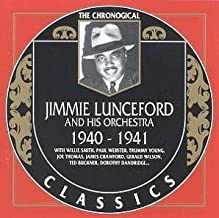
Earl Malcolm “Jock” Caruthers Sr. was born on May 27, 1910 in Monroe, Mississippi and studied at Fisk University in the 1920s. He began playing in Bennie Moten’s ensemble in 1928.
Working in St. Louis, Missouri early in the next decade with Dewey Jackson and Fate Marable, Jock then joined Jimmie Lunceford’s band in 1932, recording often with the band. He remained a member of the orchestra until Lunceford’s death in 1947.
Following this he played with Joe Thomas and Ed Wilcox, and he worked locally in Kansas City through the 1960s. Saxophonist Earl Caruthers, who was a mainstay on the Kansas City jazz scene, passed away on April 5, 1971 in Kansas City, Kansas.
More Posts: history,instrumental,jazz,music,saxophone