

Daily Dose Of Jazz…
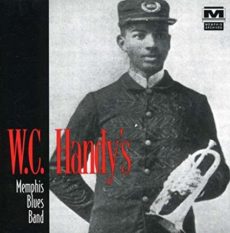
William Christopher Handy was born on November 16, 1873 in a log cabin built by his grandfather in Florence, Alabama. Because his father believed musical instruments were tools of the devil, he purchased his first guitar without his parents’ permission, that he secretly saved for by picking berries and nuts and making lye soap. Upon seeing the guitar his father ordered him to return it, but also arranged short-lived organ lessons, moving on to learn to play the cornet. Secretly he joined a local band, purchased a cornet from a fellow band member and spent every free minute practicing it.
After working for a time on a “shovel brigade” at the McNabb furnace, in 1892 Handy travelled to Birmingham, Alabama, passed a teaching exam and began teaching. Finding the compensation too little, he quit, got a job in a pipe plant, put together a small string orchestra and taught musicians how to read music. He later organized the Lauzetta Quartet, ventured to St. Louis, Missouri and founding working conditions deplorable, so they disbanded.
Handy would go on to Evansville, Indiana, play the cornet in the Chicago World’s Fair in 1893, join a successful band that performed throughout the neighboring cities and states and worked as a first tenor vocalist in a minstrel show, a band director, choral director, cornetist and trumpeter.
At the age of 23, he was the bandmaster of Mahara’s Colored Minstrels and over a three-year tour, they toured to Chicago, throughout Texas, Oklahoma, Tennessee, Georgia, Florida, Cuba and Alabama at the end. Weary of life on the road, he and his wife, Elizabeth, settled in his nearby hometown of Florence and he became a faculty member at Alabama and Mechanical University from 1900 to 1902.
W.C. traveled throughout Mississippi, listening to various styles of black popular music, and with his remarkable memory would recall and transcribe the music later. He rejoined the Mahara Minstrels, toured the Midwest and Pacific Northwest, and became the director of a black band in Clarksdale, Mississippi. By 1909 he and his band moved to Memphis, Tennessee, where the publication of his Memphis Blues sheet music introduced his style of 12-bar blues, credited as the inspiration for the foxtrot dance step. By the time he was 40, he had established his musical style, his popularity had greatly increased, he was a prolific composer and a successfully profitable music publisher.
He founded the Handy Record Company, gained widespread popularity with the Bessie Smith recording of his Saint Louis Blues with Louis Armstrong, published several books including an autobiography and went blind after a fall from a subway platform. He later suffered a stroke and on March 28, 1958, W. C. Handy, The Father of the Blues, passed away from bronchial pneumonia at Sydenham Hospital in New York City.
More Posts: cornet
Daily Dose Of Jazz…
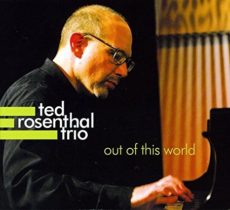
Ted Rosenthal was born on November 15, 1959 and raised in Great Neck, Long Island, New York. He began playing by ear at a young age, and started studying at 12 with Tony Aless, a sideman with Charlie Parker and Stan Getz. In high school, he studied briefly with Jaki Byard and Lennie Tristano, and attended workshops with Billy Taylor, Woody Shaw and others.
Finding limited opportunities to study jazz at the conservatory level, Ted found joy in in studying classical piano at the Manhattan School of Music. He received bachelor’s and master’s degrees in piano performance while continuing to pursue his love of jazz outside the classroom. After college, he continued his classical piano studies with Phillip Kawin while playing jazz in and around New York.
Rosenthal won the Thelonious Monk International Jazz Competition in 1988, launched his solo career, released his first CD as a leader New Tunes, New Traditions, with Ron Carter, Billy Higgins and Tom Harrell. The album interweaves Thelonious Monk songs with his original compositions. In the early 1990s with the last Gerry Mulligan Quartet, recording three CDs with Mulligan and performed in major jazz festivals throughout the world. After Mulligan’s death, Rosenthal became musical director of The Gerry Mulligan All Star Tribute Band, featuring Lee Konitz, Bob Brookmeyer and Randy Brecker. The group’s CD, Thank You, Gerry!, was nominated for a Grammy award in 1998.
As a sideman Ted has performed in small groups led by Art Farmer, Jon Faddis, Phil Woods, Jay Leonhart, Wynton Marsalis and the Lincoln Center Jazz Orchestra, the Carnegie Hall Jazz Band, the Westchester Jazz Orchestra, the Vanguard Jazz Orchestra, Lewis Nash, George Mraz, Bill Charlap, Dick Hyman, Helen Merrill, Mark Murphy and Ann Hampton Callaway, to name a few.
Pianist Ted Rosenthal, a recipient of 3 NEA grants, currently holds faculty positions at the Juilliard School and Manhattan School of Music in New York City, is a member of the Juilliard Jazz Quintet and continues to perform, record, compose and tour as a leader and sideman.

More Posts: piano
Daily Dose Of Jazz…
John LaBarbera was born November 10, 1945 in Mount Morris, New York and studied trumpet in his youth. During the late Sixties he worked with Buddy Rich but has performed and recorded with many big bands.
His career accomplishments to date include recording and/or performing with Woody Herman, Count Basie, Dizzy Gillespie, Sammy Davis, Jr., Mel Tormé, Chaka Khan, Harry James, Bill Watrous, the Glenn Miller Orchestra, Al Cohn, Bill Perkins, and Phil Woods.
A two-time recipient of the National Endowment For the Arts award for Jazz Composition, John is also an educator teaching jazz and music industry courses at the University of Louisville.
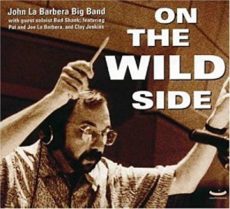
Leading his own big band, trumpeter and arranger John LaBarbera has released two CDs, On the Wild Side and Fantazm, the former of which was nominated for a Grammy award in 2004. He continues to educate, perform and arrange.

More Posts: trumpet
Daily Dose Of jazz…
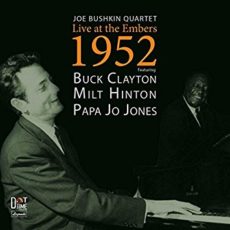
Joe Bushkin was born on November 7, 1916 in New York City and began his career playing trumpet and piano with New York City dance bands. He acquired a lot of experience performing with Frank LaMare’s Band at the Roseland Ballroom in Brooklyn, New York.
In 1935 he joined Bunny Berigan’s band, played with Eddie Condon from 1936 to 1937, and with Max Kaminsky and Joe Marsala, before rejoining Berigan in 1938. He then left to join Muggsy Spanier’s Ragtime Band in 1939. From the late Thirties through to the late 1940s he also recorded with Eddie Condon as well as performing on radio and television. After his World War II service he worked with Louis Armstrong, Bud Freeman and Benny Goodman.
Best-known for his composition Oh! Look at Me Now with John DeVries, composed when he was working in Tommy Dorsey’s band. The song would become Frank Sinatra’s first hit. In his 60s, Bushkin’s semi-retirement was ended by an offer from Bing Crosby for them to tour together in 1976 and 1977. He also appeared on Crosby’s 1975 Christmas TV special with Fred Astaire, performed in a concert series at New York’s St. Regis Hotel in 1984 that celebrated his 50 years in show business.
Pianist Joe Bushkin passed away in Santa Barbara, California on November 3, 2004, three days shy of his 88th birthday, which he had dreamed of celebrating the 88 piano keys.

More Posts: piano
Daily Dose Of Jazz…
Andy McGhee was born on November 3, 1927 in Wilmington, North Carolina. Graduating from the New England Conservatory in 1949 the saxophonist worked for a short time with trumpeter Roy Eldridge and local Boston musician Fat Man Robinson. After marrying in 1950, McGhee served in the Army in Korea and at Fort Dix, New Jersey where he played in an Army band and gave lessons to other musicians.
From 1957 to 1963 McGhee worked with Lionel Hampton’s band, touring the United States, Europe, and the Far East. During his tenure with Hampton, he composed the song, McGhee, that was recorded on The Many Sides of Lionel Hampton. He went on to work with Woody Herman from 1963 to 1966.
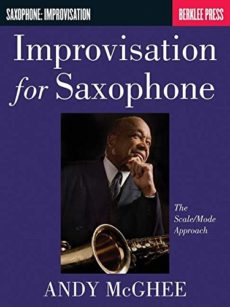
Joining the faculty of Berklee College of Music in 1966, Andy taught saxophonists Bill Pierce, Javon Jackson, Donald Harrison, Antonio Hart, Sam Newsome, Richie Cole, Greg Osby, and Ralph Moore. While devoting his time to teaching, McGhee wrote the instruction books Improvisation for Saxophone and Flute: The Scale/Mode Approach and Modal Strategies for Saxophone.
In the late Seventies he teamed again with Lionel Hampton and the Lionel Hampton Alumni Band as part of The Boston Globe Jazz Festival, performing with Bob Wilber, Ernie Wilkins, Teddy Wilson, Alan Dawson and Terri Lynne Carrington. and Hampton on vibraphone. The early 1990s, saw McGhee touring again with Lionel Hampton as member of the Golden Men of Jazz tour with Harry “Sweets” Edison, Clark Terry, Benny Bailey, Al Grey, and Benny Golson.
In 2006 he was awarded an Honorary Doctorate of Music from Berklee College of Music. On October 12, 2017, tenor saxophonist and educator Andy McGhee passed away at the age of 89.
More Posts: saxophone