

Daily Dose Of Jazz…
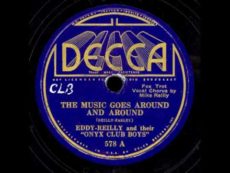
Eddie Farley was born on July 16, 1904 in Newark, New Jersey. He received his trumpet education at Sacred Heart and St. Benedict Prep School in Newark. After graduating he played in dance orchestras led by Bert Lown and his Hotel Biltmore Orchestra, an outfit he began playing with in the late ’20s for several years and with drummer Will Osborne in the early Thirties. By 1935 he organized his own orchestra with Mike Riley for his NBC radio program and his career was doing quite well around New York City in addition to touring the country.
He is best known for the mid ’30s hit The Music Goes ‘Round and Round”, and was the high point in the songwriting and bandleading partnership of Farley and Mike Riley. However the thrill of working together only lasted until 1936 and after firing their own respective combo cannonballs Eddie had success with it, adding his own pleasant vocals to the mix and holding down stints at ritzy venues such as the Midnight Club and Meadowbrooks.
Joining ASCAP in 1941, his chief musical collaborator was Mike Riley, and his other popular-song compositions include I’m Gonna Clap My Hands, There’s Something In the Wind and Looking for Love. The ’50s saw his group featured at the Ivanhoe Club in Irvington, New Jersey, Farley making his home within a short drive from the gig in Essex, New Jersey where the trumpeter, composer, vocalist, conductor, author and songwriter passed away in 1983.

Inspire A Young Mind

More Posts: trumpet
Daily Dose Of Jazz…
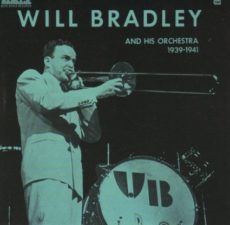
Will Bradley was born Wilbur Schwichtenberg on July 12, 1912 in Newton, New Jersey. He became one of the premier trombonists on the New York swing scene, and he often participated in jam sessions broadcast on The CBS Saturday Night Swing Club. In 1939 he and drummer Ray McKinley formed a big band with pianist Freddie Slack that became well known for boogie-woogie, with hit records Beat Me Daddy, Eight to the Bar and Scrub Me Mama with a Boogie Beat and Down the Road a Piece. The latter song was recorded with Bradley, Ray McKinley, Doc Goldberg, Freddie Slack, with guest vocals by songwriter Don Raye.
He was one of the first band-leaders in the 1940s to appear in Soundies, three-minute musical films made for coin-operated movie jukeboxes. Their wide distribution gave the band valuable exposure with drummer Ray McKinley doing most of the vocals. After McKinley left to form his own band, Bradley joined the United States Air Force, where he played in the Glenn Miller Air Force Band and he disbanded his group due to the problems of wartime. He would go on to record with Ruth Brown and Charlie Parker and he became a studio musician, playing for many years in the The Tonight Show Band during the Johnny Carson era.
He was the band-leader for the Summer Silver Theater on CBS radio in 1941, with Ed Sullivan as the show’s host. Trombonist and bandleader Will Bradley, known for swing, sweet dance music and boogie-woogie songs, passed away on July 15, 1989, three days after his 77th birthday.
Give The Gift Of Knowledge
More Posts: trombone
Daily Dose Of Jazz…
Roy Babbington was born July 8, 1940 in Kempston, Bedfordshire, England. He started his musical career in 1958, playing double bass in local jazz bands and at the age of 17 he took up the post of double bass, doubling on electric guitar with The Leslie Thorp Orchestra at the Aberdeen Beach Ballroom. While there he honed his sight reading skills and after a move to London in 1969, he joined the band Delivery, one of the side roots of the Canterbury scene with Phil Miller, Pip Pyle and Lol Coxhill.
Babbington began to work as a session musician with jazz/fusion musicians like Michael Gibbs and The Keith Tippett Group with Elton Dean. He was part of the recording session on their album Dedicated To You But You Weren’t Listening in 1970, Tippett’s big band project Centipede in ‘71 and Dean’s album Just Us. Post Delivery in 1971 after Carol Grimes’ album Fools Meeting, he joined the group Nucleus.
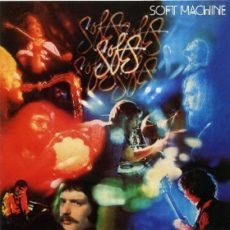
He would go on to perform and record with Alexis Korner, Harvey Andrews, Mike d’Abo, Chris Spedding and as a part time member of the bands Schunge, Solid Gold Cadillac, Ovary Lodge and Soft Machine. Remaining active on the UK jazz scene he played with Barbara Thompson’s Paraphernalia, Intercontinental Express, various bands led by pianist Stan Tracey and sat in on the album session Welcome to the Cruise by Judie Tzuke.
By the 1980s and 90s, Roy returned to his roots playing the double bass and pure jazz, so much, he became affectionately known by the musical community as the Jazz Handbrake. He also worked with Elvis Costello, Carol Grimes, Mose Allison and the BBC Big Band. Since 2008, bassist Roy Babbington, who has played big band and fusion jazz, continues to perform with Soft Machine Legacy, replacing Hugh Hopper as their electric bassist in 2009.
Sponsored By

Voices From The Community
More Posts: bass

Daily Dose Of Jazz…
Dick Kenney was born on July 6, 1920 in Albany, New York. He started playing the cello but it was as a trombonist that he got into the Toots Mondello band in the early 1940s. This initial step led to the big bands of Stan Kenton and Woody Herman.
A bandleader named Paul Villepigue brought the trombonist from Albany to New York City. In 1946 he played with Johnny Bothwell, and after two years Kenney headed for the West Coast and a return to college studies prior to hitting the big band big time.
His first gig was with Charlie Barnet and he recorded with Maynard Ferguson in 1952. Les Brown added the trombonist to his low brass section in 1957, and Dick having migrated to Brown’s New England stomping or rather foxtrotting, eased up after his Stan Kenton and Woody Herman experience.
Trombonist Dick Kenney worked with many of the big bands racking up a discography of some 100 sessions in which he is featured on. The most recent of which were tracked in the late Sixties but his list includes Stan Kenton’s visionary City of Glass as well as addresses from forgotten artists, a good example being the Bothwell collection Street of Dreams. The date of his passing is unknown at this time.
Inspire A Young Mind
preserving genius
More Posts: trombone

Daily Dose Of Jazz…
Seger Ellis was born on July 4, 1904 in Houston, Texas. He began his career as pianist playing live for a local Houston radio station KPRC in the early 1920s. In 1925 he was added to the orchestra of Lloyd Finlay for a “field trip” recording session for Victor Records and was also allowed to cut two piano solos.
The recordings led to Ellis being invited to Victor’s regular recording studio in Camden, New Jersey to cut a number of piano solos, all or most of them compositions of his own. These were among the earliest records Victor made using the new electric microphone and recording equipment, a technique that was yet not perfected which probably explains why only four of the titles were eventually issued. Of these the coupling Prairie Blues and Sentimental Blues became a minor hit.
After his first recording experiences Seger returned to Houston and radio work as well as playing in vaudeville theaters. During this period he started adding singing to his piano playing and was well received by audiences. In 1927 he was invited to New York to make vocal test recordings, his first issued vocal record was Sunday on the Columbia label. This was followed by a string of records for Okeh Records and he chose the best musicians to play with him such as Tommy and Jimmy Dorsey, Joe Venuti, Eddie Lang, Andy Sannella and Louis Armstrong.
His first recording career ended in 1931, however towards the end of the decade he returned with a big band of his own, the Choirs of Brass Orchestra with himself conducting and taking occasional vocals and featuring his wife, Irene Taylor as a vocalist. In 1939 Ellis reorganized and his new band featured the conventional four-man reed section but disbanded in 1941 and enlisted in the Army-Air Force in 1942.
A move back to Texas saw him being less active as a performer and more involved in songwriting. Many of compositions were recorded by Harry James, Gene Krupa, Bing Crosby, Count Basie and the Mills Brothers. Pianist and vocalist Seger Ellis gradually retired and took up residence in Houston where he passed away in a retirement home on September 29, 1995.
Dose A Day-Blues Away