


Daily Dose Of Jazz…
Rocco Scott LaFaro was born on April 3, 1936 in Irvington, New Jersey and grew up in Geneva, New York when his family moved there when he was five. His father played in many big bands and started him on the piano in elementary school. He switched to the bass clarinet in junior high school and the tenor saxophone in high school. It wasn’t until he was eighteen the summer before entering Ithaca College that he finally landed on the double bass.
During the early weeks of his sophomore year Scott joined Buddy Morrow and his big band, then left them in Los Angeles, California after a cross-country tour. Luck prevailed and he quickly found work and became known as one of the best of the young bassists. He studied under Red Mitchell who taught him how to pluck the strings with both the index and middle fingers independently. By 1958 he was spending much of the year in pianist/percussionist Victor Feldman’s band.
In 1959, after many gigs with Chet Baker, Stan Kenton, Cal Tjader, and Benny Goodman he moved back east and joined Bill Evans after his recent departure from Miles Davis. Along with Paul Motian and Evans that he developed and expanded the counter-melodic style that would come to characterize his playing. The trio committed to the idea of three equal voices in the trio, collectively working together organically towards a singular musical idea, often without the time being explicitly stated. LaFaro’s prodigious technique on bass made this concept possible.
By late 1960, LaFaro replaced Charlie Haden as Ornette Coleman’s bassist. In between gigs with Evans he played with Stan Getz and got a recruitment card of interest from Miles Davis. By summer they settled into the Village Vanguard in New York City for a two-week gig. The last day of the run, June 25, was recorded live in its entirely for eventual release as two albums, Sunday at the Village Vanguard and Waltz For Debby, both considered among the finest live jazz recordings of all time.
Double bassist Scott LaFaro passed away from an automobile accident on July 6, 1961 in Flint, New York four days after accompanying Stan Getz at the Newport Jazz Festival and ten days after the Village Vanguard recordings with the Bill Evans Trio.
Posthumously, in 2009, the University of North Texas Press published Jade Visions, a biography of Scott LaFaro by his sister Helene LaFaro-Fernandez. It includes an extensive discography of his recorded work. The same year Resonance Records released Pieces of Jade, the first album released featuring Scott as a bandleader. The album includes five selections recorded in New York City during 1961 that showcase LaFaro with pianist Don Friedman and drummer Pete LaRoca, as well as 22 minutes of LaFaro and Bill Evans practicing My Foolish Heart in late 1960 during a rehearsal.

Give The Gift Of Knowledge

More Posts: bass
Daily Dose Of Jazz…
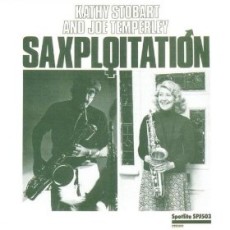
Kathy Stobart was born Florence Kathleen Stobart in the coastal town of South Shields, England on April 1, 1925. She first learned piano and alto saxophone as a child. After picking up her brother’s tenor saxophone and a month’s trial, she first played in Don Rico’s all-girl band at the age of 14 and then locally in Newcastle.
It wasn’t until her joining the Peter Fielding ballroom orchestra that her interest in jazz peaked. She met saxophonists Keith Bird and Derek Neville, who were then stationed at a local RAF camp. They bought her ten jazz records for my 17th birthday and Bird painstakingly took her through various harmonic exercises and saw to it that she succeeded him when he vacated a quartet job in London in late 1942.
Moving to London in the 1940s she began playing with Denis Rose, Ted Heath and Jimmy Skidmore. Later in the decade Stobart played with Art Pepper and Peanuts Hucko. Before the end of the Forties she played with and had a brief marriage with Art Thompson.
She toured with Vic Lewis in 1949 and led her own group in early 1950s, among its members was Derek Humble, Dill Jones and Bert Courtley, whom she married in 1951 until his death in 1969. Throughout the 1950s and 60s Kathy went into semiretirement to raise her family.
Returning to performing, from 1969 to 1977 she played with Humphrey Lyttelton. Following this she led her own groups, with Harry Beckett, John Burch and Lennie Best among others. Aside from this she played with Johnny Griffin, Al Haig, Earl Hines, Buddy Tate, Zoot Sims, Marian McPartland and Dick Hyman.
From 1992 she was paying with Lyttelton again adding flute, clarinet and baritone saxophone to her arsenal of instruments. Tenor saxophonist Kathy Stobart, who held lengthy teaching assignments at City Literature Institute in London, passed away on July 5, 2014.
Uplift Someone’s World
Daily Dose Of Jazz…
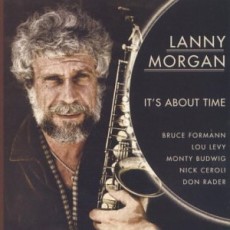
Lanny Morgan was born March 30, 1934 in Des Moines, Iowa and raised in Los Angeles, California. In the 1950s he played with Charlie Barnet, Si Zentner, Terry Gibbs and Bob Florence.
He did a stint in the U.S. military and had to turn down an offer to play in the Stan Kenton orchestra. From 1960-65 he played in Maynard Ferguson’s orchestra after a few years in New York City Morgan returned to Los Angeles in 1969. There he did frequent studio work, performed sessions with Nancy Sinatra and Carmen McRae,
He was a member of Supersax and played in the big bands of Bill Berry, Bob Florence and Bill Holman. Alto saxophonist Lanny Morgan has chiefly been active on the West Coast jazz scene.
Jazz Is Global – Share
More Posts: saxophone
Daily Dose Of Jazz…
Sidney Arodin was born in Westwego, Louisiana on March 29, 1901. He went by Sidney Arnandan, Arnondrin or Arnondin. He began playing clarinet at age 15 and played local New Orleans gatherings and on the riverboats. He made his way to New York City in the early Twenties and played with Johnny Stein’s New Orleans Jazz Band from 1922.
He performed with Jimmy Durante in the middle of the decade, then returned to Louisiana to play with Wingy Manone and Sharkey Bonano. During the 1930s he worked with Louis Prima and with a reconstituted version of the New Orleans Rhythm Kings, featuring Manone.
By 1941, Arodin’s poor health prevented him from playing frequently live, but before this time he recorded with Johnnie Miller, Albert Brunies, Monk Hazel and the Jones-Collins Astoria Hot Eight. Many of his performances are mistakenly credited on original recordings to Charlie Cordella.
Clarinetist and composer Sidney Arodin, who co-wrote the standard Lazy River with Hoagy Carmichael, passed away in New Orleans, Louisiana on February 6, 1948.
Give A Gift Of Jazz – Share
More Posts: clarinet
Daily Dose Of Jazz…
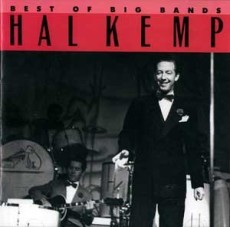
James Hal Kemp was born March 27, 1904 in Marion, Alabama. He studied and learned to play the saxophone and clarinet and while at the University of North Carolina at Chapel Hill he formed his own campus jazz group, the Carolina Club Orchestra. They recorded for English Columbia and Perfect/Pathé Records in 1924 and toured Europe that same summer under the sponsorship of bandleader Paul Specht.
Kemp returned to UNC in 1925 and put together a new edition of the Carolina Club Orchestra, featuring classmates and future stars John Scott Trotter, Saxie Dowell and Skinnay Ennis. By 1927 he turned professional and turned over the orchestra to Kay Kyser.
Basing his band in New York City, Hal’s group included Trotter, Dowell, and Ennis, and later joined by trumpeters Bunny Berigan and Jack Purvis. The sound was 1920s collegiate jazz and in the Thirties he toured Europe again and recorded regularly for Brunswick, English Duophone, Okeh and Melotone record labels.
During the height of the Depression in 1932 Kemp changed the orchestra’s style to a dance band. He incorporated an early version of the echo effect using large megaphones for the clarinets, muted trumpets and a double-octave piano. Vocalists with the band during the 1930s included Ennis, Dowell, Bob Allen, Deane Janis, Maxine Gray, Judy Starr, Nan Wynn and Janet Blair.
Hal’s band was one of the most popular bands in the 1930s and was often featured performing on NBC and CBS radio shows. The band also appeared in numerous motion-picture short subjects and was featured in the 1938 RKO film Radio City Revels. He had hits with There’s A Small Hotel, Lamplight, I Got A Date With An Angel, You’re The Top, Lullaby Of Broadway and Where or When.
On December 19, 1940, alto saxophonist, clarinetist, bandleader, composer and arranger Hal Kemp while driving from Los Angeles to a booking in San Francisco, his car collided head-on with a truck. Breaking a leg and several ribs, one of which punctured a lung, he developed pneumonia while in the hospital and died two days later in Madera, California. He was inducted into the Big Band and Jazz hall of Fame in 1992.
Dose A Day-Blues Away