

Daily Dose Of Jazz…
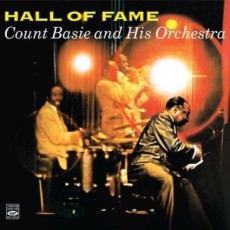
Sonny Payne was born on May 4, 1926 in New York City. His father was Wild Bill Davis’ drummer Chris Columbus. After early study with Vic Berton, in 1944 he started playing professionally around New York with the Dud and Paul Bascomb band, Hot Lips Page, Earl Bostic, Tiny Grimes and Lucille Dixon through the decade.
From 1950 to 1953, Payne played with Erskine Hawkins’ big band and led his own band for two years, but in late 1954 he made his most significant move, joining Count Basie’s band for more than ten years of constant touring and recording. He recorded Counting Five In Sweden with Joe Newman in 1958 on the Metronome label..
Leaving Basie in 1965, he again led his own trio and toured with Illinois Jacquet in 1976. He went Frank Sinatra’s personal drummer for all of the singer’s appearances with the Count Basie Orchestra in 1965 and 1966, and he later rejoined Basie as the regular drummer from 1973–1974. Most of the rest of his career, however, was spent in the Harry James band, which he joined in 1966, and with whom he was working when he passed away of pneumonia at the age of 52 on January 29, 1979 in Los Angeles, California. Harry James paid all of his medical bills and subsequent funeral costs.

Uplift Someone’s World

More Posts: drums
Daily Dose Of Jazz…
Duke Ellington was born Edward Kennedy Ellington on April 29, 1899 in Washington, D.C. to parents who were pianists with his mother primarily playing parlor songs and his father preferring operatic arias. At the age of seven, he began taking piano lessons from Marietta Clinkscales. Surrounded by dignified women who reinforced his manners and taught him to live elegantly, his childhood friends noticed that his casual, offhand manner, easy grace and dapper dress and began calling him “Duke”.
Though Ellington took piano lessons, he was more interested in baseball. Ellington went to Armstrong Technical High School in Washington, D.C. and his first job was selling peanuts at the Washington Senators baseball games. Sneaking into Frank Holiday’s Poolroom at the age of fourteen and hearing the poolroom pianists play ignited Duke’s love for the instrument, and he began to take his piano studies seriously. But in the summer of 1914, while working as a soda jerk at the Poodle Dog Cafe he wrote his first composition, Soda Fountain Rag, created by ear, as he had not yet learned to read and write music.
He took private lessons in harmony from Dunbar High School music teacher Henry Lee Grant and with guidance of pianist and bandleader Oliver “Doc” Perry, he learned to read sheet music, project a professional style, and improve his technique. He was equally inspired by his encounters with James P. Johnson, Lukey Roberts, Will Marion Cook, Fats Waller and Sidney Bechet.
Playing gigs in cafés and clubs around D.C. and working as a freelance sign-painter, in 1917 Ellington began assembling groups to play for dances beginning with The Duke Serenaders. His group ventured to Harlem joining Wilber Sweatman’s orchestra, becoming a part of the Renaissance. Striking out on their own they hit roadblocks and though Willie “The Lion” Smith introduced them to the scene and gave them some money, they ultimately returned to D.C. discouraged.
A 1923 gig in Atlantic City, New Jersey led to the prestigious Exclusive Club in Harlem, followed by the Hollywood Club and a four-year engagement, giving Ellington a solid artistic base. He would go on to lead The Washingtonians, record eight records, contribute four songs to the 1925 all-Black revue Chocolate Kiddies starring Lottie Gee and Adelaide Hall, and struck an agreement of 45% interest in his future with agent-publisher Irving Mills. He would record on nearly every label at the time giving him popular recognition.
In 1927 he began his engagement at the Cotton Club receiving national attention from weekly radio broadcasts from the club gave Ellington national exposure. He gained worldwide recognition with Adelaide Hall on Creole Love Call and Black and Tan composed by Bubber Miley. He would go on to play for Florenz Ziegfeld, compose music for film scores, hire Ivie Anderson and create hits It Don’t Mean A Thing If It Ain’t Got That Swing, Mood Indigo, Sophisticated Lady, Solitude and In A Sentimental Mood.
By the 1930s as the Depression worsened, Duke was still able to produce music and continue a high profile with his radio broadcasts. He had hits like Caravan and I Let a Song Go Out of My Heart. His short film Symphony In Black introduced Billie Holiday on A Rhapsody of Negro Life, winning an Academy Award for Best Musical Short Subject.
In 1939 he began his association with Billy Strayhorn and the stage turned up again with more great music collaborations, such as Take The “A” Train. Among the musicians in Duke’s orchestra at one time or another were Ben Webster, Cootie Williams, Ray Nance, Johnny Hodges, Jimmy Blanton, Herb Jeffries, Al Hibbler, Mary Lou Williams, Sonny Greer, Clark Terry, Louie Bellson, and many others to numerous to mention here.
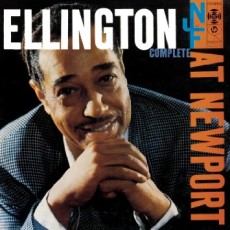
Ellington’s appearance at the Newport Jazz Festival on July 7, 1956 returned him to wider prominence and introduced him to a new generation of fans with Paul Gonsalves’ 27-chorus marathon solo, culminating in an album release.
Over the next two decades Duke continued to tour, compose and record, have statues erected, schools , streets, parks, buildings and bridges named for him, and a coin and a stamp honoring him. He has an annual competition, The Essentially Ellington High School Jazz Competition and Festival at Jazz At Lincoln Center, has a star on the Hollywood Walk of Stars, was awarded a special Pulitzer Prize, received a Presidential Medal of Freedom, a Grammy Lifetime Achievement Award, Legion Of Honor from France, won 12 Grammy Awards, and has nine songs inducted into the Grammy Hall of Fame among too many to list.
Pianist, bandleader and composer Duke Ellington, who composed to the very last days of his life and never came off the road, passed away on May 24, 1974 of complications from lung cancer and pneumonia, a few weeks after his 75th birthday.
Take A Dose On The Road
More Posts: piano
Daily Dose Of Jazz…
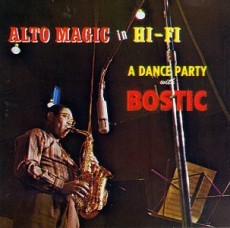
Earl Bostic was born in Tulsa, Oklahoma on April 25, 1912. He turned professional at the age of 18 when he joined Terence Holder’s Twelve Clouds of Joy. He then performed on the riverboats of New Orleans with Frank Marable before graduating from Xavier University.
He worked with territory bands as well as with Arnett Cobb, Hot Lips Page, Rex Stewart, Don Byas, Charlie Christian, Thelonious Monk, Edgar Hayes, Cab Calloway and others His first recording session was with Lionel Hampton in 1939 along with Charlie Christian, Clyde Hart and Big Sid Catlett. In 1938, and again in 1944, Earl led the house band at Smalls Paradise and while there he doubled on guitar and trumpet. During the early 1940s, he was a well-respected regular at the famous jam sessions held at Minton’s Playhouse.
Forming his own band in 1945, Bostic made his first recordings as a leader on the Majestic label. In the late Forties turned to rhythm and blues and had his biggest hits with Temptation, Sleep, You Go To My Head, Cherokee and his signature hit Flamingo. At various times his band included Keter Betts, Jaki Byard, Benny Carter, John Coltrane, Teddy Edwards, Benny Golson, Blue Mitchell, Tony Scott, Cliff Smalls, Sir Charles Thompson, Stanley Turrentine, Tommy Turrentine and others who rose to prominence in jazz.
He would go on to record Jazz As I Feel It with Shelly Manne, Joe Pass and Richard “Groove” Holmes. He wrote arrangements for Paul Whiteman, Louis Prima, Lionel Hampton, Gene Krupa, Artie Shaw, Hot Lips Page, Jack Teagarden, Ina Rey Hutton and Alvino Rey. His songwriting hits include Let Me Off Uptown that was performed by Anita O’Day and Roy Eldridge, and Brooklyn Boogie, which featured Louis Prima and members of the Booklyn Dodgers.
During the early 1950s Earl lived in Addisleigh Park in St. Albans, Queens before moving to Los Angeles, California where he opened his club, the Flying Fox. Suffering a heart attack he concentrated on writing arrangements. Alto saxophonist Earl Bostic, whose recording career encompassed small group swing-based jazz, big band jazz, jump blues, organ-based combos and a string of commercial successes, passed away October 28, 1965 from a heart attack while performing with his band in Rochester, New York. He was inducted into the Oklahoma Jazz Hal of Fame in 1993.
Uplift Someone’s World
More Posts: saxophone
Daily Dose Of Jazz…
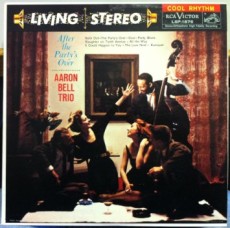
Aaron Bell was born Samuel Aaron Bell on April 24, 1921 in Muskogee, Oklahoma. As a child, he played piano and went on to learn brass instruments in high school. He attended Xavier University where he began playing bass, graduating in 1942 and joining the Navy until 1946.
After his discharge he became a member of Andy Kirk’s band and the next year enrolled at New York University to complete his Master’s degree. Aaron then joined Lucky Millinder’s band followed by gigging with Teddy Wilson.
During the 1950s, Bell appeared on Billie Holiday’s album Lady Sings The Blues and recorded with Lester Young, Stan Kenton, Johnny Hodges, Cab Calloway, Carmen McRae and Dick Hyman. Leaving Haymes in 1960 he took a chair opposite drummer Sam Woodyard in the Duke Ellington Orchestra.
He left Ellington in 1962 to spend time with Dizzy Gillespie before taking pit musician jobs on Broadway. He also recorded with Johnny Griffin, Sonny Stitt and Randy Weson as well as recording as a leader. Bell and Ellington collaborated once more in 1967, on a tribute to Billy Strayhorn. He held a residence at the La MaMa Experimental Theatre Club in New York City from 1969 to 1972.
Aaron was also an educator and began teaching at Essex College in Newark, New Jersey in 1970, remaining there until 1990. During this period he also toured with Norris Tumey, Harold Ashby and Cat Anderson. In the 1980s he returned to piano playing, and retired from active performance in 1989. Double bassist Aaron Bell passed away on July 28, 2003.
Jazz Is Global – Share
;
More Posts: bass
Daily Dose Of Jazz…
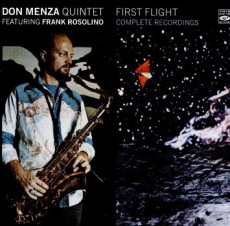
Don Menza was born on April 22, 1936 and raised in Buffalo, New York where he began playing tenor saxophone when he was 13. He studied with musician and teacher John Sedola.
After serving in the U. S. Army, Menza went to work in 1960 with the Maynard Jackson Orchestra for two years as both a soloist and an arranger. A short tenure with Stan Kenton and a year leading a quintet in Buffalo preceded a four-year period living in Germany (1964–68).
Later, he returned to the United States and joined Buddy Rich’s 1968 big band in the jazz tenor chair, recording the famous solo cadenza on Channel One Suite live at Caesar’s Palace in Las Vegas, Nevada. His utilization circular breathing during that performance has become known as a classic among music educators and musicians alike.
In the late 1960s, Don settled in California and performed with Elvin Jones and Louie Bellson. He also recorded with Keely Smith, Natalie Cole, Nancy Sinatra, Cold Blood, Pat Boone and Leonard Cohen.
Menza’s compositions, specifically Groovin’ Hard and Time Check have become standard repertoire in jazz studies programs at colleges and universities worldwide. He continues to be a prolific sideman and has recorded as a leader In addition to numerous recordings as a sideman Menza has recorded as a leader for Saba, Discwasher, Realtime, Palo Alto and Verve, working with John Klemmer, Carmen McRae, Lalo Schifrin, Bobby Shew, Lanny Morgan, Les Demerle, Frank Strazzeri, Don Rader, SWR Big Band and his own big band.
In 2005 Don Menza was inducted into the Buffalo Music Hall of Fame. He continues to perform, record and tour.
Inspire A Young Mind
More Posts: saxophone