

Daily Dose Of Jazz…
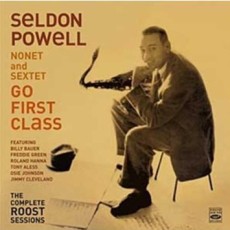
Seldon Powell was born on November 15, 1928 in Lawrenceville, Virginia. A classically trained saxophonist and flautist who studied at Juilliard in New York City, he went on to work briefly with Tab Smith in 1949 before joining and recording with Lucky Millinder the following year. For the next two years he would spend in the military and upon discharge became a studio musician.
A solid musician with the ability to move between genres from big band to hard bop to soul jazz and R&B, over a forty year career he would record four albums as a leader between 1956 and 1973 and another 60 album sessions as a sideman with Clark Terry, Johnny Hammond Smith, Buddy Rich, Louis Bellson, Neal Hefti, Billy Ver Planck, Sy Oliver,, Erskine Hawkins, Ahmed Abdul-Malik, Richard “Groove” Holmes, Gato Barbieri, Dizzy Gillespie, Gerry Mulligan,Benny Goodman, Woody Herman, roland Hana, Osie Johnson, Freddie Green, Gus Johnson, Sonny Stitt, Friedrich Gulda, Art Farmer, Cal Tjader, Billy Taylor, Ernie Wilkins, Panama Francis, Teri Thornton, Jimmy Forrest, Charlie Byrd, Oliver Nelson and the list goes on.
He recorded for Epic, Roost, Savoy, RCA, United Artists, Lion, Riverside, EmArcy, Golden Crest, Candid, ABC, New Jazz, Impulse, Solid State, Verve, 20th Century, Atlantic, and Sesac record labels. Tenor saxophonist and flautist who concentrated in the swing, progressive and soul jazz, big band and rhythm & blues genres passed away on January 25, 1997 in Hempstead, New York.

Jazz Is Global – Share
Daily Dose Of Jazz…
Lynn Baker was born Malcolm Lynn Baker on November 9, 1955 in Salem, Oregon. When he was seven he started taking piano lessons and by the fifth grade was in band class and in sixth grade his mother bought him a tenor saxophone but didn’t practice much until he got in junior high. It was there that he soon took first chair and held it throughout his high school years.
By 1973 Baker was attending Oregon College of Education but in his sophomore year transferred to the University of Oregon seeking a better jazz program without success. However it offered him the opportunity to play with a young John Zorn, which would have a powerful impact on his music aesthetic. Eventually he would transfer to Western Oregon University, Mt. Hood Community College and finally transferring back to and graduating from Oregon College of Education.
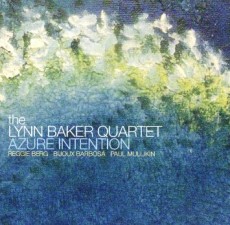
He joined a local Top 40 band led by Ricky Santos for a while, then moved to Eugene, Oregon and joined the Experimental Jazz Ensemble followed by gigs playing with dance bands and a rock/Latin fusion band. An award winning composer, performer and educator Lynn released his debut album Azure Intention in 2010 on the Origin Records label. His sophomore project LectroCoustic followed three years later.
As an educator Baker has taught at Indian University and Carleton College and is currently the director of jazz studies and Commercial Music Program at the Lamont School of Music, University of Denver, directs the Lamont Jazz Orchestra, coaches combos and teaches jazz improvisation and composition, jazz history and jazz technique. Tenor saxophonist Lynn Baker continues to perform in between his teaching duties.
Put A Dose In Your Pocket
More Posts: saxophone
Daily Dose Of Jazz…
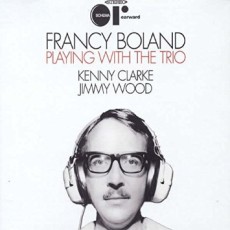
François Boland was born on November 6, 1929 in Namur, Belgium. He was classically trained on piano and first gained notice in 1949 working with Belgian jazz greats like Bobby Jaspar and in 1955 he joined Chet Baker’s quintet.
A move to the United States saw Boland arranging for Count Basie, Benny Goodman, Woody Herman and Dizzy Gillespie. He formed an octet with drummer Kenny Clarke before returning to Europe and becoming Kurt Edelhagen’s chief arranger. In 1961, building from a rhythm section featuring Clarke, Jimmy Woods and himself, he founded the Kenny Clarke Francy Boland Big Band, which rapidly became one of the most noted big bands assembled outside the United States.
Some of band’s collaborators and members over the years included Johnny griffin, Art Farmer, Phil Woods, Ake Persson, Dusko Goykovich, Eddie “Lockjaw” Davis, Muvaffak “Maffy” Falay, Idrees Sulieman, Herb Geller, Benny Bailey and Jimmy Wooden, among others.
After the band broke up in 1972 he concentrated on composing. From 1976 on Francy lived in Europe, primarily Switzerland, arranging music for Sarah Vaughan and others. He was a part of One World, One Peace, an effort that involved Pope John Paul II.
Belgian jazz composer and pianist Francy Boland passed away in Geneva, Switzerland on August 12, 2005.
Inspire A Young Mind
More Posts: piano
Daily Dose Of Jazz…
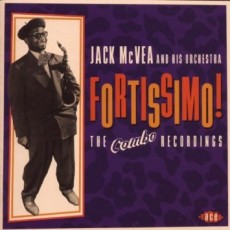
Jack McVea was born in Los Angeles, California on November 5, 1914. His first instrument was a banjo, learning from his father Satchel, who was a noted banjoist. After playing jazz in Los Angeles for several years, he joined Lionel Hampton’s orchestra in 1940. From 1944 on he mostly worked as a leader, but impressively performed as a sideman in those years was at the first Jazz at the Philharmonic concert in 1944.
McVea was leader of the Black & White Records studio band and was responsible for coming up with the musical riff for the words Open the Door, Richard and Ralph Bass got him to record it in 1946. It became immensely popular, entering the national charts the following year, and was recorded by many other artists.
From 1966 till his retirement in 1992 he led a group that played Dixieland jazz in New Orleans Square at Disneyland, called The Royal Street Bachelors. When formed, the trio consisted of McVea on clarinet, Herman Mitchell on banjo, and Ernie McLean on guitar and banjo.
In 1945 he played tenor saxophone in a recording session for Slim Gaillard alongside Charlie Parker and Dizzy Gillespie. He is also known for his playing on T-Bone Walker’s Call It Stormy Monday (But Tuesday Is Just As Bad, and has performed and recorded with B. B. King.
Tenor and baritone saxophonist Jack McVea, who also played clarinet in the swing, blues and rhythm and blues genres, passed away on December 27, 2000. He was 86.
Dose A Day – Blues Away
Daily Dose Of Jazz…
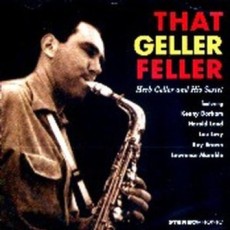
Herb Geller was born Herbert Arnold Geller on November 2, 1928 in Los Angeles, California. His initial exposure to was from his mother who played piano accompanying silent films at a Hollywood theater. At the age of 8, he was presented with an alto saxophone and two years later started clarinet. He went to Dorsey High School, joined the school band with Eric Dolphy and Vi Redd. At the age of 14, after hearing Benny Carter live in performance, he decided to pursue a career a music career playing his original instrument of study.
By age sixteen Geller had his first professional engagement in the band of jazz violinist Joe Venuti. A short time later he discovered Charlie Parker and Johnny Hodges and along with Carter became important idols for him. A move to New York City in 1949 saw him performing in the bands of Jack Fina with Paul Desmond, Claude Thornhill, Jerry Wald and Lucky Millinder. It was during this time he met hi future wife and musical partner Lorraine Walsh.
After three years in New York, Herb joined the Billy May orchestra in 1952 and, following an engagement in Los Angeles, returned there to live. He worked and recorded with Shorty Rogers, Maynard Ferguson, Bill Holman, Shelly Manne, Marty Paich, Barney Kessell, Andre Previn, Quincy Jones, Wardell Gray, Jack Sheldon, and Chet Baker. He recorded three album as a leader for Emarcy plus some with Dinah Washington, Max Roach, Clifford Brown, Clark Terry, and Kenny Drew.
In 1955 he won the “New Star Award” from Down Beat Magazine, worked in the bands of Louis Bellson and Benny Goodman, played bossa nova in Beazil and sailed to Europe and played in Paris with Kenny Clarke, Kenny Drew, Martial Solal, Rene Thomas and toured with a French radio show, Musique Aux Champs-Elysées. He would go on to work with the RIAS Big Band in Berlin, play lead alto and arrange for the NDR Big Band in Hamburg and for twenty0eight years made the city his home. During this period her performed with Don Byas, Joe Pass, Sloide Hampton, Bill Evans, Red Mitchell, Art Farmer, Georgie Fame, Ray Charles, Ella Fitzgerald, Baden Powell, Peter Herbolzheimer and George Gruntz.
He composed for two musicals Playing Jazz, a musical autobiography and Josie B, based upon the life of Josephine Baker, taught at the Hochschule fur Muzik, and wrote a method of improvisation called crossover, was knighted, and awarded the Louis Armstrong Gedachtnispreis. Alto saxophonist Herb Geller who also played clarinet, flute, oboe, English horn and passed away of pneumonia in a hospital in Hamburg, Germany, aged 85, on December 19, 2013.
Put A Dose In Your Pocket
More Posts: english horn,flute,saxophone