


Daily Dose Of Jazz…
Sy Oliver was born Melvin James Oliver on December 17, 1910 in Battle Creek, Michigan. His mother was a piano teacher and his father was a multi-instrumentalist who made a name for himself demonstrating saxophones at a time that instrument was little used outside of marching bands. Showing a proclivity for singing as a child, he also learned to lay trumpet during these formative years.
Oliver left home at 17 to play with Zack Whyte and his Chocolate Beau Brummels and later with Alphonse Trent. He sang and played trumpet with these bands, becoming known for his “growling” horn playing. In 1933, he joined the Jimmie Lunceford band, contributing many hit arrangements for the band, including My Blue Heaven and Ain’t She Sweet as well as his original composition For Dancers Only which in time became the band’s theme song.
By 1939 Sy became one of the first Black musician with a prominent role in a white band when he joined Tommy Dorsey as an arranger, though he ceased playing trumpet at that time. He led the transition of the Dorsey band from Dixieland to modern big band. His joining was instrumental in Buddy Rich’s decision to join Dorsey. His arrangement of On The Sunny side Of The Street, Yes Indeed!, Opus One, The Minor Is Muggin’ and Well, Git It were big hits for Dorsey,
After leaving Dorsey, Oliver continued working as a freelance arranger and as music director for Decca Records. One of his more successful efforts as an arranger was the Frank Sinatra album I Remember Tommy, a combined tribute to their former boss.
In 1950 the Sy Oliver Orchestra released the first American version of C’est Si Bon with the interpretation of Louis Armstrong to worldwide success. In his later years, up until 1980, he reformed his own big and small bands, with which he also played his trumpet again after having set it aside so many years earlier.
He arranged and conducted many songs for Ella Fitzgerald during her Decca years. As a composer, one of his most famous songs was T’ain’t What You Do (It’s The Way You Do It, which he co-wrote with Trummy Young. On May 28, 1988 arranger, composer, bandleader, trumpeter and singer Sy Oliver passed away in New York City. He was 77.

Jazz Is Global – Share
Daily Dose Of Jazz…
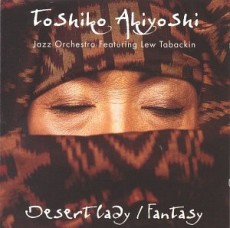
Toshiko Akiyoshi was born 12 December 1929 in Liaoyang, Manchuria in the Republic of China to Japanese emigrants. Losing their home after WWII her family returned to Japan where a local record collector introduced her to jazz through Teddy Wilson playing Sweet Lorraine. Immediately loving the sound she began to study jazz
In 1952, during a tour of Japan, pianist Oscar Peterson discovered Akiyoshi playing in a club on the Ginza. So impressed he convinced record producer Norman Granz to record her and in 1953 she dropped her debut album with the Peterson rhythm section, bassist Ray Brown and drummer J.C. Heard. The album was released as Toshiko’s Piano in the U.S. and as Amazing Toshiko Akiyoshi in Japan.
Toshiko went on to study at Berklee School of Music under a full scholarship and in 1956 she became the first Japanese student to attend. She married saxophonist Charlie Mariano in ’59, had a daughter, divorced in ’67, married Lew Tabackin in ’69 and moved to Los Angeles, California in ‘72. Tgether they formed the a 16-piece big band comprised of studio musicians. She composed and arranged the music and he was featured soloist on sax and flute, recording their first album Kogun in 1974. With commercial success in Japan the band began receiving critical acclaim.
Moving to New York City in 1982, a new big band was assembled called the Toshiko Akiyoshi Jazz Orchestra featuring Lew Tabackin. Though BMG released her big band projects in Japan, to her dismay she could never get distribution in the States and after several decades she disbanded the band after the final concert of a seven year run at Birdland in New York City.
Over the course of a fifty year career since her debut recording for Granz in 1954, pianist, composer and arranger Toshiko Akiyoshi has recorded continuously – almost exclusively as a leader of small jazz combos and of her big bands – averaging one studio album release per year for well over 50 years. She has been honored as an NEA Jazz Master, been named a winner in Down Beat Magazine Critic and Reader Polls for album, big band, arranger and composer, and has been nominated for several Grammy awards among other accolades. She continues to compose, arrange, record and perform.
Give The Gift Of Knowledge
More Posts: piano
Daily Dose Of Jazz…
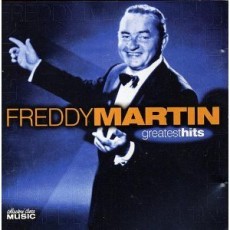
Freddy Martin was born Frederick Alfred Martin on December 9, 1906 in Cleveland, Ohio and was raised mostly in an orphanage and by various relatives. He started out playing drums, then switched to C-melody saxophone, finally landing on the tenor saxophone.
Martin led his own band while he was in high school, then played in various local bands. Earning enough money through music to enter Ohio State University, he opted to perform and wound up becoming an accomplished musician. After working on a ship’s band, he joined the Mason-Dixon band, then joined Arnold Johnson and Jack Albin, with whom he made his first recordings in 1930.
Freddy’s career got started when he filled in one night for a date Guy Lombardo couldn’t make. Though the band did well, it broke up and he didn’t put another together until 1931 at the Bossert Hotel in Brooklyn, New York. Here he pioneered the “Tenor Band” style that swept the sweet-music industry and spawned imitators in hotels and ballrooms nationwide.
He would go on to make his debut for Columbia Records in 1932, then record for Brunswick, Bluebird, and Victor Record labels. He would play NBC radio’s Maybelline Penthouse Serenade and have his million copies gold record hit Tonight We Love with Clyde Rogers on vocals. Martin recorded A Lover’s Concerto two decades before The Toys made it popular as a R&B hit, as well as many other classical pieces were arranged for his jazz band.
Nicknamed “Mr. Silvertone” by saxophonist Johnny Hodges, Chu Berry named him his favorite saxophonist, and so did Eddie Miller. He had a good ear for singers and at one time or another employed Merv Griffin, Buddy Clark and Helen Ward. His popularity led him to Las Vegas, Hollywood performing in a handful of movies, while still playing hotels, radio and a tour of one-nighters called The Big Band Cavalcade.
Returning to California he would lead Guy Lombardo’s band when he was hospitalized and led his own band until the early 1980s, although by then, he was semi-retired. Tenor saxophonist and bandleader Freddy Martin passed away at age 76 on September 30, 1983, in a Newport Beach hospital after a lingering illness.
Put A Dose In Your Pocket
More Posts: saxophone

Daily Dose Of Jazz…
Dr. Michael White was born on November 29, 1954 in New Orleans, Louisiana. He is a classically trained clarinetist who began his jazz musical career as a teenager playing for Doc Paulin’s Brass Band in New Orleans. He was a member of an incarnation of the Fairview Baptist Church Marching Band.
Kid Sheik Colar, discovered him after hearing him onstage performing in Jackson Square in the French Quarter. He began working with the musician regularly following the encounter. A staunch jazz traditionalist, he can be heard on Wynton Marsalis’s 1989 album The Majesty of the Blues. Wynton also appears on White’s 1990 album titled “Crescent City Serenade”, along with Wendell Brunious and Walter Payton.
Michael has led several bands in the New Orleans area, and has accompanied various artists on other recording projects. Since 1979 he has played in the Young Tuxedo Brass Band. During the 1980s he led a band called The New Orleans Hot Seven.
In 1981, White founded The Original Liberty Jazz Band with the express intent of preserving the musical heritage of New Orleans. They perform an end-of-year concert at the Village Vanguard every year since the early 1990s, and in 2006 with former Presidents George H. W. Bush and Bill Clinton in attendance they performed at Tulane University commencement.
Putting on his education cap Michael is also a college professor who formerly taught Spanish, now teaches African-American Music at Xavier University, holds the Rosa and Charles Keller Endowed Chair in the Humanities of New Orleans Music and Culture. As a continuing component of his performances he also serves as guest director at several Jazz at Lincoln Center concerts relating to traditional New Orleans jazz.
Give A Gift Of Jazz – Share
More Posts: clarinet
Daily Dose Of Jazz…
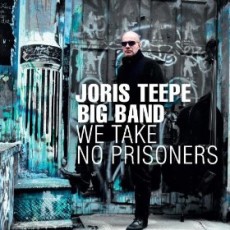
Joris Teepe was born in the Hague, Netherlands on November 27, 1962. He studied the bass at the Conservatory of Amsterdam and in 1992 the left-handed bassist moved to New York City. He recorded his debut album as a leader the following year, with co-leader tenor saxophonist Don Braden, trumpeter Tom Harrell, pianist Cyrus Chestnut and Carl Allen on drums.
A second album was released in 1996 followed by his playing and recording with the Intercontinental Jazz Trio, with Shingo Okudaira and Tim Armacost, with Randy Brecker and Chris Potter and groups that almost always included Don Braden.
In the past years he started working with larger big bands like the Groningen Art Ensemble, Brian Lynch and trombonist Conrad Herwig, and the Joris Teepe Big Band. He composes, plays and records are original compositions, but also arranges other people’s material, such as Duke Ellington, Billy Strayhorn and John Coltrane and has written for larger ensembles and symphonic orchestras.
Teepe has collaborated with Joey Berkley, Ron Jackson, Darrell Grant, Antonio Ciacca, Mathilde Santing, Deborah Brown, and Fay Claassen. Active in jazz-education heading up the jazz department at the Prins Claus Conservatory in Groningen, teaches bass at the New Jersey Performing Arts Center and continues to compose, arrange, perform, record and tour.
Inspire A Young Mind
More Posts: bass