

Daily Dose Of Jazz…
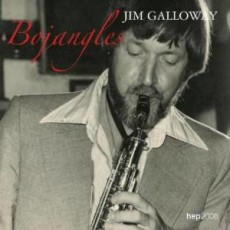
Jim Galloway was born James Braidie Galloway in Kilwinning, Ayrshire, Scotland on July 28, 1936. Since emigrating from Scotland in the mid-1960s he had based his career in Canada.
Galloway recorded several albums as a leader and in the late 1970s formed an ensemble, the Wee Big Band. One of his many albums, Walking On Air, was nominated for Best Jazz Album at the 1980 Juno Awards.
He was the artistic director of the Toronto Jazz Festival from 1987 to 2009. In 2002 Jim was honored when made a Chevalier of the French Ordre des Arts et des Lettres. His musical performances continue to be listed on the Toronto Jazz Festival website.
Bandleader, songwriter, clarinet and saxophone player Jim Galloway died in palliative care in Toronto, Ontario, Canada on December 30, 2014.

Give The Gift Of Knowledge
Daily Dose Of Jazz…
Patti Bown was born on July 26, 1931 in Seattle, Washington and began playing piano at age two. She studied piano while attending the university in Seattle and played in local orchestras toward the end of the 1940s. From 1956 she moved to New York and worked as a soloist, playing early on in sessions with Billy Eckstine and Jimmy Rushing.
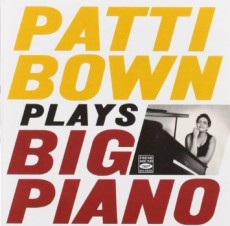
Bowen released one album in 1958 as a leader titled Patti Bown Plays Big Piano for Columbia Records. The following year, she recorded in a trio with Ed Shaughnessy and then was part of the Quincy Jones Orchestra touring Europe. While there she also played with Bill Coleman in Paris.
By the 1960s Patti was working extensively in the studios, recording with Gene Ammons, Oliver Nelson, Cal Massey, Duke Ellington, Roland Kirk, George Russell, Etta Jones, Art Farmer and Harry “Sweets” Edison. Stretching outside the jazz genre, she also recorded with Aretha Franklin and James Brown, and for a period of time she was the musical director for the bands that were accompanying Dinah Washington and Sarah Vaughan.
The 1970s saw Bown working as a pianist in orchestras on Broadway and composing for film and television. She lived in Greenwich Village for the last 37 years of her life and played regularly at the nightclub Village Gate. Pianist, composer and music director Patti Bown passed away on March 21, 2008 in Media, Pennsylvania.
Jazz Is Global – Share
More Posts: piano
Daily Dose Of Jazz…
Don Ellis was born on July 25, 1934 in Los Angeles, California and started playing th trumpet in his youth. After a move to Minneapolis, Minnesota attended West High School. Upon hearing the Tommy Dorsey Big Band he became interested in jazz as well as being inspired by Louis Armstrong and Dizzy Gillespie. He went on to receive a music composition degree from Boston University.
Ellis’ first job was with the Glenn Miller Band until his enlistment in the U.S. Army Symphony Orchestra and the Soldier’s Show Company. Transferred to Germany he met Cedar Walton, Eddie Harris and Don Menza and got his first opportunity to compose and arrange for a big band. Two years later he was in New York City playing in dance hall bands, toured with Charlie Barnet and by ’59 was in Maynard Ferguson’s band.
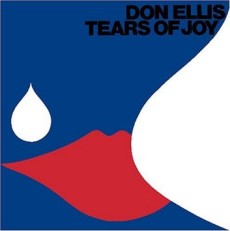
Becoming involved in the avant-garde jazz scene he appeared on albums by Charles Mingus, Eric Dolphy and George Russell, staying with the latter for two years. Ellis led several sessions with small groups between 1960 and 1962 that featured Jaki Byard, Paul Bley, Gary Peacock, Ron Carter, Charlie Persip and Steve Swallow among others. He would go on to tour Poland, Germany and Sweden, return to New York, form the Improvisational Workshop Orchestra, studied ethnomusicology, Indian music, be involved with several Third Stream Projects and teach at SUNY Buffalo for a year. He delved into electronic music in the late Sixties on Columbia Records with Electric Bath and garnered a Grammy nomination and a Down Beat Album of the Year Award.
Don’s popularity among educators was also climbing and copies of his band’s charts were being published and played by many high school and college big bands. Accordingly, he taught many clinics and played with many school bands. He composed the music for the film The French Connection, winning Grammy for Best Instrumental Arrangement and later composed music for the film The Seven-Ups.
He became interested in Brazilian music and created the Organic Band utilizing a vocal quartet and indigenous musicians. He would continue performing and touring well into the Seventies and his last known public performance took place on April 21, 1978, at the Westside Room in Century City. After this date, his doctor ordered him to refrain from touring and playing trumpet because it was too stressful on his heart. On December 17, 1978, after seeing a Jon Hendricks concert, trumpeter, composer, arranger, bandleader and educator Don Ellis suffered a fatal heart attack at his North Hollywood home where his parents were staying with him. He was 44.
Give A Gift Of Jazz – Share
More Posts: trumpet
Daily Dose Of Jazz…
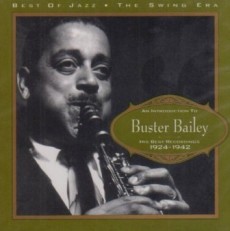
William C. “Buster” Bailey was born July 19, 1902 in Memphis, Tennessee and was educated on the instrument by classical teacher Franz Schoepp, the man who taught Benny Goodman. He got his start with the W.C. Handy Orchestra in 1917 when he was just fifteen years old. After two years of touring with Handy, he quit while the band was in Chicago and in 1919 Bailey joined Erskine Tate’s Vendome Orchestra.
1923 saw Buster joining up with Joe “King” Oliver as part of his King Oliver’s Creole Jazz Band. It was here that he met and became friends with fellow band mate Louis Armstrong. In 1924, when Armstrong left King Oliver’s Jazz Band to join the Fletcher Henderson Orchestra in New York. It was less than a month that Armstrong extended an invitation for Bailey to join the band and accepting, he moved to New York City.
During the late 1920s Bailey became a highly respected sideman with Perry Bradford, Clarence Williams and others, Recording both clarinet and soprano saxophone. He toured Europe with Noble Sissle’s orchestra in 1927, returned and performed with Edgar Hayes and Dave Nelson, rejoined Sissle in 1931. By 1934 he was back with Henderson and then settled in with the John Kirby Band. Off and on he would perform with the mills Blue Rhythm Band, Midge Williams and Her Jazz Jesters and record as a leader as Buster Bailey and His Rhythm Busters.
In 1947 he joined Wilbur de Paris and performed with him until 1949. During the early 1950s Bailey was with Big Chief Russell Moore but for most of the decade he played with Henry “Red” Allen. From 1961 to 1963 he performed with Wild Bill Davison, the Saints And Sinners, and rejoined his old friend Armstrong and became a member of Louis Armstrong and His All-Stars.
Buster appeared on film three times during his career in That’s The Spirit in 1933, Sepia Cinderella in 1947 as part of John Kirby’s band and in When The Boys Meet The Girls in 1965 with Louis Armstrong. He also appeared in 1958 in the DuMont TV series Jazz Party and in 1961 on the TV program The Dupont Show of the Week in an episode titled “America’s Music – Chicago and All That Jazz”.
Clarinetist Buster Bailey, who was also well versed on saxophone and one of the most respected session players of his era, passed away in Brooklyn, New York on April 12, 1967 of a heart attack.
Jazz Is Global – Share
Daily Dose Of Jazz…
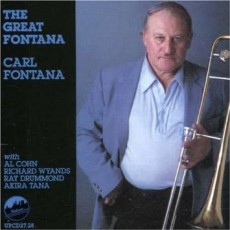
Carl Charles Fontana was born on July 18, 1928 in Monroe, Louisiana and learned jazz from his father Collie, a saxophonist and violinist. He first performed with his father’s band while in high school and would go on to attend the University of Louisiana Monroe for two years prior to transferring to Louisiana State University and getting a degree in Music Education.
Fontana got his first professional break on the jazz scene in 1951 when he was hired to stand in for Urbie Green in the Woody Herman band. Impressing the bandleader with his improvisational skills he kept him on as a permanent member of the band even after Green returned..
Three years later he left Herman and joined Lionel Hampton’s big band. In early 1955 he played briefly with Hal McIntyre before joining Stan Kenton’s big band later in the year. He recorded three albums with Kenton and also worked with fellow trombonist Kai Winding during this period. Being an inventive yet fluid player made it easy for him to record and tour, but Carl was also a master of the “Doodle Tonguing” technique, that allowed him to smoothly execute runs of notes at speeds many had not previously considered possible to achieve on a slide trombone.
By 1958, Fontana was living in Las Vegas, Nevada and would tour only on rare occasions. He primarily performed with house orchestras in Las Vegas during the 1960s, particularly Paul Anka’s band with Rosolino, and in the bands backing Sammy Davis Jr., Tony Bennett, Wayne Newton and the Benny Goodman Orchestra. This continued into the Seventies in addition to recording with Louie Bellson, Bill Watrous, and Supersax as well as co-leading a date with Jack Hanna, titled The Hanna-Fontana Band: Live at Concord.
The 1980s saw him appearing regularly on National Public Radio’s Monday Night Jazz program. And although he recorded on more than 70 albums over his long career, his first true record as a headliner did not appear until 1985 when Uptown Jazz released The Great Fontana. He continued performing and recording sporadically throughout the 1990s.
Trombonist Carl Fontana, who never earned great fame but was on every great trombonist’s list of greats, passed away in Las Vegas, Nevada aged 75 after suffering from Alzheimer’s disease on October 9, 2003.
Jazz Is Global – Share
More Posts: trombone