

Daily Dose Of Jazz…
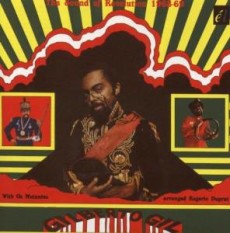
Gilberto Passos Gil Moreira was born June 26, 1942 in Salvador do Bahia, Brazil though he spent much of his childhood in the countryside of Ituaca. The offspring of a doctor and a schoolteacher, he attended the Marist Brothers school until he was nine and then returned to Salvador for secondary school.
Gil’s interest in music began when he was two and grew up listening to the forro music and the street performers of Salvador. Early on, he began to play the drums and the trumpet, and then took up the accordion before attending music school. He first played classical music, but grew more interested in the folk and popular music of Brazil, influenced by accordionist Luiz Gonzaga. He discovered the samba music of Dorival Caymmi, American big band jazz and tango.
In 1950 while still in high school he joined his first band, Os Desafinados (The Out of Tunes), playing accordion and vibraphone and singing. Soon afterwards he settled on the guitar as his instrument after hearing Joao Gilberto and started playing bossa nova. Gil met guitarist and singer Caetano Veloso at the Universidade Federal da Bahia in 1963 and immediately they began collaborating and performing together, releasing a single and EP soon afterwards. Along with Maria Bethania, Gal Costa and Tom Ze, they opened the Vila Velha Theatre with a night of bossa nova and traditional Brazilian songs in 1964.
Gilberto would go on to become musical director of the theatre’s concert series, sold bananas, composed jingles for tv ads and work for Unilever before moving to Sao Paulo in in 1965. Though he had a hit single with Louvação that was later recorded by Elis Regina, his first solo hit was the 1969 song Aquele Abraco. Arrested with Veloso he spent seven months in jail and house arrest and then instructed to leave the country. After a concert in Salvador in ’69 they left for Portugal, Paris and London where he listened to Bob Marley, Jimmy Cliff and Burning Spear. He performed with Yes, Pink Floyd and the Incredible String Band. It was in London that he recorded Gilberto Gil Nega and attended Miles Davis and Sun Ra concerts.
Over the course of his career he participated in the Aids benefit album Red, Hot + Rio, win Grammy awards, receive the Legion d’honneur from France, and was the first Latin American recipient of the Polar Music Prize in Stockholm. In between performances he turned to politics becoming the Salvador Secretary of Culture, founded the environmental protection organization Onda Azul (Blue Wave), was a Good will Ambassador for the Food and Agriculture Organization of the United Nations, became Brazil’s Minister of Culture and then retired due to a vocal cord polyp.
Tenor, baritone and falsetto vocalist, guitarist, lyricist and composer Gilberto Gil who is one of the pioneers of tropicália, and became increasing interested in the welfare of Black culture and focused on Afro-Brazilian culture. He continues to transcend the eras of dance and music trends emerging on the other side with a blend of music styles that stay true to his traditional Bahian roots while engaging with commercial markets.

Inspire A Young Mind
Daily Dose Of Jazz…
Pablo “Chino” Nunez was born on June 25, 1961, adopted as an infant, the only son of Puerto Rican immigrants and raised in New York City’s Sunset Park section of Brooklyn. Inspired and encouraged at a young age, he attributes his success to the “masters” he studied as well as idolizing many instrumentalists and vocalists most notably Tito Puente, Orestes Villato, Miles Davis, Gil Evans, Nicky Marrero, The Beatles, The Jackson 5, James Brown, and Ella Fitzgerald among others.
Self-taught, Chino’s career spans four decades he established himself as a percussionist, multi-Instrumentalist, producer, arranger, composer, recording artist, band leader, and educator. He is a multiple Grammy, Latin Grammy and Billboard nominee and winner. He has amassed hundreds of music credits as a producer including the documentary film, “Pedro “Cuban Pete” Aguilar: Dancing En Clave”. He has toured with a who’s who list of performers and has garnered critical acclaim with his Chino Nunez Orchestra.
Nunez has recorded and performed with Tito Puente, Hector Lavoe, Celia Cruz, Johnny Pacheco, Marc Anthony, El Gran Combo de Puerto Rico, Ray Barretto, Willie Colon, Ruben Blades, Gilberto Santa Rosa, Larry Harlow, Tito Nieves, Spanish Harlem Orchestra and a host of others. He has performed all over the world including Lincoln Center, Carnegie Hall, North Sea Jazz Festival, Madison Square Garden, Montreal Jazz Festival, the Tito Puente Amphitheatre and Bellas Arte Performing Arts Center in San Juan, Puerto Rico, to name a few.
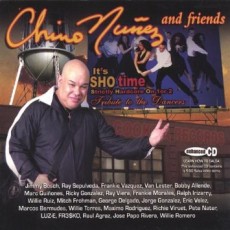
He creates a unique and rhythmic swing fusing Salsa, Big Band, Latin Jazz, Christian, Gospel, Bachata, Reggaeton, Hip Hop and R & B. On Broadway he has performed in “The Life of Celia Cruz”, “Evita”, “Cape Man”, “Lion King”, and “A Tale of Two Cities” featuring his arrangement “Another 100 People”. In 2005, he released his debut album Chino Nunez & Friends, A Tribute to the Dancers, It’s ShoTime. Producer of voice-overs, jingles, radio and television and commercials, Chino Nunez continues to perform and tour worldwide.
Dose A Day – Blues Away
More Posts: percussion
Daily Dose Of Jazz…
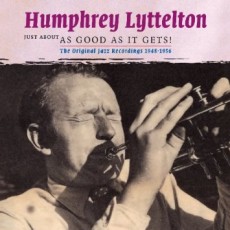
Ian Christie was born on June 24, 1927 in Blackpool, Lancashire, England to a father who was a piano tuner and banjoist. He took lessons from Charlie Farrell but opted to join the Royal Air Force, taking up photography as his primary interest. After his brother Keith joined Humphrey Lyttleton’s band, he soon followed, finishing his photography studies with financial help from Humphrey.
During the 1950s and 1960s Ian worked extensively with Mick Mulligan and George Melly as well as playing in a number of trad jazz ensembles, and forming a group with his brother Keith, Ken Coyle and Dicky Hawdon called the Christie Brothers’ Stompers.
Throughout his career he continued to work in trad jazz ensembles into the 2000s, with the Wyre Levee Stompers, the Merseysippi & Parade Jazz Band, and the Tony Davis Band, among others. In his later years he played with Graham Tayar in his Crouch End All Stars. Aside from playing music clarinetist Ian Christie worked as a film critic for The Daily Express for over 25 years and as a photographer until his passed away on January 19, 2010.
Take A Dose On The Road
More Posts: clarinet
Daily Dose Of Jazz…
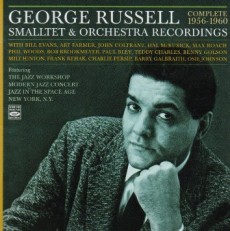
George Allen Russell was born on June 23, 1923 in Cincinnati, Ohio, the adopted only child of a nurse and a chef on the B & O Railroad. He sang in the choir of the African Methodist Episcopal Church and listened to the Kentucky Riverboat music of Fate Marable and made his stage debut at age seven, singing “Moon Over Miami” with Fats Waller.
Surrounded by the music of the black church and the big bands played on the Ohio Riverboats, he started playing drums with the Boy Scouts and Bugle Corps, receiving a scholarship to Wilberforce University. There he joined the Collegians, a band noted as a breeding ground for great jazz musicians including Ben Webster, Coleman Hawkins, Charles Freeman, Frank Foster and Benny Carter. He was a member noted jazz composer, Ernie Wilkins. When called up for the draft at the beginning of WWII he was hospitalized with tuberculosis where he was taught the fundamentals of music theory by a fellow patient.
Following his release from the hospital, he played drums with Benny Carter’s band, but after hearing Max Roach decided to give up drumming as a vocation. Inspired by hearing Thelonious Monk’s Round Midnight, George moved to New York in the early Forties and became a member of a coterie of young innovators who frequented the 55th Street apartment of Gil Evans. This clique included Miles Davis, Charlie Parker, Gerry Mulligan and John Lewis.
Back to the hospital in 1945 for 16 months with another bout of tuberculosis Russell worked out the basic tenets of what was to become his Lydian Chromatic Concept of Tonal Organization. This was his theory encompassing all of equal-tempered music which has been influential well beyond the boundaries of jazz. At that time, Russell’s ideas were a crucial step into the modal music of John Coltrane and Miles Davis on his classic recording, Kind Of Blue, and served as a beacon for other modernists such as Eric Dolphy and Art Farmer.
George would go on to compose Cubano Be,Cubano Bop for the Dizzy Gillespie Orchestra, becoming the pioneering experiment of fusing bebop and Cuban jazz elements. The following year he composed A Bird In Igor’s Yard in tribute to Charlie Parker and Igor Stravinsky and recorded at a session led by Buddy DeFranco. He would start playingpiano and go on to work with Artie Shaw, Bill Evans, Art Farmer, Hal McCusick, Barry Galbraith, Milt Hinton, Paul Motian, Paul Bley, Jon Hendricks, Bob Brookmeyer, Steve Swallow, Dave Baker, Eric Dolphy, Sheila Jordan, Tom Harrell, Ray Anderson and numerous and others.
Russell recorded his debut album as a leader, Jazz Workshop, playing very little but masterminding the events of the session in the same vein as Gil Evans. He was to record a number of impressive albums over the next several years, sometimes as primary pianist.
Over the course of his career he would be commissioned to compose a piece for Brandeis University and Swedish Radio for the Radio Orchestra, tour Europe, live in Scandinavia, assume the presidency of the New England Conservatory of Music and was appointed to teach the Lydian Concept in the newly created jazz studies department. He continued to compose major orchestral and chorus works, earned two Grammy nominations for his 45-minute opus The African Game, and toured with a group of American and British musicians, resulting in The International Living Time Orchestra, a group comprised of Dave Bargeron, Steve Lodder, Tiger Okoshi, Brad Hatfield, and Andy Sheppard, who still tour and perform today.
He received a MacArthur Foundation Genius Grant, NEA American Jazz Master Award, two Guggenheim Fellowships and a British Jazz Award. He taught throughout the world, and was a guest conductor for German, Italian, Danish, Finnish, Norwegian, and Swedish radio groups. Pianist, composer, arranger and theorist George Russell died of complications from Alzheimer Disease in Boston, Massachusetts on July 27, 2009.
Give The Gift Of Knowledge
More Posts: piano
Daily Dose Of Jazz…
Babe Russin was born Irving Russin on June 18, 1911 in Pittsburgh, Pennsylvania. He played with some of the best-known jazz bands of the 1930s and 1940s, including Benny Goodman, Tommy Dorsey and Glenn Miller. He solos on the Glenn Miller band recording of A String of Pearls on Bluebird Records in 1941.
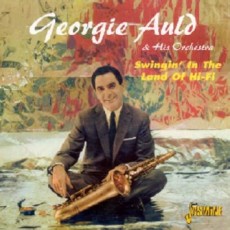
In the early Forties he briefly led his own band. In 1950, Babe was credited as a musician with the backup band on two Frank Sinatra tunes, Should I? and You Do Something To Me. He co-wrote the instrumental “All the Things You Ain’t” with Jimmy Dorsey that was recorded and released in 1945. He also recorded with Jack Hoffman in 1947 and Georgie Auld in 1955.
In 1953 he appeared briefly in the 1953 Universal-International movie The Glenn Miller Story. He plays Cheating On Me with a small group on the soundtrack to the 1954 Warner Bros. Judy Garland movie A Star Is Born. He also appeared in the 1956 movie The Benny Goodman Story. Tenor saxophonist Babe Russin passed away on August 4, 1984.
Dose A Day – Blues Away
More Posts: saxophone