

Daily Dose Of Jazz…
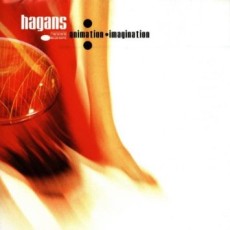
Tim Hagans was born on August 19, 1954 and grew up in Dayton, Ohio. His early inspiration came from Miles Davis, Freddie Hubbard and Thad Jones. In 1974 he joined the Stan Kenton band with whom he played until 1977, when he then toured with Woody Herman. Leaving for Europe he lived in Malmo, Sweden, which was a hotbed of the European jazz scene. He toured extensively and played with Dexter Gordon, Kenny Drew, Horace Parlan and Thad Jones. He would later dedicate For the Music Suite, a 40-minute piece for jazz orchestra to Jones.
Tim’s first recorded composition, I Hope This Time Isn’t The Last, appears on Thad Jones Live at Slukefter. In 1987 he moved to New York City and has since performed with Maria Schneider, the Yellowjackets, Steps, Secret Society, and Gary Peacock. He has worked extensively with producer and saxophonist Bob Belden on a variety of recordings and live performances, including their ongoing Animation/Imagination project.
As an educator Hagans has taught master classes at universities both stateside and abroad including the University of Cincinnati and Berklee College of Music. He has held the position of Artistic Director and Composer-in-Residence for the Norrbotten Big Band in Lulea, Sweden for which his Avatar Seesions: The Music of Tim Hagans was nominated for a Grammy. He has had several commissions by the NDR Big Band, Jazz Baltica, and the Barents Composers Orchestra.
Trumpeter Tim Hagans has been honored with awards, a featured subject in the documentary Boogaloo Road, a featured soloist on the soundtrack for the film The Score with Marlon Brando, Edward Norton and Robert DeNiro. He currently performs, tours, and records with the Tim Hagans Quartet: Tim Hagans, trumpet; Vic Juris, guitar; Rufus Reid, bass, and Jukkis Uotila, drums.

Inspire A Young Mind
More Posts: trumpet
Daily Dose Of Jazz…
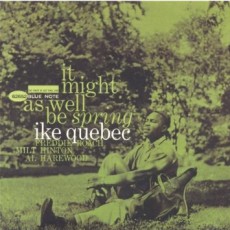
Ike Quebec was born Ike Abrams Quebe on August 17, 1918 in Newark, New Jersey and was both an accomplished dancer and pianist. He switched to tenor sax as his primary instrument in his early twenties, and quickly earned a reputation as a promising player. His recording career started in 1940, with the Barons of Rhythm and from 1944 and 1951 he worked intermittently with Cab Calloway.
Over the course of his career Quebec recorded or performed with Frankie Newton, Hot Lips Page, Roy Eldridge, Trummy Young, Ella Fitzgerald, Benny Carter, Sonny Clark, Dodo Green, Jimmy Smith and Coleman Hawkins. He recorded as a leader for Blue Note records in the Forties era, and also served as a talent scout for the label, helping pianists Thelonious Monk and Bud Powell come to wider attention. Due to his exceptional sight-reading skills, he was also an un-credited impromptu arranger for many Blue Note sessions.
His struggles wit drug addiction and the fading popularity of big band music forced Ike to record only sporadically during the 1950s, though he still performed regularly. He kept abreast on new developments in jazz, and his later playing incorporated elements of hard bop, bossa nova and soul jazz. He occasionally recorded on piano, as on his 1961 Blue & Sentimental album, where he alternated between tenor and piano, playing the latter behind Grant Green’s guitar solos.
In 1959 he began what amounted to a comeback with a series of albums on the Blue Note label. Blue Note executive Alfred Lion, though always fond of his music, was unsure how audiences would respond to the saxophonist after a decade of low visibility. So in the mid-to-late 1950s, they issued a series of singles for the juke-box market and audiences ate them up, leading to a number of warmly-received albums. However, his comeback was short-lived when Ike Quebec, the tenor saxophonist with the big breathy sound, passed away from ling cancer on January 16, 1963.

Daily Dose Of jazz…
Urban Clifford “Urbie” Green was born August 8, 1926 in Mobile, Alabama and was taught the piano as a child by his mother, jazz and popular tunes from the beginning. He picked up the trombone when he was about 12 and although he listened to such trombone greats as Tommy Dorsey, J.C. Higginbotham, Jack Jenney, Jack Teagarden and Trummy Young, he was more influenced by the styles of Dizzy Gillespie, Charles Parker and Lester Young. Vocalists Perry Como and Louis Armstrong also influenced his style.
After his father died when he was 15, Green went straight into professional music, first joining the Tommy Reynolds Band and then stints with Bob Strong, Jan Savitt and Frankie Carle. While at Auburn High School he played with The Auburn Knights Orchestra, a college big band. In 1947, he joined Gene Krupa’s outfit and quickly moved up to Woody Herman’s 3rd Thundering Herd Big Band in 1950 to play with his brother, Jack.
By 1953 Urbie was in New York City quickly establishing himself as the premier trombonist in the booming recording industry and in 1954 he was voted the “New Star” trombonist in the International Critics Poll from Down Beat magazine. He was voted “Most Valuable Player” several times by the National Academy of Recording Arts and Sciences. He recorded with virtually all of the major jazz musicians of the 1950s and 1960s and led his own groups while also joining tours as a featured performer.
He collaborated with innovative producer Enoch Light for the Command and Project 3 labels, producing The Persuasive Trombone of Urbie Green and 21 Trombones, and was sideman and soloist on the album ‘s Continental by Ray Conniff in 1961. In the Seventies he began making innovations with his instrument designing a signature mouthpiece for Jet Tone and collaborated with Martin Brass on practical improvements to trombone design.
He would go on to record with Enoch Light and the Light Brigade, Dick Hyman, Maynard Ferguson and Doc Severinsen before moving over to CTI where he played more of his music and less solos with his band. He would record with Blue Mitchell, Herbie Mann, Manny Albam,, Steve Allen, Ray Bryant, Count Basie, Paul Desmond, Gil Evans, Art Farmer, Aretha Franklin, Dizzy Gillespie, Johnny Griffin, Billie Holiday, Coleman Hawkins, Milt Jackson, Bobby Hutcherson, Wes Montgomery, Mark Murphy and the list goes on and on.
By the 1980s and beyond Urbie’s recording career began a slowing down with only two live, straight jazz works; Just Friends, and Sea Jam Blues. In 1995 he was elected into the Alabama Jazz Hall of Fame and he still plays live at the Delaware Water Gap Celebration of the Arts Festival every September, just miles down the road from his home.
Put A Dose In Your Pocket
More Posts: trombone

Daily Dose Of Jazz…
Rickey Woodard was born August 5, 1950 in Nashville, Tennessee and picked up his first music experiences playing saxophone in the family band. He went on to attend Tennessee State University and following graduation joined the Ray Charles band, spending seven years with him.
Woodard became a member of the Clayton-Hamilton Jazz Orchestra, has recorded with Frank Capp, and is a member of Jeanine and Jimmy Cheatham’s Sweet Baby Blues Band. In 1988 he moved to Los Angeles and started playing sessions for Concord Records that soon led to a recording contract.
By 1993 Rickey embarked on a series of yearly visits to the Peterborough Jazz Club in England. There he was billed with veteran British jazz musicians such as Dick Morrissey, John Burch and Tony Archer. In 1994 he was a part of the recording session Seven Sensational Saxophones – Fujitsu-Concord 26th Jazz Festival with Jesse Davis, Gary Foster, Bill Ramsay, Ken Peplowski, Chris Potter and Frank Wess.
He recorded his debut album The Frank Capp Trio Present Rickey Woodard in 1991 and has released seven more as a leader or co-leader in the company of Joe Chambers, Eric Reed, Cedar Walton, Ernie Watts, Pete Christlieb, Gerry Wiggins, Chuck Berghofer, Tony Dumas, Roy McCurdy, James Williams, Christian McBride and Ray Brown. As a sideman he has another ten projects as a sideman working with Horace Silver, Kenny Rogers, Nnenna Freelon and Diana Krall.
Saxophonist Rickey Woodard continues to lead his own quartet, perform and tour with the Clayton-Hamilton Jazz Orchestra, The Juggernaut and The Cheathams.
Inspire A Young Mind
More Posts: saxophone
Daily Dose Of Jazz…
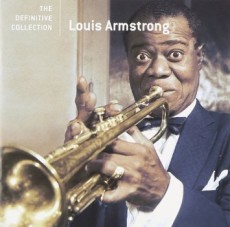
Louis Armstrong was born on August 4, 1901 in New Orleans, Louisiana and grew up in the poverty-stricken, rough neighborhood known as “The Battlefield”, which was part of the Storyville legal prostitution district. Abandoned by his father while still an infant, he and his sister lived with relatives for a period of years. He attended the Fisk School for Boys, getting his early exposure to music, worked as a paperboy, discarded food reseller, and hauled coal to the brothels and clubs and worked for a Jewish junk haulers who treated him like family.
Dropping out of school at age eleven, Louis joined a quartet of boys singing on the corner for money, and listened to the bands in Storyville. He developed his cornet playing skills by playing in the band of the New Orleans Home for Colored Waifs under the tutelage of Professor Peter Davis who instilled discipline in and provided musical training to the otherwise self-taught Armstrong. He eventually became the bandleader, they played around New Orleans and by thirteen-year-old he began drawing attention by his cornet playing, starting him on a musical career. At fourteen he got his first dance hall job at Henry Ponce’s where Black Benny became his protector and guide. He hauled coal by day and played his cornet at night.
Over the next years he played in the city’s frequent brass band parades and listened to older musicians every chance he got, learning from Bunk Johnson, Buddy Petit, Kid Ory and Joe “King” Oliver, who acted as a mentor and father figure to the young musician. He toured with Fate Marable, replaced King Oliver in Kid Ory’s band, and was second trumpet in the Tuxedo Brass Band.
1922 saw Armstrong in Chicago joining King Oliver’s Creole Jazz Band when the city was the center of the jazz universe. He was challenged to “cutting contests” by hornmen trying to displace the new phenomenon, which could blow two hundred high Cs in a row. He made his first recordings on the Gennett and Okeh labels, he met Hoagy Carmichael through his friend Bix Beiderbecke. Taking the advice of second wife Lil Harden Armstrong, he left Oliver and went to work with Fletcher Henderson in New York and developing his own style. By 1924 he switched to trumpet and his influence upon Henderson’s tenor sax soloist Coleman Hawkins, can be judged by listening to the records made by the band during this period.
During this time, Armstrong made many recordings on the side, arranged by Clarence Williams, with the Williams Blue Five pairing him with Sidney Bechet and backing Bessie Smith, Ma Rainey and Alberta Hunter. He began recording under his own name for Okeh with his famous Hot Five and Hot Seven groups Hot Five and Hot Seven groups, producing hits Potato Head Blues, Muggles and West End Blues, the music of which set the standard and the agenda for jazz for many years to come. His recording of Heebie Jeebies turned on both black and white young musicians to his new type of jazz, including a young Bing Crosby.
Over the course of his career he appeared in musical, played clubs, added vocals to his repertoire covering most famously Carmichael’s Stardust that became one of the most successful renditions. His approach to melody and phrasing was radical and evolved into scat singing. As with his trumpet playing, Armstrong’s vocal innovations served as a foundation stone for the art of jazz vocal interpretation. The uniquely gritty coloration of his voice became a musical archetype that was much imitated and endlessly impersonated.
After spending many years on the road, in 1943 Louis settled permanently in Queens, New York in 1943 in contentment with his fourth wife, Lucille. During the subsequent thirty years, he played more than three hundred gigs a year, toured Africa, Europe, and Asia under sponsorship of the US State Department earning the nickname “Ambassador Satch” and inspiring Dave Brubeck to compose his jazz musical The Real Ambassadors.
He has been honored posthumously with a Grammy Lifetime Achievement Award, won a Male Vocal Performance Grammy for Hello Dolly, has 11 recordings inducted into the Grammy Hall of Fame, the Rock and Roll Hall of Fame list his West End Blues as one of the 500 songs that shaped Rock and Roll, had a commemorative U.S. postage stamp issued, and has been inducted into six Halls of Fame, has a star on the Hollywood Walk of Fame, as well as the Louis Armstrong New Orleans International Airport, the US Open main stadium was renamed Louis Armstrong Stadium, and his Hot Five and Hot Seven recordings are now a part of the National Recording Registry in the Library of Congress.
Trumpeter and vocalist Louis Armstrong, also known as Satchmo, Dipper, Pops and the King of Jazz, passed away in his sleep of a heart attack on July 6, 1971. His honorary pallbearers included Bing Crosby, Ella Fitzgerald, Dizzy Gillespie, Pearl Bailey, Count Basie, Harry James, Frank Sinatra, Ed Sullivan, Earl Wilson, Alan King, Johnny Carson and David Frost. Peggy Lee sand The Lords Prayer, Al Hibbler sang Nobody Knows The Trouble I’ve Seen and his long-time friend Fred Robbins gave the eulogy.
Dose A Day – Blues Away