

Daily Dose Of Jazz..
Matso Limtiaco was born May 2, 1963 and majored in music education as an undergraduate. After a brief period teaching public school music, he earned his MA in music theory/composition at Washington State University in 1990. After spending six years teaching music at all levels from junior high band to university jazz ensembles, arranging music for groups he led and for a variety of local performers.
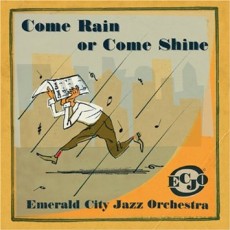
Limtiaco gained his first notoriety as a marching band arranger for Washington State University, and then for the University of Washington. Matso quit teaching music full-time and is active as a freelance composer, arranger, and performer in the Seattle area. His baritone saxophone work has anchored the Emerald City Jazz Orchestra saxophone section since 1994, and the band’s two recordings “Alive and Swinging” and “Come Rain or Come Shine” feature his charts.
After spending several years in music education, he left teaching and now works as an independent composer/arranger, with a “day job” as a technical writer for a large manufacturing company. Among jazz arrangers and composers Matso is not the most well-known nor the most prolific but he rapidly established himself as one of the most polished and professional writers anywhere.

Inspire A Young Mind
Daily Dose Of Jazz…
Karl Curtis George was born on April 26, 1913 in St. Louis, Missouri. Early in his career he played with McKinney’s Cotton Pickers in 1933, and Cecil Lee. in the 1930s he spent time in the Jeter Pillars Orchestra and then in the orchestras of Teddy Wilson from 1939–40, followed by a year-long stint with Lionel Hampton in 1941.
George served in the Army from 1942 to 1943, then moved to California and played with Stan Kenton, Benny Carter, spent a spring with Count Basie and in Los Angeles with Happy Johnson, his final collaboration of note.
He also played in sessions led by Charles Mingus, Slim Gaillard, Oscar Pettiford, Dinah Washington and Lucky Thompson. During years1945-1946 Karl led his own group on record the track “Peek-A-Boo” by the Karl George Octet, originally released on Melodisc, has been reissued on a Topnotch compilation.
Jazz trumpeter Karl George retired back in his hometown once his health got the better of him, while recordings he had played on continued to be stocked on record store shelves. He lived out the rest of his life in almost total obscurity until passing away in May 1978.
Dose A Day – Blues Away
More Posts: trumpet
Daily Dose Of Jazz…
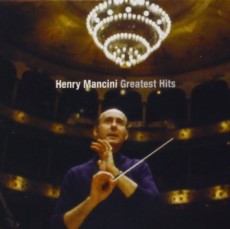
Henry Mancini was born Enrico Nicola Mancini on April 16, 1924 in the Little Italy neighborhood of Cleveland, Ohio and was raised in the steel town of West Aliquippa near Pittsburgh, Pennsylvania. He began piccolo lessons at age eight, by 12 began piano lessons and played flute in the Aliquippa Italian immigrant band, “Sons of Italy”. After graduating from high school he went to Juilliard School of Music and after one year of study was drafted into the Army, where in 1945 was part of the liberation force of a southern Germany concentration camp.
After the war years Mancini entered the music industry as a pianist and arranger for the newly re-formed Glenn Miller Orchestra. He went on to broaden his skills in composition, counterpoint, harmony and orchestration during subsequent studies. By 1952 he joined the Universal Pictures music department and over the next six years contributed music to over 100 movies, most notably The Glenn Miller Story, The Benny Goodman Story, Touch of Evil and The Creature from the Black Lagoon. It was also during this period that he wrote his first hit single for Guy Lombardo and His Royal Canadians titled I Won’t Let You Out of My Heart.
Henry left Universal International to work as an independent composer and arranger in 1958 and soon scored the television series Peter for writer and producer Blake Edwards. This was the genesis of a relationship in which Edwards and Mancini collaborated on 30 films over 35 years and was one of several pioneers introducing jazz elements in the late romantic orchestral film and TV scoring prevalent at the time.
Mancini’s scored film songs Moon River, Days of Wine and Roses, The Pink Panther, A Time For Us, Baby Elephant Walk, and the Love Theme from Romeo and Juliet as well as many TV shows and movies such as the Thorn Birds, Peter Gunn and Remington Steele. Among his many singers he worked with frank Sinatra, Tony Bennett, Julie London, Peggy Lee among a host of others. He recorded over 90 albums, eight certified gold by the RIAA, a twenty-year contract with RCA that culminated in 60 commercial albums. Many of his songs have become jazz standards, most notably, Charade, Moment To Moment, Two For The Road, Love Story, Slow Hot Wind, Moonlight Sonata, The Pink Panther, The Days of Wine and Roses and Moon River.
Composer, arranger and conductor Henry Mancini died of pancreatic cancer in Los Angeles, California on June 14, 1994. He was working at the time on the Broadway stage version of Victor/Victoria, which he never saw on stage. Mancini was nominated for an unprecedented 72 Grammys, winning 20; nominated for 18 Academy Awards, winning four; won a Golden Globe Award, nominated for two Emmys, was posthumously Grammy Lifetime Achievement Award and honored with a 37 cent postage stamp in 2004.
Put A Dose In Your Pocket
Daily Dose Of Jazz…
Ryan Kisor was born April 12, 1973 in Sioux City, Iowa and learned trumpet from his father. He started playing in a local dance band, the Eddie Skeets Orchestra, at age ten. By 12 he was taking classical trumpet lessons, met Clark Terry when he was 15 while attending his summer jazz camp, and played with all-star high school bands. In 1990, he won the Thelonious Monk Institute’s trumpet contest at the age of 17, performing against Nicholas Payton and Marcus Printup.
Following this he was signed by Columbia Records and released his first two albums, 1992’s Minor Mutiny and 1993’s On the One. Following this, Kisor entered the Manhattan School of Music and studied under Lew Soloff among others.
He has played in New York with the Mingus Big Band, Michel Camilo Big Band, with Gerry Mulligan, Wynton Marsalis, Wycliffe Gordon, Horace Silver and Walter Blanding. Since 1994 he has been a member of the Jazz at Lincoln Center Orchestra, has released fifteen albums as a bandleader and continues to perform and record.
Inspire A Young Mind
More Posts: trumpet
Daily Dose Of Jazz…
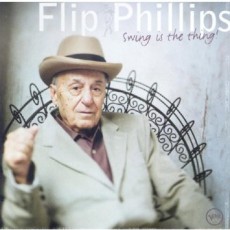
Flip Phillips was born Joseph Edward Filipelli on March 26, 1915 in Brooklyn, New York. In the mid-1940s, he was one of the anchors of the Woody Herman band, and also played with the Woodchoppers, a small spin-off group that Herman led. After this period he went out on his own and joined Jazz at the Philharmonic. His deep, strong and articulate playing with a very full sound contrasted him to his successors such as Stan Getz in the subsequent Herman bands.
Phillips recorded extensively for Clef Records, now Verve, in the 1940s and 1950s, including a 1949 album of small-group tracks under his leadership, with Buddy Morrow, Tommy Turk, Kai Winding, Sonny Criss, Ray Brown and Shelly Manne. He accompanied Billie Holiday on her 1952 Billie Holiday Sings album. He became a frequent player at the Odessa Jazz Party in Odessa, Texas from 1971 to 1991.
Tenor saxophonist and clarinet player Flip Phillips, best known for his work with Jazz At The Philharmonic from 1946 to 1957, passed away in Fort Lauderdale, Florida on August 17, 2001 at the age of 86.
Dose A Day – Blues Away