

Daily Dose Of Jazz…
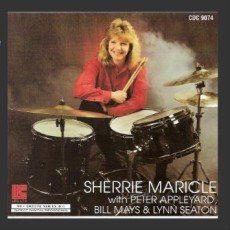
Sherrie Maricle was born Sharon Lee Maricle on September 2, 1963 in Buffalo, New York. She began playing drums professionally performing locally with Slam Stewart while studying music at SUNY-Binghamton. She then attended New York University where she completed a Masters in Jazz Performance and a Doctorate of Philosophy in Jazz Performance and Composition.
Maricle directed Saturday jam sessions at the Village Gate from 1987 until the venue closed in 1993. Beginning in 1987, she also began collaborating and leading small groups with Peter Appleyard. In the late 1980’s, she was appointed director of percussion studies at NYU.
By the 1990’s Sherrie was performing with the New York Pops, Clark Terry, Al Grey and began working with the group DIVA, currently leading the DIVA Jazz Orchestra, the DIVA Jazz Trio, and the quintet Five Play.
As an educator she teaches on the jazz faculty of the New York State Summer Music Festival, as well as running her own private drum and percussion studio. In 2009, she received the Lifetime Achievement Award at the Mary Lou Williams Women in Jazz Festival. Drummer Sherrie Maricle continues to perform, tour and record.

Take A Dose On The Road
More Posts: drums
Daily Dose Of Jazz…
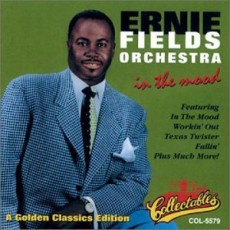
Ernie Fields was born Ernest Lawrence Fields on August 28, 1904 in Nacogdoches, Texas, though raised in Taft, Oklahoma. He attended Tuskegee Institute before moving to Tulsa. From the late 1920s, he led the Royal Entertainers, and eventually began touring more widely from Kansas City, Kansas to Dallas, Texas, and recording. Fields’ band became the first African-American band to play at Tulsa’s landmark Cain’s Ballroom.
A 1939 invite to New York by John Hammond to record for Vocalion. He began touring nationally, never became a star but continued to work steadily, recording for smaller labels, and gradually transforming his sound through a smaller band and a repertoire shift from big band and swing to R&B. During WWII he entertained troops both at home and abroad.
Continuing to straddle these styles into the 1950s, Ernie played swing standards such as “Tuxedo Junction” and “Begin The Beguine” in a rocking R&B style. In the late 1950s he moved to Los Angeles, California and joined the Rendezvous Records and ran the house band In 1959 this band had an international hit with an R&B version of Glenn Miller’s “In The Mood” that reached #4 on the Billboard chart, selling over a million copies. He would go on to record instrumentals under a variety of names including B. Bumble and the Stingers, The Marketts and The Routers.
After Rendezvous Records folded in late 1963, trombonist, pianist, arranger and bandleader Ernie Fields retired and returned to Tulsa. He died on May 11, 1997, at the age of 92.
Put A Dose In Your Pocket
More Posts: arranger,bandleader,piano,trombone
Daily Dose Of Jazz…
Paul Webster, born August 24, 1909 in Kansas City, Kansas attended Fisk University and worked as an embalmer before switching to music. He played in bands led by George E. Lee, Bennie Moten, Tommy Douglas and Eli Rice through the 1920s.
In 1931 he joined Jimmie Lunceford’s outfit, left and then returned to play from 1935 to 1944. It was here he took over Tommy Stevenson’s spot and the high-note trumpet player found his fame during this period of his career. It has been noted that he had a big influence on a young Stan Kenton, who later featured high note trumpeters in many of his bands.
Following this Webster played lead trumpet in bands led by Cab Calloway, Charlie Barnet, Sy Oliver, Ed Wilcox, and Count Basie through the war years to the end of the decade. After 1953 he played trumpet only part-time, contributed to ‘Paul Curry Presents the Friends of Fats’ LP in 1959 on the Golden Crest Label, but still occasionally played with Sy Oliver’s band into the 1960s. Jazz trumpeter of the big band era, Paul Webster passed away 0n May 6, 1966.
Inspire A Young Mind
More Posts: trumpet
Daily Dose Of Jazz…
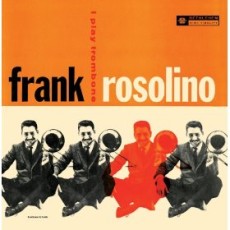
Frank Rosolino was born on August 20, 1926 in Detroit, Michigan. He studied the guitar with his father from the age of 9 and took up the trombone at age 14 while he was enrolled at Miller High School where he played with Milt Jackson in the school’s stage band and small group. Having never graduated, he joined the 86th Division Army Band during World War II.
Perhaps most influential of all was the street education Frank received after returning to Detroit following his period in the Army during which he sat in at the Mirror Ballroom or the Bluebird where other to-be-renowned musicians also congregated, the Jones brothers – Hank, Thad and Elvin, Tommy Flanagan, Kenny Burrell, Paul Chambers and later at the 3 Deuces on 52nd Street in New York City with Charlie Parker.
During this period Rosolino was also performing with the big bands of Bob Chester, Glen Gray, Tony Pastor, Herbie Fields, Gene Krupa and Stan Kenton. Leaving the Kenton outfit he settled in Los Angeles where he performed with Howard Rumsey’s Lighthouse All-Stars from 1954–1960 in Hermosa Beach.
Throughout the 1960s and 1970s, between nightclub engagements, Rosolino was active in many Los Angeles recording studios where he performed with such notables as Frank Sinatra, Sarah Vaughan, Tony Bennett, Peggy Lee, Mel Torme, Michel Legrand and Quincy Jones among others.
He can also be seen performing in “Sweet Smell of Success” in 1957 with Burt Lancaster and Tony Curtis, and in 1958 with Shelly Manne’s group in the film “I Want To Live!” starring Susan Heyward and also. He was also a regular on The Steve Allen Show, The Tonight Show and The Merv Griffin Show. A talented vocalist, renowned for his wild form of scat-singing, Frank recorded one vocal album, “Turn Me Loose!” featuring both his singing and trombone playing. He can also be seen performing in the half hour syndicated program Jazz Scene USA, hosted by Oscar Brown, Jr.
It was during the 1970s that he performed and toured with Quincy Jones and the Grammy Award winning group Suoersax. He recorded some two-dozen sessions as a sideman and a dozen as a leader. Trombonist and vocalist Frank Rosolino committed suicide on November 26, 1978 after shooting his two sons.
Put A Dose In Your Pocket
Daily Dose Of Jazz…
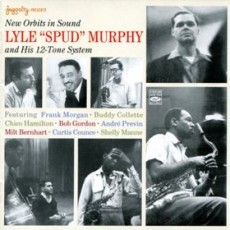
Lyle Stephanovic was born Miko Stefanovic to Serbian émigré parents in Berlin, Germany on August 19, 1908. Better known in the jazz world as Spud Murphy, he grew up in Salt Lake City, Utah where he took the name of a childhood friend. Murphy studied clarinet and saxophone when young and took trumpet lessons from Red Nichol’s father.
He worked with Jimmy Joy in 1927-28 and with Ross Gorman and oboist Slim Lamar in 1928. He worked the early 1930s as saxophonist-arranger for Austin Wylie, Jan Garber, Mal Hallett and Joe Haynes, and then became a staff arranger for Benny Goodman from 1935 to 1937. At the same time he also contributed charts to the Casa Loma Orchestra, Isham Jones, Les Brown and many others.
From 1937 to 1940 Murphy led a big band and recorded for Decca and Bluebird Records in 1938-39. In the 1940s he relocated to Los Angeles where he did work in the studios and with film music, in addition to authoring and teaching the 1200-page “System of Horizontal Composition” also known as the “Equal Interval System”. The Equal Interval System is a modern system of music composition, developed by Murphy over a lifetime of research.
Spud recorded two jazz albums in the 1950s, but his later career was focused on classical and film music. In 2003, orchestra leader Dean Mora, a close friend of Murphy’s, recorded some two dozen of his arrangements in a tribute CD, “Goblin Market”.
Multi-instrumentalist, bandleader and arranger Spud Murphy died in Los Angeles, two weeks short of his 97th birthday on August 5, 2005.
Give The Gift Of Knowledge