

Daily Dose OF Jazz…
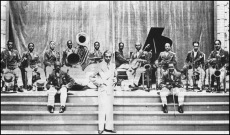
Demas Dean was born on October 6, 1903 in Sag Harbor, New York. He began playing trumpet at age 10 and later picked up the violin but professionally became a trumpeter.
While in high school he played in Mazzeo’s Brass Band, and worked with Beatrice Van while still in his teens. He attended Howard University from 1922 – 23 and played with Elmer Snowden, Doc Perry, Russell Wooding and Lucille Hegamin in the first half of the decade.
Through the end of the 1920s Dean played with Billy Butler, Ford Dabney and Leon Abbey, touring South America. In 1928 he recorded with Bessie Smith and the following year worked with Noble Sissle in the Blackbirds revue in Europe.
By the early 1930s Demas was working with bandleaders Joe Jordan and Pike Davis but returned to play with Sissle from 1934 to 1944. Shortly after 1944 he quit music and took a post office position in Los Angeles, working there until his retirement in 1965. Jazz trumpeter Demas Dean passed away in 1991 in Los Angeles, California. (in picture – 2nd from left)

Inspire A Young Mind
More Posts: trumpet
Daily Dose OF Jazz…
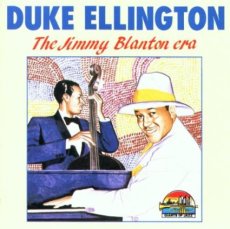
Jimmy Blanton was born on October 5, 1918 in Chattanooga, Tennessee and originally learned to play the violin but took up the bass while at Tennessee State University. During his matriculation in the mid-thirties he performed with the Tennessee State Collegians, and during the vacations with Fate Marable. Blanton left school to play full time in St. Louis with the Jeters-Pillars Orchestra. Making his first recordings with the orchestra, he then went on to join Duke Ellington’s band in 1939.
Though he stayed with Ellington for only two years, Blanton made an incalculable contribution in changing the way the double bass was used in jazz. Moving from quarter notes in ensemble or solos to soloing more in a ‘horn like’ fashion, Blanton began sliding into eighth and sixteenth-note runs, introducing melodic and harmonic ideas that were totally new to jazz bass playing.
His virtuosity put him in a different class from his predecessors, making him the first true master of the jazz bass and demonstrating the instrument’s unsuspected potential as a solo instrument. Such was his importance to Ellington’s band at the time, together with the tenor saxophonist Ben Webster, that it became known as the Blanton-Webster band.
In 1941, Blanton was diagnosed with tuberculosis, cutting short his tenure with Ellington. However, he recorded a series of bass and piano duets with Ellington. Double bassist Jimmy Blanton, credited as the originator of pizzicato and bowed bass solos, died the following year on July 30, 1942 after retiring to a sanatorium in California at the age of 23.
Give A Gift Of Jazz – Share
More Posts: bass
Daily Dose Of Jazz…
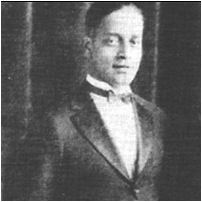
Lammar Wright, Jr. was born September 28, 1927 in Kansas City, Missouri to a big band trumpeter father. He began playing with local bands and by 16 the young trumpeter performing professionally with the Lionel Hampton band. Stints with Dizzy Gillespie and as principal soloist with the Charlie Barnet big band followed.
Often substituting for one another on recordings, Sr. or Jr. were never put in the credits on discographies, leaving the two to become ambiguous. However it was only the younger that hired out as a session player in the genres of R&B, rock and roll, doo-wop and others forms of music backing such artists as Wynonie Harris, Esther Phillips, The Coasters and Otis Redding during the ‘50s and ‘60s.
He later even had a brief association with Stan Kenton, whose modernistic charts were obviously influenced by some of the Hampton band’s more eccentric traits. Lammar Wright Jr. eventually settled on the West Coast, where he passed away on July 8, 1983 in Los Angeles.
Inspire A Young Mind
More Posts: trumpet
Daily Dose Of Jazz…
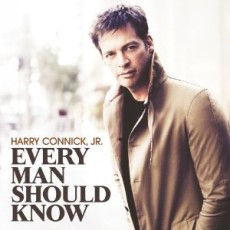
Harry Connick, Jr. was born Joseph Harry Fowler Connick, Jr. on September 11, 1967 and raised in New Orleans, Louisiana. His musical talents soon came to the fore when he started learning the keyboards at the age of three, played publicly at age five and recorded with a local jazz band at ten.
When Harry was nine years old, he performed with the New Orleans Symphony Orchestra and later played a duet of “I’m Just Wild About Harry” with Eubie Blake at the Royal Orleans Esplanade Lounge in New Orleans. His musical talents were developed at the New Orleans Center for Creative Arts and under the tutelage of Ellis Marsalis and James Booker.
Moving to New York, Connick studied at Hunter College and the Manhattan School of Music. It was here that Columbia Records A&R exec Dr. George Butler persuaded him to sign with the label releasing first a self-titled album and then “20” as his sophomore project. He soon acquired a reputation in jazz because of extended stays at high-profile New York venues.
Over the course of his career Harry has sung on film soundtracks, ventured into acting on Broadway and the big and small screens, has sold over 25 million albums worldwide, has seven top-20 US albums, and ten number-one US jazz albums, earning more number-one albums than any other artist in the U.S. jazz chart history. Harry Connick Jr., singer, big-band leader, conductor, pianist, actor, and composer, continues to perform, record and tour.
Put A Dose In Your Pocket
Daily Dose Of Jazz…
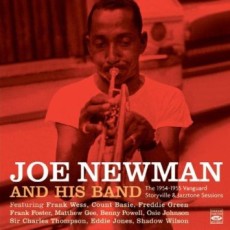
Joseph Dwight Newman was born on September 7, 1922 in New Orleans, Louisiana. A child of a pianist father, he had his first music lessons from David Jones. He continued his study of trumpet at Alabama State College where he also played, led and toured the school band, the Bama State Collegians.
By 1941 Joe joined Lionel Hampton for two years, before signing with Count Basie, a relationship that lasted for a total of thirteen years resulting in a number of small group recordings as leader, spent time with Illinois Jacquet, and then with J.C. Heard. He also played on Benny Goodman’s 1962 tour of the Soviet Union.
Leaving the Basie band in 1961, Newman helped found Jazz Interactions, of which he became president in 1967. Jazz Interactions was a charitable organization which provided an information service, brought jazz master classes into schools and colleges, and later maintained its own Jazz Interaction Orchestra, for whom Newman wrote.
In the 1970s and 1980s Newman toured internationally, recorded for various major record labels. He suffered a stroke in 1991, however, which seriously disabled him. Joe Newman, trumpeter, composer and educator best known for his years with Count Basie passed away on July 4, 1992.
Inspire A Young Mind
More Posts: trumpet