

Daily Dose Of Jazz…
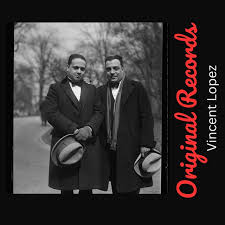
Vincent Lopez was born of Portuguese immigrant parents in Brooklyn, New York City on December 30, 1895. By 1916 he was leading his own dance band in New York City. Five years later his band began broadcasting on the new medium of entertainment radio, giving listeners a weekly 90-minute show on Newark, New Jersey station WJZ. The broadcast was instrumental in making him one of North America’s most popular bandleaders through the 1940s.
In the 1930s and ‘40s Vincent worked occasionally in feature films, notably The Big Broadcast and I Don’t Want to Make History and was one of the first bandleaders to work in Soundies movie musicals. His flamboyant style of piano playing influenced Eddy Duchin and Liberace.
Noted musicians who played in his band included Artie Shaw, Xavier Cugat, Jimmy Dorsey, Tommy Dorsey, Bob Effros, Mike Mosiello, Fred Lowery, Joe Tarto and Glenn Miller. He featured singers Keller Sisters and Lynch, Betty Hutton, and Marion Hutton. Lopez’s longtime drummer was Mike Riley, who popularized the novelty hit The Music Goes Round and Round.
In 1941, Lopez’s Orchestra began a residency at Manhattan’s Taft Hotel that lasted 25 years. In the early 1950s, he along with Gloria Parker hosted a radio program broadcast from the Taft Hotel called Shake the Maracas in which audience members competed for small prizes by playing maracas with the orchestra.
Bandleader, pianist and actor Vincent Lopez, who published his autobiography Lopez Speaking in 1960, died at the Villa Maria nursing home in North Miami, Florida on September 20, 1975.

More Posts: bandleader,history,instrumental,jazz,music,piano
Daily Dose Of Jazz…
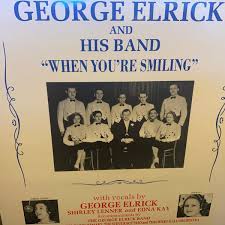
George Connell Elrick was born on December 29, 1903 in Aberdeen, Scotland. His first ambition was to be a doctor but financial constraints prevented this. Still in his teens, he began playing drums for local dance bands and by 1928 had formed his own band, the Embassy Band. The group swept the prizes in the All-Scottish Dance Band Championship that year.
Turning professional, George moved to London, England where he became friends with the crooner Al Bowlly, and began singing himself. He joined the Henry Hall Orchestra as a vocalist and drummer and their 1936 recording of The Music Goes Round and Round made him a star. Leaving Hall in 1937 he formed his own band, and two years later began his solo career, which was moderately successful through the years of World War II.
In 1948, he took a touring revue around Britain, and was asked by the BBC to stand in for two weeks as disc-jockey on the morning record request show Housewives’ Choice. The temporary job lasted almost twenty years, as his Scottish accent and liberal use of catchphrases became highly popular.
In later years, he became something of an impresario and acted as an agent for numerous musicians such as Mantovani. He was a member of the Grand Order of Water Rats, and was also a life member of the Variety Club of Great Britain.
Drummer George Elrick, who published his autobiography titled Housewives’ Choice: The George Elrick Story, died on December 15, 1999.
More Posts: bandleader,drums,instrumental,jazz,music,vocals
Daily Dose Of Jazz…
Tatsuya Takahashi was born on December 24, 1931 in Tsuruoka, Yamagata, Japan.
In the early 1950s Tatsuya played on US military bases and later in the decade moved to Tokyo, Japan. He worked with Keiichiro Ebihara from 1961, and by 1966 was leading his own ensemble, Tokyo Union, which remained active until 1989.
The 1970s saw him playing at the Monterey and Montreux Jazz Festivals. After leaving Tokyo Union, Takahashi worked in jazz education, and in 1996 founded a new ensemble, Jazz Groovys.
Saxophonist Tatsuya Takahashi died on February 29, 2008 in Tokyo, Japan.
More Posts: bandleader,history,instrumental,jazz,music,saxophone
Daily Dose Of Jazz…
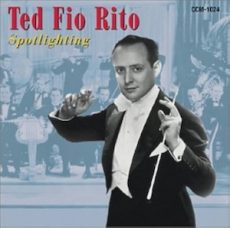
Theodore Salvatore Fiorito, known professionally as Ted Fio Rito, was born December 20, 1900 in Newark, New Jersey into an Italian immigrant couple. His mother had sung light opera in Italy. He attended Barringer High School in Newark.
He was still in his teens when he landed a job in 1919 as a pianist at Columbia’s New York City recording studio, working with the Harry Yerkes bands: the Yerkes Novelty Five, Yerkes’ Jazarimba Orchestra and The Happy Six.
His earliest compositions were recorded by the Yerkes groups and Art Highman’s band. Fio Rito had numerous hit recordings, notably his two number one hits, My Little Grass Shack in Kealakekua, Hawaii and I’ll String Along with You. Over the course of his life he composed more than 100 songs, collaborating with such lyricists as Ernie Erdman, Gus Kahn, Sam Lewis, Cecil Mack, Albert Von Tilzer, and Joe Young.
Moving to Chicago, Illinois in 1921 he joined the Dan Russo band and the following year became the co-leader of Russo and Fio Rito’s Oriole Orchestra and opened at Detroit, Michigan’s Oriole Terrace, with a rebranding as the Oriole Terrace Orchestra. Returning to Chicago they did their first radio remote broadcast in 1924. Throughout the 1920s the orchestra played Chicago, St. Louis, Kansas City, Cincinnati and San Francisco.
The Fio Rito Orchestra’s vocalists included Jimmy Baxter, Candy Candido, the Debutantes, Betty Grable, June Haver, the Mahoney Sisters, Muzzy Marcellino, Joy Lane, Billy Murray, Maureen O’Connor, Patti Palmer, Kay and Ward Swingle.
During the 1940s, the band’s popularity diminished, but Fio Rito continued to perform in Chicago and Arizona. He played in Las Vegas, Nevada during the 1960s. In his last years, he led a small combo at venues throughout California and Nevada until his death.
Composer, orchestra leader, and keyboardist Ted Fio Rito, who was popular on national radio broadcasts in the 1920s and 1930s, died from a heart attack on July 22, 1971 in Scottsdale, Arizona.
More Posts: bandleader,composer,history,instrumental,jazz,music,organ,piano
Daily Dose Of Jazz…
Peter Charles Strange was born December 19, 1938 in Plaistow, Newham, London, England and played violin as a child before switching to trombone as a teenager. His first major gig was with Eric Silk and his Southern Jazz Band when he was just 18 years old.
In 1957, Silk’s clarinetist Teddy Layton split off and formed his own band, and Strange went with him. Called up for National Service in 1958 and became a bandsman in the Lancashire Fusiliers, whilst serving in Cyprus. Following this he played with Sonny Morris, Charlie Gall, and Ken Sims, before joining Bruce Turner from 1961 to 1964.
1964 saw Turner in a 10 year partial retirement for about 10 years, playing but when he returned Peter played with Turner permanently in 1974, and in 1978 co-founded the Midnite Follies Orchestra with Alan Elsdon.
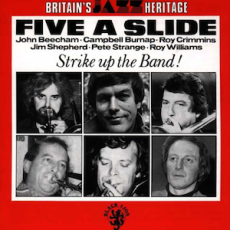
In 1980, he founded the five-trombone ensemble, Five-A-Slide, which featured Roy Williams and Campbell Burnap. He joined Humphrey Lyttelton’s band in 1983, and remained with the ensemble until the leader died. With the other members of the Lyttelton band, Strange performed on the 2001 Radiohead album Amnesiac.
Trombonist, arranger and composer Pete Strange, who played with his group The Great British Jazz Band, died of cancer in Banstead, Surrey, England on August 14, 2004 at the age of 65.
More Posts: arranger,bandleader,composer,history,instrumental,jazz,music,trombone