

Daily Dose Of Jazz…
Jimmy Vass was born March 31, 1937, in Philadelphia, Pennsylvania and acquired his first saxophone at age 18. After honing his chops on the local club scene, he relocated to New York City in 1963, working a series of day jobs while moonlighting as a musician.
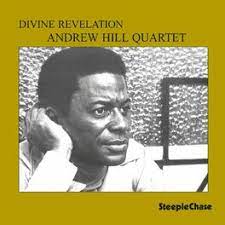
Vass first appeared on record in 1968 via Sunny Murray’s Hard Cores. With 1971’s Soul Story, he began an extended collaboration with the great soul-jazz organist Charles Earland. His most notable partnership paired him with avant-jazz pianist Andrew Hill, beginning with 1975’s Divine Revelation.
He played on Roberta Flack’s Feel Like Makin’ Love. He also lent his talents to recording sessions with Muhal Richard Abrams, Rashied Ali, Charles Mingus, Lionel Hampton, Ronnie Boykins and Woody Shaw. Never leading a recording date of his own, in the autumn of his career Jimmy worked as a music instructor and led his own New York-based group playing standards and originals.
Alto and soprano saxophonist and flutist Jimmy Vass, who emerged as one of the premier jazz sidemen of the 1970s, transitioned on September 21, 2006, at the age of 69.

Daily Dose Of Jazz…
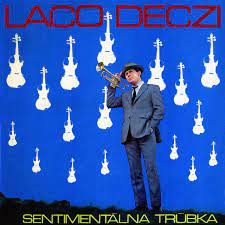
Ladislav Déczi was born on March 29, 1938 in Bernolákovo, Czechoslovakia and showed an interest in the trumpet while in elementary school. He went through several music ensembles in high school and during his military service performed in Prague, Czechoslovakia. After his discharge he remained in Prague and started performing with the Rokoko Theater Sextet and then with the Jazz Outsiders. He then went on to work with Karel Velebny’s S+HQ and as the frontman for the Reduta Quartet.
By the mid-Sixties he founded Jazz Celulla, joined the Czechoslovak All Star Band, the Jazz Orchestra of the Czechoslovak Radio, and the Dance Orchestra of the Czechoslovak Radio. He recorded several solo albums, composed orchestral compositions.
Emigrating to America in 1986 he again took the frontman space for Celula New York. He performed with Elvin Jones, Bill Watrous, Junior Cook, Dave Weckl and Sonny Costanzo. He recorded several duo albums with Sarka Dvorak and composed an abundance of music for film and television productions. He has won several awards during his career and has toured Eastern Europe especially his homeland, Germany and Austria.
Trumpeter, composer, and bandleader Laco Déczi, who also paints, continues to perform, compose and record.
More Posts: composer,history,instrumental,jazz,music,trumpet

Daily Dose Of Jazz…
Lance Bryant was born on March 23, 1961 in Markham, Illinois. His early musical experience was in the Baptist church. He received his formal education at Berklee College of Music in Boston, Massachusetts where he studied saxophone composition and arranging. Moving to New York City in the mid Eighties he continued his study of saxophone and arranging privately with Frank Foster.
In the Nineties he began his relationship with the Lionel Hampton Orchestra and three years later became the orchestra’s musical director and principal arranger. He made his film debut in Spike Lee’s Malcolm X. He traveled extensively with Phyllis Hyman, Jon Hendricks, Pete “LaRocca” Sims, Wallace Roney, Abdullah Ibrahim, Bootsy Collins,James Williams and numerous others. He was an on-stage musician for the Broadway musical review Swing, has recorded with Carla Cook, George Gee, Yoron Israel.
Returning to his church roots he became Director of Instrumental Music at Fountain Baptist Church, Minister of Music for Andover Baptist Church and released Psalm in 2002, his first of a four cd series of originals and jazz arrangements of hymns and spirituals. As an educator he has taught Covenant Christian Academy, Phillips Academy, his alma mater Berklee, and Jazz At Lincoln Center’s Educational Department.
Saxophonist, arranger and vocalist Lance Bryant when not touring with Abdullah Ibrahim and Ekaya, he continues to perform around New York and New Jersey with Andy Farber Orchestra and the New Lionel Hampton Big Band.
More Posts: arranger,history,instrumental,jazz,music,saxophone,vocal

Daily Dose Of Jazz…
Michael John David Westbrook was born March 21, 1936 in High Wycombe, Buckinghamshire, England and grew up in Torquay. After a spell in accountancy and his National Service he went to art school and studied painting and where he began his first bands in 1958, soon joined by such musicians as John Surman, Lou Gare and Keith Rowe.
Moving to London, England in 1962, Westbrook led numerous bands, large and small, and played regularly at the Old Place and the Little Theatre Club at Garrick Yard, St Martin’s Lane. Together with Chris McGregor’s Brotherhood of Breath, Westbrook shared the role of house-band at Ronnie Scott’s Jazz Club.
Becoming a key figure in the development of British jazz, Mike produced several big-band records for the Deram label, with the newly formed Mike Westbrook Concert Band, which varied in size from 10 to 26 musicians. His music was given exposure on BBC Radio. The British Arts Council awarded him a bursary to develop ‘Metropolis’ for an enlarged Concert Band, and the jazz suite was further broadcast on BBC Radio Three.
The 1970s saw a wide range of different projects beyond his orchestra work including but not limited to carnival processions, jazz-rock, avant-rock. At 80 years old, Westbrook, as part of the celebrations, recorded his first solo piano album for 40 years, titled PARIS.
Pianist, composer, and writer of orchestrated jazz pieces Mike Westbrook, who was awarded the OBE (Most Excellent Order of the British Empire), and recorded his latest album London Bridge Live in Zurich 1990 in 2022, continues to expand his musical horizons.
More Posts: bandleader,composer,history,instrumental,jazz,music,piano

Daily Dose Of Jazz…
James R. Coe was born in Tompkinsville, Kentucky on March 20, 1921 and moved to Indianapolis, Indiana with his family as a child. He first played in a band with Erroll “Groundhog” Grandy, who mentored J. J. Johnson and Wes Montgomery.
From 1938 to 1940, Coe performed with Buddy Bryant’s band and by the age of 20, was already touring with the Jay McShann band, which included Charlie Parker, Al Hibbler, Walter Brown, Bernard Anderson, Gene Ramey and Doc West.
In the 1950s Jimmy recorded for King Records as a member of Tiny Bradshaw’s band, then made a session with his own combo, though the company oddly insisted on billing him as Jimmy Cole. 1953 saw States recording his Gay Cats of Rhythm. By the late 1950s, he led the house band for the small Indianapolis-based label Note Records. Some of the material was licensed to Checker, which had better distribution.
Coe backed performers Wes Montgomery, Slide Hampton, David Baker, Freddie Hubbard, Carl Perkins, Larry Ridley, Leroy Vinnegar, as well as Aretha Franklin, Roy Hamilton, Gladys Knight & the Pips. and doo-wop performers, The Students.
Saxophonist Jimmy Coe transitioned in Indianapolis on February 26, 2004 at the age of 82.
More Posts: bandleader,history,instrumental,jazz,music,saxophone