

Daily Dose Of Jazz…
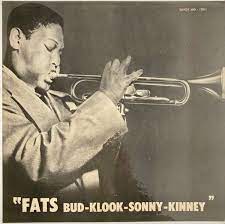
Alfred Wesley Hall was born on March 18, 1915 and grew up in Philadelphia, Pennsylvania. He played cello and tuba early in life before settling on bass at the age of 17. Moving to New York in 1936, Al played at different times through and into the Forties with Billy Hicks, Skeets Tolbert, and Teddy Wilson in both big band and small ensemble format.
Following time with Ellis Larkins and Mary Lou Williams, Hall took a job as a staff musician at CBS, working in Paul Baron’s orchestra on the Mildred Bailey Show. He also worked in Broadway theater pit orchestras for the next several decades. In 1946, he founded his own label, Wax Records, which was bought by Atlantic Records in 1949. He led five numbers on his own label in the mid Forties and four on Columbia Records Europe in 1959.
Hall had an extended partnership with Erroll Garner, playing with him intermittently from 1945 to 1963. He also played later in life with Benny Goodman in 1966, Hazel Scott, Tiny Grimes, and Alberta Hunter from 1977 to 1978, and Doc Cheatham. He recorded with Helen Merrill, Paul Quinichette, Duke Ellington, Harold Ashby, Eddie Condon, Della Reese, Teddy Wilson and numerous others.
Double bassist Al Hall, who recorded thirty albums as a sideman but none as a leader, transitioned on January 18, 1988.

More Posts: bass,history,instrumental,jazz,music
Daily Dose Of Jazz…
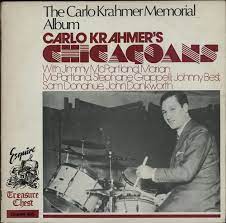
Carlo Krahmer was born William Max Geserick on March 11, 1914, Shoreditch, London, England. He was partially sighted at birth. He made his first record in 1939 and in the early Forties recorded with Johnny Claes’s band. He later joined Claude Bampton’s Blind Orchestra, a body sponsored by the National Institute for the Blind (now the RNIB), of which George Shearing was also a member. He worked in various bands, sometimes as leader, taking his own group to the Paris Jazz Festival in 1949.
In 1947, Krahmer co-founded Esquire Records with Peter Newbrook, a label which recorded bebop and licensed recordings from American blues and jazz labels. By 1950, Krahmer had retired from active performance, but had begun to teach aspiring drummers such as Victor Feldman.
Drummer and record producer Carlo Krahmer, whose label has continued to release music under the guidance of his wife Greta, transitioned on April 20, 1976 in London.
More Posts: drums,history,instrumental,jazz,music,record producer
Daily Dose Of Jazz…
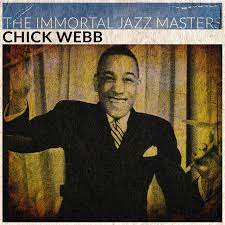
Pete Clark was born on March 10, 1911 in Birmingham, Alabama. His brothers Richard and Arthur “Babe” were trumpeter and saxophonist respectively. Like his brothers he studied music at the Fess Whatley School. He would learn to play both alto and baritone saxophone as well as clarinet.
He began his career playing with Montgomery’s Collegiate Ramblers, followed by a stint with Wayman Carver. He would go on to find membership in the orchestras of Chick Webb, Duke Ellington, Ella Fitzgerald, Louis Armstrong, Teddy Wilson, Rex Stewart, Don Redman, John Kirby, Happy Caldwell, Jimmy Jones, Teddy Wilson and others.
Alto and baritone saxophonist and clarinetist Pete Clark, also known as Pete Clarke, transitioned in New York City on March 27, 1975.
More Posts: clarinet,history,instrumental,jazz,music,saxophone
Daily Dose Of Jazz…
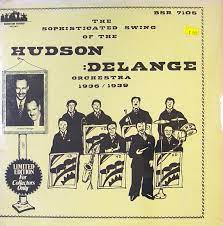
Will Hudson was born Arthur Murray Hainer on March 8, 1908 in Grimsby, Ontario, Canada. His parents immigrated to the United States when he was nearly two years old. Growing up in Detroit, Michigan he graduated from Southeastern High School in 1926. He changed his name sometime between 1931 and 1933 and put together his first big band in Detroit in the early 1930s. Hudson became a United States citizen on April 14, 1941.
In 1934 Hudson joined ASCAP in 1934. At some point during the early 1930s, he became a staff arranger for Irving Mills, writing stock arrangements. Mills was notable in various roles in the development of swing and jazz — was as much a promoter of songwriters, arrangers, and big bands as he was a publisher.
Hudson was a dance-band arranger, and co-leader with Eddie DeLange of the Hudson-DeLange Orchestra. Singers with the orchestra included Ruth Gaylor, Mitchell Ayres, Georgia Gibbs, and Nan Wynn. When the orchestra was at the height of its popularity, around 1940, Hudson had to withdraw for health reasons.
Hudson also led his own band, the Will Hudson Orchestra, from 1939 to about 1941. His vocalists included Kay Kenny, Elisse Cooper, Jayne Dover and Ruth Gaylor.
DeLange and Hudson wrote the lyrics to several songs composed by Hudson and in 1941 he began focusing on arranging, full-time. Enlisting in the U.S. Army in 1943, serving in the U.S. Army Air Force. He became the arranger for the Glenn Miller Army Air Force Band until his discharge in 1945.
1948 saw Will enrolled at Juilliard where he studied orchestration and composition, earning a diploma in 1952 and post-grad diploma the following year. He also studied composition privately. His compositions include Moonglow, Tormented, Sophisticated Swing, Mr. Ghost Goes to Town, Devil’s Kitchen, You’re Not the Kind and Witch Doctor.
Composer, arranger, and big band leader Will Hudson, active from the mid-1930s through the mid-Fifties, transitioned on July 16, 1981.
More Posts: arranger,bandleader,composer,history,instrumental,jazz,music
Daily Dose Of Jazz…
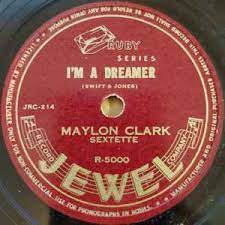
Mahlon Clark was born on March 7, 1923 and raised in Portsmouth, Virginia. He started out in vaudeville as a child, however, as a teenager he became a big band musician playing for the Ray McKinley and Will Bradley bands, among others.
Relocating to California during World War II and after serving in the armed forces, found employment at Paramount Pictures where he performed music on many movie soundtracks.
In 1962 Mahlon was hired by Lawrence Welk to join his orchestra and his television show. For six years he played both the clarinet and saxophone on the weekly show and on stage when the Musical Family went out on tour.
Leaving the Welk organization in 1968, Clark continued to perform on many more movie soundtracks and with numerous artists such as Frank Sinatra and Madonna.
Clarinetist and saxophonist Mahlon Clark transitioned on September 20, 2007 at the age of 84.
More Posts: clarinet,history,instrumental,jazz,music,saxophone