

Daily Dose Of Jazz…
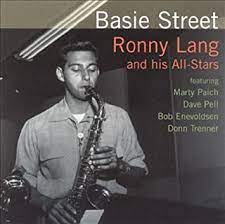
Ronnie Lang was born July 24, 1929 in Chicago, Illinois. Sometimes spelled Ronny, his professional début was with Hoagy Carmichael’s Teenagers. He went on to play for a year with Earle Spencer in 1946, then with Ike Carpenter, and Skinnay Ennis the following year.
Gained attention during his two tenures with Les Brown’s Orchestra between 1949–50 and 1953 to 1956, he recorded with the Dave Pell Octet in the mid-1950s. During this time he moved to California and attended Los Angeles State College of Applied Arts and Sciences studying music and woodwinds.
By 1958 he had become a prolific and busy studio musician in Los Angeles, often employed by Henry Mancini. Ronnie played the iconic sax melodic line in Bernard Herrmann’s score for the 1976 movie Taxi Driver. He also recorded with Pete Rugolo, Bob Thiele, and Peggy Lee.
Alto saxophonist Ronnie Lang, who also played flute and clarinet in the bop, progressive, big band, swing idioms, is now retired at 92.

More Posts: bandleader,clarinet,flute,history,instrumental,jazz,music,saxophone
The Quarantined Jazz Voyager
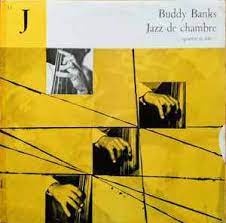
This week the Jazz Voyager is choosing from the library of rare gems seldom heard on this side of the pond. Thanks to the internet, as you listen to the twenty-nine minutes of the album, remember to keep vigilant about the safety of your health and others. On the turntable is the hard bop Jazz De Chambre, a 1954 recording by double bassist Buddy Banks.
Buddy Banks, originally a saxophonist who switched to bass, had arrived in Europe after World War II. On this session he is accompanied by drummer Roy Haynes, pianist Bob Dorough, and guitarist Jimmy Gourley. The leader takes the spotlight in a subtle take of Yesterdays, though a strange clicking mars an otherwise swinging “I Love You.” Banks’ group also offers serviceable interpretations of modern pieces like Gerry Mulligan’s Line for Lyons and Milt Jackson’s Bag’s Groove.
The album was recorded at Geneix Studio in Paris, France and was produced by Frank Ténot. The liner notes were provided by Alain Tercinet with English translation by Martin Davies.
Tracks | 32:56- A Night In Tunisia (Dizzy Gillespie / Frank Paparelli) ~ 4:26
- Almost Like Being In Love (lan Jay Lerner / Frederick Loewe) ~ 3:19
- Bag’s Groove (Milt Jackson) ~ 3:47
- Yesterdays (Otto Harbach / Jerome Kern) ~ 3:29
- I Love You (Cole Porter) ~ 5:58
- Line For Lyons (Gerry Mulligan) ~ 3:46
- You Go To My Head (J. Fred Coots / Haven Gillespie) ~ 4:29
- Buddy Banks Blues (Buddy Banks) ~ 3:27
- Bob Dorough ~ piano
- Buddy Banks ~ double bass
- Jimmy Gourley ~ guitar
- Roy Haynes ~ drums

More Posts: adventure,album,club,double bass,genius,jazz,museum,music,preserving,restaurant,travel
Daily Dose Of Jazz…
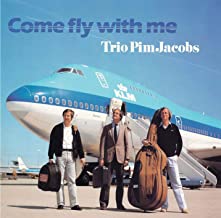
Pim Jacobs was born Willem Bernard Jacobs on October 29, 1934 in Hilversum, the Netherlands to artistic parents and was the older brother to bassist Ruud. With his brother he formed a trio with drummer Wessel Ilcken in 1954 and the band grew with the addition of guitarist Wim Overgaauw and Ilcken’s wife, Rita Reys.
The trio recorded with Herbie Mann in 1956 and following Ilcken’s death in 1957, Pim and Reys performed as a duo or trio with Overgaauw. They often recorded and played jazz festivals in Europe and New Orleans, Louisiana featuring vocal standards and bebop material.
He worked as a producer of non-jazz radio and television programs beginning in 1964, briefly operated the Go Go Club in Loosdrecht from 1967, and recorded with Bob Cooper, Louis van Dijk, and his own trio. For television, he hosted the music show Music for All, composed film music, and in the 1970s and 1980s he presented concerts in schools.
Pianist, composer and television presenter Pim Jacobs, who had a theatre in Maarssen named for him, passed away on July 3, 1996 in Tienhoven, the Netherlands.

More Posts: bandleader,history,instrumental,jazz,music,piano
Daily Dose Of Jazz…
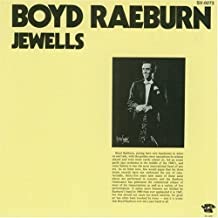
Boyd Albert Raeburn was born in Faith, South Dakota on October 27, 1913 and attended the University of Chicago, where he led a campus band. Gaining his earliest experience as a commercial bandleader at 1933~1934 Chicago’s World Fair, for the rest of the decade, he worked in and often led dance bands.
In the Forties the group passed through swing before becoming identified with the bop school. He went on to start a big band, which was active from 1944 to 1947, performing arrangements comprable to those used by Woody Herman and the progressive jazz of Stan Kenton during the same period. The compositions arranged by George Handy were the most contemporary, and after Handy’s departure Johnny Richards joined in 1947 and for the next year he wrote 50 compositions.
He composed Rip Van Winkle for his second wife, singer Ginny Powell, who sang with her husband’s group, as well as with Harry James and Gene Krupa. Boyd left music in the mid-1950s and they moved to Nassau, Bahamas where his wife transitioned.
Settling in New Orleans, Louisiana for a time, he ran a furniture store. Bass saxophonist and bandleader Boyd Raeburn passed away of a heart attack at age 52 on August 2, 1966 in Lafayette, Indiana.
More Posts: bandleader,history,instrumental,jazz,music,saxophone
Daily Dose Of Jazz…
Born May 18, 1894 in North Buxton, Ontario, Canada, Louis Stanley Hooper was raised in Ypsilanti, Michigan. He attended the Detroit Conservatory, where he played locally in dance orchestras in the 1910s. He then moved to New York City around 1920, recorded with Elmer Snowden and Bob Fuller frequently in the middle of the decade, and performed with both of them in Harlem as well as with other ensembles.
Hooper served for some time as the house pianist for Ajax Records and accompanied many blues singers on record, including Martha Copeland, Rosa Henderson, Lizzie Miles, Monette Moore, and Ethel Waters. He participated in the Blackbirds Revue of 1928.
In 1932 returning to Canada he played in Mynie Sutton’s dance band, the Canadian Ambassadors. Lou did local work solo and in ensembles for the next two decades, then was brought back into the limelight by the Montreal Vintage Music Society in 1962. He released an LP of ragtime piano tunes in 1973 entitled Lou Hooper, Piano.
As an educator he taught at the University of Prince Edward Island late in his life and appeared regularly on CBC television in Halifax. His papers, which include unpublished compositions and an autobiography, are now held at the National Library of Canada in Ottawa, Ontario. Pianist Lou Hooper passed away on September 17, 1977, Charlottetown, Prince Edward Island.

More Posts: bandleader,composer,history,instrumental,jazz,music,piano