


Daily Dose Of Jazz…
Elmer Schoebel was born in East St. Louis, Illinois on September 8, 1896. Early in his career he played along to silent films in Champaign, Illinois. After moving on to vaudeville late in the 1910s, he played with the 20th Century Jazz Band in Chicago, Illinois in 1920.
1922-23 saw him as a member of the New Orleans Rhythm Kings, then led his own band, known variously as the Midway Gardens Orchestra, the Original Memphis Melody Boys and the Chicago Blues Dance Orchestra, before joining Isham Jones in 1925. After returning to Chicago, Elmer played with Louis Panico and Art Kassel, and arranged for the Melrose Publishing House.
By the 1930s, Schoebel was writing and arranging, working as the chief arranger for the Warner Brothers publishing division. From the 1940s onward he did some performing with Conrad Janis, Blue Steele’s Rhythm Rebels (1958), and with his own ensembles in St. Petersburg, Florida. He continued to play up until his death.
Schoebel wrote a number of standards, including Bugle Call Rag, Stomp Off- Let’s Go, Nobody’s Sweetheart Now, Farewell Blues, and Prince of Wails. While a member of the New Orleans Rhythm Kings he wrote I Never Knew What A Girl Could Do, Oriental, and Discontented Blues.
Pianist, composer and arranger Elmer Schoebel, who as a leader only recorded one of his own compositions in 1929 titled Prince of Wails, transitioned on December 14, 1970.

More Posts: arranger,bandleader,composer,history,instrumental,jazz,music,piano

Daily Dose Of Jazz…
John Zorn was born September 2, 1953 in New York City, New York and attended the United Nations International School, where he studied piano, guitar and flute from an early age. Exposed by his families musical tastes in classical, world, jazz, French chansons, country doo-wop and rock and roll records, he spent his teenage years exploring classical and film music, listening to The Doors and playing bass in a surf band. He explored experimental and avant-garde music as well as cartoon soundtracks and film scores. He went on to teach himself orchestration and counterpoint by transcribing scores and studied composition under Leonardo Balada.
After discovering Anthony Braxton’s album For Alto when he was studying composition at Webster College in St. Louis, Missouri, Zorn began playing saxophone and attended classes taught by Oliver Lake. While at Webster, he incorporated elements of free jazz, avant-garde and experimental music, film scores, performance art and the cartoon scores of Carl Stalling into his first recordings.
Leaving Webster after three semesters, John lived on the West Coast before returning to Manhattan where he gave concerts in his apartment and other small NY venues, playing saxophone and a variety of reeds, duck calls, tapes, and other instruments. He immersed himself in the underground art scene, assisting Jack Smith with his performances and attending plays by Richard Foreman
Zorn entered New York City’s downtown music scene in the mid-1970s, collaborating with improvising artists while developing new methods of composing experimental music. Over the next decade he performed throughout Europe and Japan and recorded on independent US and European labels. In 1986 he received acclaim with the release of his radical reworking of the film scores of Ennio Morricone, The Big Gundown, followed by Spillane, an album featuring his collage-like experimental compositions. Spy vs Spy and Naked City both demonstrated his ability to merge and blend musical styles in new and challenging formats.
Having spent time in Japan in the late 1980s and early ’90s John returned to Lower East Side Manhattan to establish the Tzadik record label in 1995, enabling him to establish independence, maintain creative control, and ensure the availability of his growing catalog of recordings. He prolifically recorded and released new material for the label, issuing several new albums each year, along with recordings by many other artists.
He performs on saxophone with the groups Naked City, Painkiller, and Masada but more often conducts bands like Moonchild, Simulacrum and several of his Masada-related ensembles. He composes concert music for classical ensembles and orchestras, produces music for opera, sound installations, film and documentary, and tours Europe, Asia, and the Middle East. Composer, conductor, saxophonist, arranger and producer John Zorn continues his exploration of music and adds to his diverse repertoire.
Bestow upon an inquiring mind a dose of a New York City composer to motivate the perusal of the genius of jazz musicians worldwide whose gifts contribute to the canon…
More Posts: arranger,bandleader,composer,history,instrumental,jazz,music,saxophone

Daily Dose Of Jazz…
Allen Nicholas Farnham was born May 19, 1961 in Boston, Massachusetts and first played piano when he was 12. In 1983 he graduated from the Oberlin Conservatory of Music in Ohio.
Moving to New York City in the following year Allen freelanced before signing with Concord Records in 1986. Between 1986 and 1990 he led his own quartet, with either Joe Lovano or Dick Oatts on saxophone and Drew Gress and Jamey Haddad filling out the rhythm section and from 1990 he was pianist and music director for Susannah McCorkle.
He has produced more than fifty albums, is on the faculty of New Jersey City University and has recorded several albums under his own name. Pianist, record producer, educator, composer and arranger Allen Farnham continues to pursue all his musical endeavors.

More Posts: arranger,bandleader,composer,history,instrumental,jazz,music,piano,record producer

Daily Dose Of Jazz…
Claus Ogerman, born Klaus Ogermann on April 29, 1930 in Ratibor (Racibórz), Upper Silesia, Germany is now part of Poland. He began his career with the piano but became one of the most prolific arrangers of the 20th century.
In the 1950s, Ogerman worked in Germany as an arranger-pianist with Kurt Edelhagen, saxophonist and bandleader Max Greger, and Delle Haensch. He also worked as a part-time vocalist and recorded several 45 rpm singles under the pen name of Tom Collins, duetting with Hannelore Cremer. He also recorded a solo vocal with the Delle Haensch Jump Combo.
Moving to the United States in 1959, Claus joined producer Creed Taylor at Verve Records, working on recordings with many artists. During this time he also arranged many pop hits, and in 1967 joined Creed Taylor on the A&M/CTi label. Ogerman charted under his own name in 1965 with the RCA single Watusi Trumpets.
In 1980 Ogerman won a Grammy Award for Best Instrumental Arrangement for Soulful Strut and the 2010 Grammy Award for Best Instrumental Arrangement Accompanying Vocalists for Quiet Nights. He composed music for seventeen movies, recorded fifteen albums, and released a compilation in 2002.
He arranged and conducted an impressive 58 albums with George Benson, Solomon Burke, Donald Byrd, Betty Carter, Sammy Davis Jr., Bill Evans, Connie Francis, Michael Franks, Stan Getz, Astrud Gilberto, João Gilberto, João Donato, Lesley Gore, Stephane Grappelli, Al Hirt, Billie Holiday, Johnny Hodges, Freddie Hubbard, Willis Jackson, Cal Tjader, Antônio Carlos Jobim, Dr. John, Wynton Kelly, Ben E. King, Diana Krall, Wes Montgomery, Danilo Perez, Oscar Peterson, Frank Sinatra, Jimmy Smith, Barbra Streisand, Cal Tjader, Mel Tormé, Stanley Turrentine, and Kai Winding.
Having worked in the jazz, top 40, rock, pop, R&B, soul, easy listening, Broadway and classical music fields, it has never been determined the exact number of recording artists for whom he has either arranged or conducted during his career. Arranger, conductor, and composer Claus Ogerman,transitioned on March 8, 2016
More Posts: arranger,bandleader,composer,conductor,history,instrumental
Daily Dose Of Jazz…
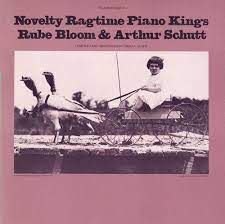
Reuben Bloom was born April 24, 1902 in New York City, New York to Jewish parents. During the 1920s he wrote many novelty piano solos, recorded for the Aeolian Company’s Duo-Art reproducing piano system various titles including his Spring Fever. His first hit came in 1927 with Soliloquy; his last was Here’s to My Lady in 1952, which he wrote with Johnny Mercer. In 1928, he made a number of records with Joe Venuti’s Blue Four for OKeh, including five songs he sang, as well as played piano.
He formed and led a number of bands during his career, most notably Rube Bloom and His Bayou Boys, which recorded three records in 1930. The Bayou Boys consisted of Benny Goodman, Adrian Rollini, Tommy Dorsey, Mannie Klein and Frankie Trumbauer in the Sioux City Six.
His I Can’t Face the Music, Day In Day Out, Fools Rush In (Where Angels Fear To Tread) and Give Me The Simple Life has become a part of the Great American Songbook and jazz standards.
During his career, he worked with many well-known performers, including those mentioned above and Ruth Etting, Stan Kenton, Jimmy Dorsey and collaborated with a wide number of lyricists, such as Ted Koehler, and Mitchell Parish.
Pianist, arranger, bandleader, recording artist, vocalist, and author Rube Bloom published several books on piano method before he transitioned on March 30, 1976 in his home city.
More Posts: arranger,author,bandleader,composer,history,instrumental,jazz,music,piano,vocal