

Daily Dose Of Jazz…
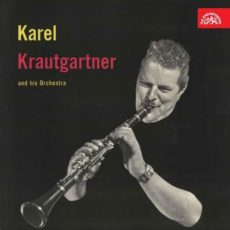
Karel Krautgartner was born on July 20, 1922 in Mikulov, Moravia and began to play piano at the age of eight. In 1935, after moving to Brno, he found interest mainly in the radio broadcasting and especially in jazz. He began to study clarinet privately with Stanislav Krtička, acquiring necessary skills and inherited a fanatic passion for clarinet construction and its components.
In 1936 Krautgartner founded the student orchestra Quick Band and six years later signed his first professional contract as a saxophonist in the Gustav Brom Orchestra in the hotel Passage in Brno. In 1943 he gradually created Dixie Club and started to arrange in the Benny Goodman and Glenn Miller styles. During 1945 – 1955, the core of the Dixie Club moved gradually to Prague and became a part of Karel Vlach orchestra. Karel became leader of the saxophone section and started to contributing his own compositions.
1956 saw him founding the Karel Krautgartner Quintet along with Karel Velebný. The group played in various line-ups modern jazz, swing, dixieland and accompanied popular singers. From 1958 to 1960 he performed with the All star band, an orchestra playing in west-coast style, and dixieland with Studio 5. Between 1960 and 1968 he became the head of the Taneční Orchestr Československého Rozhlasu (Dance Orchestra of Czechoslovakia Radio), renamed to Karel Krautgartner Orchestra in 1967.
Following the Soviet invasion of Czechoslovakia, he emigrated to Vienna, Austria in 1968 and became the chief conductor of the 0RF Bigband. Later he moved to Cologne, Germany. Clarinetist, saxophonist, arranger, composer, conductor and teacher Karel Krautgartner passed away on September 20, 1982 in Germany.
Sponsored By


#preserving genius
Daily Dose Of Jazz…
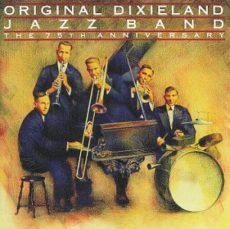
Antonio Sparbaro, better known as Tony Sbarbaro or Tony Spargo was born on June 27, 1897 in New Orleans, Louisiana to an immigrant Sicilian family. Early in his career he played with the Frayle Brothers Band, possibly as early as 1911 and the Reliance Band of Papa Jack Laine.
After doing side work with Merritt Brunies and Carl Randall he joined the Original Dixieland Jazz Band for their initial recordings in 1917. Tony became its leader in the 1940s and remained a member of the ensemble until its dissolution in the 1960s. At the time the band broke up he was the only founding member still in the group.
Sbarbaro composed for the group, writing the tune Mourning Blues among others. He remained a fixture of Dixieland jazz performance for most of his life, performed at the New York World’s Fair in 1941 and with Connee Boswell in the 1950s. Later in life in New Orleans he played with Miff Mole, Big Chief Moore, Pee Wee Erwin, and Eddie Condon. Quitting music in the Sixties due to the popularity of rock & roll, drummer Tony Sbarbaro passed away on October 30, 1969.

#preserving genius
More Posts: drums
Daily Dose Of Jazz…
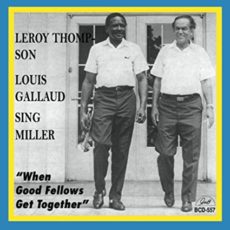
Sing Miller was born James Miller in New Orleans, Louisiana on June 17, 1914. He started out his career singing with the Harmonizing Browns Quartet and playing banjo, but in the late 1920s he switched to piano. He did solo freelance work and as an accompanist in New Orleans in the 1930s, playing with Percy Humphrey for a time.
Serving in the military during World War II, after his discharge he played with Earl Foster’s band from 1945 to 1961. During the 1960s he was a regular at Preservation Hall, working with Kid Thomas Valentine, Kid Sheik Colar, The Humphrey Brothers, Jim Robinson, and Polo Barnes. He did asolo tours of Europe in 1979 and 1981, and recorded two full-length albums under his own name, a 1972 effort for Dixie Records and one in 1978 for Smoky Mary.
Pianist Sing Miller, who was a longtime performer on the New Orleans jazz scene, passed away on May 18, 1990.
Sponsored By

#preserving genius
More Posts: piano
Daily Dose Of Jazz…
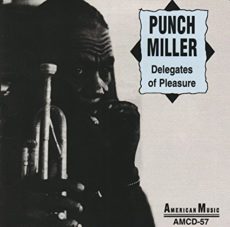
Punch Miller was born Ernest Miller on June 10, 1894 in Raceland, Louisiana and learned to play the trumpet as a child. He was also known as Kid Punch Miller in New Orleans, Louisiana, where he was based from 1919 to 1927,
He moved to Chicago, Illinois and worked with various bands, including Jelly Roll Morton and Tiny Parham, as well as appearing on a number of recordings. His lifestyle and the decline of Dixieland or New Orleans jazz led to his return to mostly doing festivals and falling out of the limelight. This changed with the rising importance of the Preservation Hall Jazz Band and he returned to national attention.
He returned to New Orleans, playing at Preservation Hall and leading a band under his own name, in addition to playing with other groups. In 1963 he toured Japan with the clarinetist George Lewis.
Trumpeter Punch Miller, who was the subject of the television documentary Til the Butcher Cuts Him Down, passed away on December 2, 1971 in New Orleans.
Sponsored By
#preserving genius
More Posts: trumpet
Daily Dose Of Jazz…
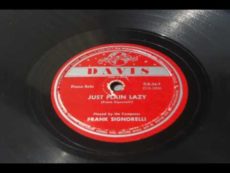
Frank Signorelli was born in New York City on May 24, 1901 and was a founding member of the Original Memphis Five at age sixteen in 191. He went on to join the Original Dixieland Jazz Band briefly in 1921. By 1927 he was playing in Adrian Rollini’s New York ensemble, and subsequently worked with Eddie Lang, Bix Beiderbecke, Matty Malneck and Paul Whiteman.
1935 saw him as a part of Dick Stabile’s All-America Swing Band and from 1936 to ‘38 he played in the revived version of the Original Dixieland Jazz Band. He recorded with Phil Napoleon in 1946 and with Miff Mole in 1958.
As a songwriter, Signorelli composed I’ll Never Be The Same, initially called Little Buttercup by Joe Venuti’s Blue Four, Gypsy that was recorded by Paul Whiteman and his Orchestra, Caprice Futuristic, Evening, Anything, Bass Ale Blues, Great White Way Blues, Park Avenue Fantasy, Sioux City Sue, Shufflin’ Mose, Stairway to the Stars and A Blues Serenade which was recorded by Signorelli in 1926, Glenn Miller and his Orchestra in 1935 and Duke Ellington’s version in 1938.
On December 9, 1975, pianist Frank Signorelli, who never led a recording session, passed away in New York City, New York.

More Posts: piano