

Daily Dose Of Jazz…
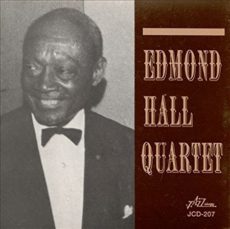
Edmond Hall was born on May 15, 1901 in Reserve, Louisiana, into a musical family. His father, Edward, played the clarinet in the Onward Brass Band, joined by Edmond’s maternal uncles, Jules Duhe on trombone, Lawrence Duhe on clarinet, and Edmond Duhe on guitar. The Hall brothers, Robert, Edmond, and Herbert, all became clarinetists, but Edmond was first taught guitar by his uncle Edmond. When Hall finally picked up the clarinet, he played it within a week.
Tired of working as a farm-hand, by 1919 he left for New Orleans where he signed up with the band of Bud Rousell, then with trombonist Jack Cary and blues cornetist Chris Kelley. His first big break came in late 1920, when he went to a dance at Economy Hall, saw Buddy Petit and discovered his clarinet player had left the band and the following Saturday Hall was sitting in with Petit’s band as a replacement until 1922.
Arriving in Pensacola, Florida in 1923, there was a series of band as he joined Lee Collins, then Mack Thomas, the Pensacola Jazzers, where Hall met the young trumpeter Charles “Cootie” Williams, on to “Eagle Eye” Shields, the Alonzo Ross DeLuxe Syncopators, finally in 1928 with pianist Arthur “Happy” Ford.
1929 saw Edmond moving back to New York he joined Charlie Skeet’s band, followed by Claude Hopkins and an invitation to play the Savoy Ballroom. By 1935 he left Hopkins and took residency in Billy Hicks’ Sizzling Six. Hall’s new sound on the clarinet led him to recording with the big stars and in 1937 he had his first recording session with Billie Holiday, sitting alongside tenor saxophonist Lester Young. Leaving Hicks he stepped into Café Society, joining Joe Sullivan’s band in late 1937. In between the regular job at the Cafe Society he recorded with Bud Freeman, Teddy Wilson, Charlie Christian, Henry “Red” Allen, J.C. Higginbotham, Art Tatum, Big Joe Turner, Hot Lips Page, Zutty Singleton, Meade Lux Lewis, Big Sid Catlett, Josh White, Ida Cox, Coleman Hawkins, Helen Ward, Vic Dickenson, Sidney de Paris, Wild Bill Davison, Eddie Heywood, Roy Eldridge and Jack Teagarden among others.
In 1941 Edmond led his first recording session as a leader, joined Teddy Wilson’s outfit, and made recordings as Edmond Hall’s Blue Note Jazzmen, the Edmond Hall Sextet, the Edmond Hall Celeste Quartet, Edmond Hall’s Star Quintet, Ed Hall and the Big City Jazzmen, and Edmond Hall’s Swingtet. Very popular among the musicians and critics and was frequently invited to the New York Town Hall Concerts led by Eddie Condon.
By 1944 Hall began fronting his own band, becoming a draw for Café Society. More recording dates followed for the famous Commodore Records and Blue Note labels. While business at the Café Society was exceedingly good, Hall appeared at Town Hall Concerts in between. Hall relocated successfully with his band to the Café Society Uptown and would also play for World War II servicemen.
Throughout his career he would perform with pianist George Wein, Louis Armstrong’s All Stars, tour Europe, settle in Los Angeles, California to shoot the film High Society with Grace Kelly and Bing Crosby, and appear on the Ed Sullivan Show. In 1952, Hall, Buzzy Drootin and Ralph Sutton appeared as the Ralph Sutton Trio in Saint Louis, where they played the Encore Lounge for several weeks and were the first mixed trio there. He received the Esquire Magazine Silver Award for clarinet, a certificate for nomination as one of the outstanding jazz artists of 1961 from Playboy Magazine and was awarded as the best Clarinetist by the English Melody Maker.
Clarinetist and bandleader Edmond Hall, who also played alto and baritone saxophones and is perhaps best known for the 1941 chamber jazz song Profoundly Blue, which is regarded as a pre-World War II jazz classic, passed away on February 11, 1967 in Boston, Massachusetts.
Sponsored By

Voices From The Community

#preserving genius
Daily Dose Of Jazz…
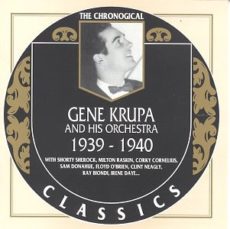
Floyd O’Brien was born May 7, 1904 in Chicago, Illinois and first played trombone with the Austin High School Gang in the 1920s and later in the decade he played with Earl Fuller, Floyd Town, Charles Pierce, Thelma Terry, and Husk O’Hare. Between 1930-31 he worked in a pit band at a theater in Des Moines, Iowa.
O’Brien moved to New York City and played with Mal Hallett, Joe Venuti, Smith Ballew, Mike Durso, Phil Harris, Gene Krupa and Bob Crosby between 1932 and 1942. Relocating to Los Angeles, California in 1943 he played with Eddie Miller, Bunk Johnson, Shorty Sherock, Jack Teagarden, and Wingy Manone.
By 1948 Floyd was back in Chicago performing with with Bud Freeman, Art Hodes and Danny Alvin. He recorded with Freeman as early as 1928 and other recordings include sessions with Eddie Condon, Fats Waller, Mezz Mezzrow, George Wettling, Charles LaVere, Albert Nicholas and Smokey Stover.
Trombonist Floyd O’Brien, whose lone session as a bandleader yielded two singles for Jump Records in 1945 and were also released under Charles LaVere’s name, passed away on November 26, 1968.
Sponsored By

www.whatissuitetabu.com
#preserving genius
More Posts: trombone
Daily Dose Of Jazz…
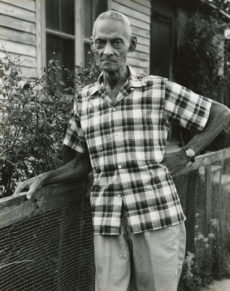
Lawrence Duhé was born April 30, 1887 in La Place, Louisiana. He played with Kid Ory in his youth, and followed Ory to New Orleans, Louisiana. There he played clarinet with Ory, King Oliver, Frankie Duson, and led his own band in Storyville.
Duhé moved to Chicago, Illinois in 1917 and his band became popular in the clubs and dance halls. They played in the stands at the notorious 1919 World Series. During the Roaring Twenties he led Sugar Johnnie’s New Orleans Creole Orchestra comprised of Lil Hardin, Sidney Bechet, King Oliver, Freddie Keppard, tubby Hall and Mutt Carey among others.
By the mid-1920s he had returned to New Orleans and for a time played with Armand J. Piron. After touring with the Rabbit Foot Minstrel Show, Lawrence worked out of Lafayette and New Iberia in Southwest Louisiana with such musicians as Evan Thomas and Bunk Johnson before retiring from music in the 1940s.
Clarinetist and bandleader Lawrence Duhé, passed away in Lafayette, Louisiana in 1960.
Sponsored By
www.whatissuitetabu.com
#preserving genius
More Posts: clarinet
Daily Dose Of Jazz…
Abram Lincoln was born March 29, 1907 in Lancaster, Pennsylvania, one of six brothers, and began playing trombone at age five, instructed by his cornet playing father John. His older brother Bud, would also become a professional musician, as would brothers Roy and Chet.
He began working professionally in the early 1920s and 1930s spending time playing with Adrian Rollini’s California Ramblers, replacing Tommy Dorsey. Lincoln also performed with Arthur Lange, Ace Brigode, Roger Wolfe Kahn, Paul Whiteman, and Ozzie Nelson.
As a studio musician, Abe most prominently performed occasional solos and dixieland-stylings during the musical portions on the Old Time Radio show on NBC. In the 1930s and into the 1940s he work primarily in Los Angeles, California studios as a sideman. He played on Fibber McGee and Molly from the mid-40s until 1953 with the Billy Mills Orchestra.
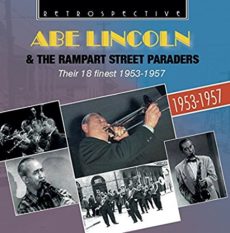
During the Dixieland revival of the 1950s Abe’s career saw a resurgence, playing with Wingy Manone, the Rampart Street Paraders, Red Nichols, Bob Scobey, Pete Fountain, Jack Teagarden, and Matty Matlock.
Lincoln played his trombone for music and sound effects for Walter Lantz Woody Woodpecker cartoons and some Buster Keaton comedies. He recorded with Wild Bill Davison and did freelance work into the 1970s, though he went into semi-retirement by the 1980s. Trombonist Abe Lincoln, who played weddings and special occasions, passed on June 8, 2000 in Van Nuys, California.
Sponsored By

#preserving genius
More Posts: trombone
Daily Dose Of Jazz…
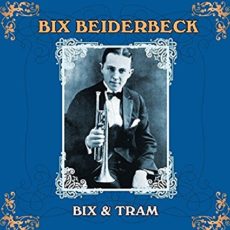
Bix Beiderbecke was born Leon Bismark Beiderbecke on March 10, 1903 in Davenport, Iowa and began playing piano at age two standing on the floor and playing with his hands over his head. At seven he was lauded in the Davenport Daily Democrat tas being able to play any selection he hears. At age ten he slipping aboard one or another of the excursion boats to play the Calliope or at home trying to duplicate the silent matinee melodies.
His love of jazz came from listening to records by the Original Dixieland Jazz Band his brother brought him and from the excursion boats that stopped on the Mississippi. Bix taught himself to play cornet largely by ear listening to Nick LaRocca’s horn lines, leading him to adopt a non-standard fingering creating his original sound.
While attending Davenport High School from 1919 to 1921 he played professionally with various bands, including those of Wilbur Hatch, Floyd Bean and Carlisle Evans, and in 1920 Beiderbecke performed for the school’s Vaudeville Night, singing in a vocal quintet called the Black Jazz Babies and playing his horn. However, due to his inability to read music he never got his union card.
Enrolled at the exclusive Lake Forest Academy, north of Chicago, Bix would often jump a train into Chicago, Illinois to catch the hot jazz bands at clubs and speakeasies, sometimes sit in with the New Orleans Rhythm Kings and go to the Southside to listen to Black musicians who he referred to as real jazz musicians. Soon after, Beiderbecke began pursuing a career in music, moved to Chicago, joined the Cascades Band and gigged around the city until the fall of 1923.
He first recorded with Midwestern jazz ensembles, The Wolverines and The Bucktown Five in 1924, after which he played briefly for the Detroit-based Jean Goldkette Orchestra before joining Frankie “Tram” Trumbauer for an extended gig at the Arcadia Ballroom in St. Louis. In 1926 Beiderbecke and Trumbauer joined Goldkette, touring widely and famously played a set opposite Fletcher Henderson at the Roseland Ballroom in New York City. He made his greatest recordings Singin’ the Blues and I’m Coming, Virginia in 1927 and the following year the pair left Detroit for New York City and the best-known dance orchestra in the country: the Paul Whiteman Orchestra.
During the Whiteman period Bix suffered a precipitous decline in his health, brought on by the demand of the bandleader’s relentless touring and recording schedule in combination with his persistent alcoholism. Support from family and Whiteman along with rehabilitation centers did not help to stem his drinking or decline.
Cornetist, jazz pianist, and composer Bix Beiderbecke, one of the most influential jazz soloists of the Twenties, along with Louis Armstrong and Muggsy Spanier, passed away of lobar pneumonia in his apartment in Sunnyside, Queens, New York on August 6, 1931 at the age of 28.
Sponsored By

#preserving genius