

Daily Dose Of Jazz…
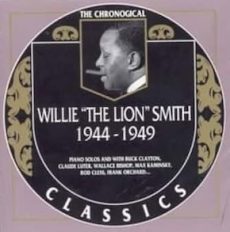
Frank Orchard was born on September 21, 1914 in Chicago, Illinois. He studied at Juilliard from 1932-33 and performed for a year with Stanley Melba’s band, but then worked outside of music altogether, mostly as a salesman until 1941.
Orchard became a part of the New York Dixieland scene in the 1940s, working with Jimmy McPartland, Jimmy Dorsey, Louis Armstrong, Bobby Hackett, Max Kaminsky, Wingy Manone, Joe Marsala and the Eddie Condon gang.
The mid-1950s saw Frank’s move to Dayton, Ohio and eventually to St. Louis, Missouri and still playing trombone although out of the spotlight. He never led his own record date and returned to New York in the 1960s. He worked regularly at Jimmy Ryan’s from 1970-71 and with Billy Butterfield in 1979.
Trombonist, violinist, banjoist and tubist Frank Orchard, who also played in the Willie “The Lion” Smith band with Jack Lesberg, Mac McGrath, Max Kaminsky, Rod Cless, died December 27, 1983 in Manhattan, New York City, New York.

More Posts: banjo,history,instrumental,jazz,music,trombone,tuba,violin
Daily Dose Of Jazz…
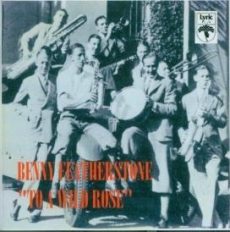
Benny Featherstone was born on July 30, 1912 in Brown’s Creek, Tasmania, Australia. His family moved to Melbourne, Australia around the time he was six where he attended Melbourne Grammar and played trombone with the school orchestra and its Footwarmers band between 1926 and 1927. He went on to play drums with Joe Watson and His Green Mill/Wentworth Hotel Orchestra for three years when he was 17. During those years he recorded with the Beachcombers.
Between 1931 and 1933 he worked with bands led by Maurice Guttridge, Les Raphael, Em Pettifer, Geoff Smith and the 3DB Radio Studio Band. Mid 1933 he went to Englandwhere he heard and met Louis Armstrong and Duke Ellington and had a short residency at the Silver Slipper Club. Returning home he joined Art Chapman’s New Embassy Band and led a group at Rex Cabaret. He joined Art Chapman’s New Embassy Band and led a group at Rex Cabaret.
In Sydney, Australia he led the Benny Featherstone Famous Band for a year residency at the Manhattan Club/Cabaret.that only lasted eight weeks when the club went bankrupt. He led the Commodore Cabaret Band, was a member of Art Chapman’s Orchestra at Wattle Palais, then reformed his band in 1935. Two years later he worked with popular dance, swing and show bands. He contributed to the legendary Fawker Park Kiosk Jam Sessions on weekends.
He led his own swing quartet, sextet, Six Stars of Swing, and the Dixielanders. Joining the merchant navy late in 1943 he played in American Servicemen’s clubs in Queensland and in Oakland, California. He disappeared from music in 1945 became a shipping clerk from 1958 to 1975 but played the occasional jam session.
Trumpeter Benny Featherstone became reclusive in his later years and died in Melbourne on April 6, 1977.

Daily Dose Of Jazz…
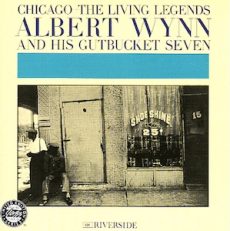
Albert Wynn was born on July 29, 1907 in New Orleans, Louisiana but grew up in Chicago, Illinois where he began his professional career as a trombonist. His first appearance on record in 1926 backing Ma Rainey and the following year he played and recorded in St. Louis, Missouri with Charlie Creath.
Wynn went on to work with Earl Hines’s band briefly in 1928 before assembling a group of his own. Later that same year he joined the Sam Wooding Orchestra on their European tour and didn’t return to the United States until 1932 when he would live in New York City for a short time before going back to Chicago.
He was a member of Sidney Bechet’s New Orleans Feetwarmers for a stint going on to work with the bands of Jesse Stone, Carroll Dickerson, Richard M. Jones, and the Earl Hines Orchestra once again. During the late 1930’s and early ’40’s Albert played in the big band of Fletcher Henderson and the short lived assembly of Jimmie Noone.
Settling into semi-retirement he ran a Chicago record store and enjoined his final professional band work as a member of Franz Jackson’s Original Jazz All-Stars from 1956 to 1960 and the Gold Coast Jazz Band from 1960 to 1964.
Trombonist Albert Wynn died on May 1, 1973.
More Posts: bandleader,history,instrumental,jazz,music,trombone
Daily Dose Of Jazz…
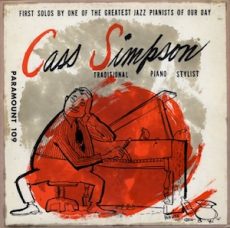
Wendell “Cassino” Simpson was born on July 22, 1909. He may have studied piano under Zinky Cohn. His first recording was in 1923 with Bernie Young, then recorded with the Moulin Rouge Orchestra in 1925. Following this he joined Arthur Sims’s orchestra, recording with them in 1926. With Sims dying soon after Bernie Young took over as bandleader and Simpson remained in the ensemble until 1930.
He simultaneously recorded with Jabbo Smith’s Rhythm Aces on his 1929 Brunswick Records releases. From 1931 to 1933 he played with Erskine Tate, though he never recorded with him. Cass recorded as a leader under various names, with Jabbo Smith and Milt Hinton as sidemen. In 1933 he cut a few sides with Half Pint Jaxon, a female impersonator.
Soon after his recordings with Jaxon, Simpson apparently became mentally disturbed, and was institutionalized in 1935 in Elgin, Illinois. While there, he continued to play piano and vibraphone in a hospital dance band, and played bass drum in the hospital’s marching band.
He recorded solo piano numbers on the grounds of the hospital in the middle of the 1940s. Pianist Cass Simpson, who was best known for his associations on the Chicago, Illinois jazz scene and was never released from the hospital, died on March 27, 1952.
More Posts: bandleader,history,instrumental,jazz,music,piano
Daily Dose Of Jazz…
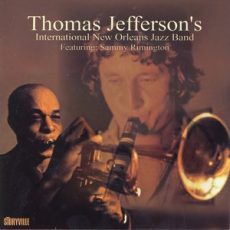
Thomas Jefferson was born on June 20, 1920 in Chicago, Illinois. He played drums and French horn while young before switching to trumpet and was strongly influenced by Louis Armstrong. His professional career began when he was 14 playing with Billie and De De Pierce.
He played with Papa Celestin’s orchestra in 1936, as well as with New Orleans jazz musicians Sidney Desvigne and Armand “Jump” Jackson. The 1950s saw him working with Johnny St. Cyr, Santo Pecora, and George Lewis. In 1966, Andrew Morgan recruited Jefferson to play lead trumpet for the Young Tuxedo Brass Band. Subsequently, Jefferson led a jazz band which performed at the New Orleans jazz club Maison Bourbon.
Thomas recorded sparingly as a leader; sessions include dates for Southland Records in the 1960s and Maison Bourbon Records in the 1970s. Jefferson had a cameo as a jazz musician in the 1975 film Hard Times.
Trumpeter Thomas Jefferson, who recorded six albums as a leader and played Dixieland, died in New Orleans, Louisiana on December 13, 1986.

More Posts: bandleader,history,instrumental,jazz,music,trumpet