

Daily Dose Of Jazz…
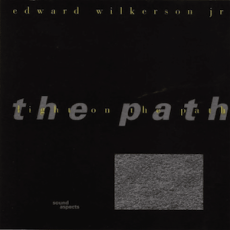
Edward L. Wilkerson Jr. was born in Terre Haute, Indiana on July 27, 1953. Over the course of his career he has associated himself with medium-to large-scale projects and has been a major presence in Chicago, Illinois’s Association for the Advancement of Creative Musicians (AACM), teaching and serving a term as president.
The AACM collective has been a nurturing force for Wilkerson and has informed much of his work. He was an original member of the Ethnic Heritage Ensemble formed by percussionist Kahil El’Zabar and remained with the group from 1976 until 1997. Though he recorded on three albums with the group he was becoming more involved in leading his own projects. His most ambitious project, Shadow Vignettes, was initiated in 1979 with 25 musicians and incorporated dance, poetry, and visual arts. The ensemble’s influences include the big band work of Muhal Richard Abrams, Duke Ellington, Count Basie and Sun Ra.
Wilkerson’s best-documented octet as a leader is 8 Bold Souls, a series of concerts that led Wilkerson to establish the group as a working band. They have released four albums, 8 Bold Souls, Sideshow, Ant Farm, and Last Option. Their music is influenced by the small groups of Duke Ellington and Jimmie Lunceford, but leaves room for adventurous experimentation.
In addition to his work with the preceding groups he has played with the AACM Big Band, Roscoe Mitchell, Douglas Ewart, the Temptations, Chico Freeman, the late Geri Allen, the Lyric Opera of Chicago, Muhal Richard Abrams, Aretha Franklin, and George Lewis.
Wilkerson has received grants from the Illinois Arts Council, the National Endowment for the Arts, Meet the Composer, and the Community Arts Assistance Program, and has been cited in numerous music polls.
Saxophonist, clarinetist, pianist, composer, arranger and educator Ed Wilkerson Jr., who has recorded 14 albums and two soundtracks, continues to teach composition at the AACM School of Music and explore the realms of jazz from his base in Chicago.

More Posts: arranger,bandleader,clarinet,composer,educator,history,instrumental,jazz,music,saxophone
Daily Dose Of Jazz…
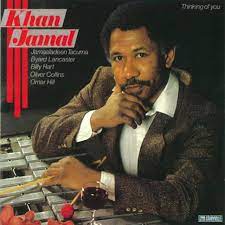
Khan Jamal was born Warren Robert Cheeseboro in Jacksonville, Florida on July 23, 1946. His father worked as an entrepreneur, his mother a stride pianist. Raised in Philadelphia, Pennsylvania and began playing the vibraphone during the later part of his teenage years in the mid Sixties. He went on to attend the Granoff School of Music and the Combs College of Music.
Jamal first played for a group called Cosmic Forces during the later part of the 1960s. He played with the Sun Ra Arkestra. After leaving the group, he teamed up with several of its former members to play with Sunny Murray’s group Untouchable Factor.
He later co-founded Sounds of Liberation with Byard Lancaster in 1970. The band released its only album titled New Horizons, two years later on its own record label Dogtown. However, it gained little impact outside Philadelphia at the time. In addition to leading his own groups, Jamal performed with Ronald Shannon Jackson’s Decoding Society in the 1980s, Joe Bonner, Billy Bang, Charles Tyler and others. His first solo album was Drum Dance to the Motherland, a live recording that was held in a small café in his hometown and first released in 1973.
His style connected the two contrasting forms of free jazz and jazz fusion. He was also known for his skill of shifting modes and moods. Vibraphone and marimba player Khan Jamal suffered from kidney failure prior to his transition on January 10, 2022, at the Chestnut Hill Hospital in Philadelphia. He was 75.
Daily Dose Of Jazz…
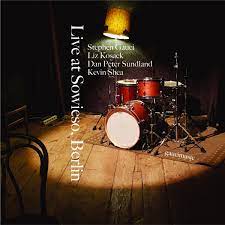
Dan Peter Sundland was born in Oslo, Norway on July 15, 1986 and grew up in Børsa, a village outside Trondheim, Norway. He started playing bass at age 14 and studied with bass players Andreas Bergsland and Mattis Kleppen. He was a member of Middle-Norwegian Youth Big Band and went on to become a member of the S. Møller big band.
Attending Sund Folk College from 2005 to 2006 he then attained a bachelor’s degree in jazz performance at NTNU Music Institute in Trondheim in 2010. He went on to get his European Jazz Masters degree (EUJAM) at NTNU Music Institute with exchange to Berlin Jazz Institute in 2012 and Rytmisk Musikkonservatorium in Copenhagen, Denmark in 2013.
Active in the jazz and improvisation scenes in Norway and Berlin, Germany he has set himself apart by his expressive, wide ranging playing techniques, including cello-like bowing and a varied palette of percussive colours. Has been featured with musicians including Jim Black, John Hollenbeck, Axel Dörner, Tobias Delius, Hans Hulbækmo, Hanna Paulsberg, Eirik Hegdal, John Pål Inderberg and Tor Haugerud.
His discography includes compositional work for his own eleven-piece Elevenette, the Berlin based improvising quartet Home Stretch and sideman work and collective groups including Lina Allemano’s Ohrenschmaus, Simon Kanzler’s hardcore opera and singer-songwriter Port Almond.
Electric bassist and composer Dan Peter Sundland, who has led Trondheim Improvisation Orchestra together with Peder Simonsen, continues to compose, perform and record.
More Posts: bandleader,bass,composer,history,instrumental,jazz,music

Daily Dose Of Jazz…
Luciano Troja was born in Messina, Italy on July 6, 1963. Self-taught from the age of 6, he studied for several years with the pianist-composer Salvatore Bonafede. In New York City, for a brief and intensive time, he studied with Richie Beirach. He attended several jazz courses and clinics such as Siena Jazz, Berklee Clinics in Umbria, Aebersold School in London, and piano courses with Shirley Scott, James Williams and Franco D’Andrea.
Luciano has performed at festivals and jazz clubs in Europe and the United States. He is the pianist of the Mahanada Quartet, an original combination of free improvisation and written music. He released three CDs with Mahanada that garnered extremely good reviews and recognitions. He released two CDs in duo with the guitarist Giancarlo Mazzù, Seven Tales About Standards and Seven Tales About Standards Vol. 2, both considered as a creative and original approach to the standards.
He along with Salvatore Bonafede of Double Piano Orchestra have recorded Double Rainbow and My Funny Valentine (Wide Sound, 2008).
He has been named Talent of the Year, Pianist of the Year, Group of the Year and CD of the Year in Top Jazz Poll of Musica Jazz magazine. He has since released At Home With Zindars a piano solo project. Pianist Luciano Troja continues to perform and record.
More Posts: bandleader,history,instrumental,jazz,music,piano
Daily Dose Of Jazz…
Jaimie Breezy Branch was born June 17, 1983 in Huntington, New York and started playing trumpet at age nine. At 14 she moved to Wilmette, Illinois, a suburb of Chicago. She attended the New England Conservatory of Music and after graduating moved back to Chicago and began working as a musician, organizer, and sound engineer on the local music scene. She performed in Chicago and New York with her trio Princess Princess, with bassist Toby Summerfield and drummer Frank Rosaly, and in other trios before founding the band Block and Tackle with Jason Stein, Jeb Bishop, and Jason Roebke.
By 2012 Branch had moved to Baltimore, Maryland where she worked toward a master’s degree in Jazz performance from Towson University. At this time she also founded the record label Pionic Records, which released the music of her group Bomb Shelter. After two years, she dropped out of Towson, and six months later she moved to New York to seek treatment for heroin addiction.
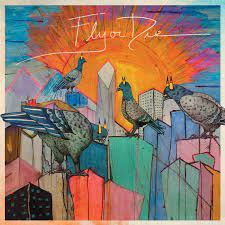
In 2015 Jaimie moved to Brooklyn, New York where she began working with Fred Lonberg-Holm, Mike Pride, Luke Stewart, Jason Nazary, Tcheser Holmes, and many more. In addition, she performed on albums with independent rock groups. In 2017 she released her debut solo album, Fly or Die, with Tomeka Reid, Jason Ajemian, Chad Taylor, Matt Schneider, Ben LaMar Gay, and Josh Berman. Fly or Die was chosen as one of NPR Music’s Top 50 Albums of 2017.
Citing Don Cherry, Axel Dörner, Booker Little, Miles Davis, and Evan Parker among her musical influences. Jaimie Branch transitioned at home in the Red Hook section of Brooklyn on August 22, 2022, at the age of 39.

More Posts: bandleader,history,instrumental,jazz,music,trumpet