

Daily Dose Of Jazz…
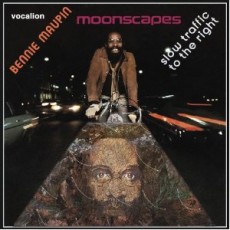
Bennie Maupin was born on August 29, 1940 in Detroit, Michigan and undertook extensive instrumental studies, both privately and at the Detroit Institute of Musical Art from age 14 until 1962. During this period his influences were Yusef Lateef, Wayne Shorter, John Coltrane and Sonny Rollins. By 1966 he was working with Roy Haynes followed by a two-year tenure with Horace Silver in ’68.
Maupin joined Herbie Hancock’s Mwandishi sextet and his Headhunters band, and then joined Miles Davis for the recording of Bitches Brew. He has also performed on several Meat Beat Manifesto albums.
Bennie is noted for having a harmonically advanced, “out” improvisation style, and as a composer, he has the ability to create brief melodies and song forms that create vast landscapes for improvisation.
Multireedist Bennie Maupin was also a member of the group “Almanac” with Cecil McBee, has recorded a half dozen albums as a leader and another two-dozen as a sideman. He has worked with the likes of Lee Morgan, Eddie Henderson, Marion Brown, John Beasley, Mike Clark, Jack DeJohnette, Darek Oles, Lonnie Smith, McCoy Tyner and Lenny White. He appears in the 2016 biopic I Called Him Morgan about trumpeter Lee Morgan and continues to pursue his career in music from jazz to rock to abstraction.
In January 2025 he lost his home, instruments, and other belongings in the Eaton Wild Fire in Los Angeles, California. Flutist, clarinetist and saxophonist Bennie Maupin continues to perform and record.
Daily Dose Of Jazz…
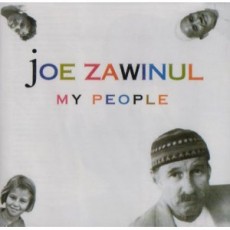
Joe Zawinul was born Josef Erich Zawinul on July 7, 1932 grew up in Vienna, Austria. Classically trained at the Konservatorium Wien, he played in various broadcasting and studio bands before emigrating to the U.S. in 1959 on a music scholarship to Berklee College of Music in Boston.
He went on to play with trumpeter Maynard Ferguson, where he first met Wayne Shorter after having had an influence in hiring him. Shorter left soon thereafter for Art Blakey’s group and Joe departed ways to tour and record with Dinah Washington for two years.
First coming to prominence in 1961 with saxophonist Cannonball Adderley, and during his nine-year stint composed the hit songs “Mercy, Mercy, Mercy”, “Walk Tall” and “Country Preacher”, the latter a tribute to Jesse Jackson
In the late 60s Zawinul played with Miles Davis, becoming one of the creators of jazz-fusion and one of the first to use electric pianos and synthesizers. He composed the title track on the album In A Silent Way and “Pharaoh’s Dance” on the landmark album Bitches Brew that occupied the whole of side one.[1]
In 1970, Zawinul co-founded Weather Report with Wayne Shorter bringing relatively open group improvisation with their fourth album Mysterious Traveller being their breakthrough. For the next fifteen years they would experience unparallel success with his composition “Birdland” being covered by the likes of Quincy Jones and the Manhattan Transfer and Jefferson Starship among others and winning him three Grammy awards.
Joe recorded 74 albums as a leader, sideman and collaborator; has been named Keyboardist” 28 times by the readers of Down Beat magazine, had several musicians honor him in song, written symphonies and performed and toured up until his hospitalization for a rare skin cancer where he died on September 11, 2007.
More Posts: piano
Daily Dose Of Jazz…
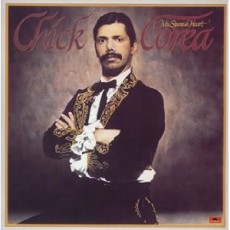
Chick Corea was born Armando Anthony Corea on June 12, 1941 in Chelsea, Massachusetts of Sicilian and Spanish descent. His father, a jazz trumpeter led a Dixieland band introduced him to the piano at the age of four. Growing up surrounded by jazz music, he was influenced at an early age by bebop stars Dizzy Gillespie, Charlie Parker, Bud Powell, Horace Silver and Lester Young. At eight Corea added drums, which later influenced his use of the piano as a percussion instrument.
Corea started taking piano lessons and musical composition at age eight and went on to spend several years in the drum and bugle corps, the Knights of St. Rose. By high school he was gigging, listening to Herb Pomeroy’s band at the time, and had a trio that performed Horace Silver’s music at a local jazz club.
A move to New York had him studying music at Columbia University and The Julliard School but found them both disappointing, subsequently immersing himself in the New York jazz scene. Corea’s first major professional gig was with Cab Calloway, followed by Blue Mitchell, Herbie Mann, Willie Bobo and Mongo Santamaria. He released his debut album Tones For Joan’s Bones in 1966 and has followed with an impressive discography.
He would venture into the avant-garde with Miles Davis on Filles de Kilimanjaro, In A Silent Way and Bitches Brew; and on Joe Farrell’s Song of the Wind. Hew would record and tour with Davis into the 70s until leaving to form the group “Circle” with Dave Holland, pushing more free jazz. Striking out on his own, in 1971 he formed the fusion band Return To Forever that featured Flora Purim on vocals and has spawned a multitude of albums with his most popular tune “Spain” coming from the Light As A Feather album.
He has done duet projects, delved into electric instrumentation, has won 18 Grammys out of 51 nominations, two Latin Grammy awards, has been inducted into the Grammy Hall of Fame for Now He Sings, Now He Sobs, formed the 5 Peace Band and continued to perform, tour and record until his death. Pianist, keyboardist, and composer Chick Corea passed away of a rare form of cancer at his home near Tampa Bay, Florida on February 9, 2021, at age 79
More Posts: piano
Daily Dose Of Jazz…
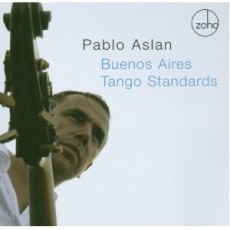
Pablo Aslan was born in Buenos Aires, Argentina on May 5, 1962 and began playing bass in his youth. He received his music education at University of California – Santa Cruz, CalArts and UCLA, and in the 90’s in the clubs of New York.
Pablo has led several groups like New York Buenos Aires Connection, Avantango, and New York Tango Trio, which included musicians such as the late Thomas Chapin, pianist Ethan Iverson (now of The Bad Plus), drummer Kenny Wollesen, saxophonist Donny McCaslin, and bandoneonists Raul Jaurena and Tito Castro.
Aslan has worked with Yo Yo Ma, Lalo Schifrin, Pablo Ziegler, Osvaldo Golijov, Arturo O’Farrill, Emilio Solla and Fernando Otero. In 2009 he released “Tango Grill” that was nominated for both a Grammy and Latin Grammy. He has collaborated with Paquito D’Rivera, “Tango Jazz” Live at Jazz @ Lincoln Center” and also for a tribute to tango master Astor Piazzolla on the 90th anniversary of his birth. Bassist Pablo Aslan continues to champion the fusion of jazz and tango as he records, performs and tours.
Daily Dose Of Jazz…
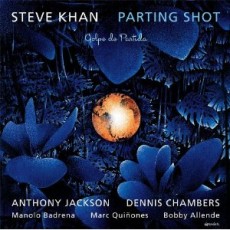
Steve Khan was born April 28, 1947 in Los Angeles, California to lyricist Sammy Cahn. As a teenager he was a terrible drummer but grew a love for guitar and switched at around age 19. He would go on to matriculate through U.C.L.A. and move to New York, performing one of his first guitar duos with Larry Coryell in 1974.
During the 80s he was a member of the group Elements. Khan has worked with Jack DeJohnette, Maynard Ferguson, Billy Cobham, Hubert Laws, Steely Dan, Billy Joel, Michael Franks and Weather Report on his short list.
He toured with the CBS Jazz All Stars in Japan, led a band called Eyewitness, authored five jazz books, was nominated for a Grammy in the Best Latin Jazz Album category for his album “Borrowed Time” and recorded over thirty albums as a leader and sideman for such labels as Concord, Arista, Columbia, Flying Dutchman and Novus to name a few. He continues to perform, record and tour.
More Posts: guitar