Daily Dose Of Jazz…
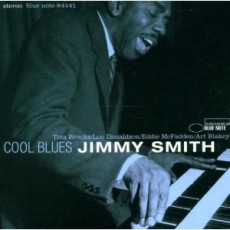
Jimmy Smith was born James Oscar Smith on December 8, 1925 in Norristown, Pennsylvania. He began as a pianist but switched to organ after hearing Wild Bill Davis, purchasing his first Hammond, renting a warehouse and emerging a year later with a fresh new sound. He was instrumental in revolutionizing the playing of the instrument. It only took one time for Alfred Lion to hear him play before signing him to Blue Note in 1956. It was the second album, “The Champ” that established him as a new star on the jazz scene, followed by “The Sermon”, “Home Cookin’” “Midnight Special” and “Back at the Chicken Shack”.
Forty sessions later Jimmy left Blue Note for Verve Records dropping his first album Bashin’ with a big band led by Oliver Nelson. With this album selling well he went on to collaborate over the next decade with Lalo Schifrin, Wes Montgomery, Kenny Burrell, Lou Donaldson, Lee Morgan, Stanley Turrentine, Grady Tate, Jackie McLean, George Benson and many other jazz greats of the day.
In the 1970s, Smith opened a supper club in Los Angeles where he played regularly; his career resurged in the 80s recording for Blue Note, Verve, Milestone and Elektra with Quincy Jones, Frank Sinatra, Michael Jackson, Dee Dee Bridgewater, B.B. King, Etta James and Joey DeFrancesco.
Smith’s virtuoso improvisation technique popularized the Hammond B3 and his style on fast tempo pieces combined bluesy “licks” with bebop-based single note runs, ballads had walking bass lines and up-tempo tunes he played the bass line on the lower manual with use of the pedals for emphasis of a string bass. He influenced the likes of Jimmy McGriff, Brother Jack McDuff, Richard “Groove” Holmes, Larry Goldings and Joey DeFrancesco as well as many rock keyboardists like Brian Auger or more recently The Beastie Boys.
Jimmy Smith, Hammond B3 pioneer in the hard bop, mainstream, funk and fusion jazz genres, was honored as an NEA Jazz Master shortly before his death on February 8, 2005 in Scottsdale Arizona.
More Posts: organ
Daily Dose Of Jazz…
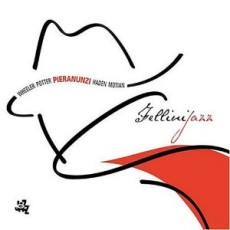
Enrico Pieranunzi was born December 5, 1949 in Rome, Italy. When he was only five and a half years old he began studying piano. At the same time his father, a guitarist, started introducing him to the wonders and challenges of jazz improvisation as well. From then on Enrico followed a double road in music developing his jazz style while studying classical piano.
At 19, Enrico began his professional career in Italy and since then he has worked with an abundance of bands, both Italian units and groups led by Americans. His wide-ranging experiences include collaborations with jazz luminaries such as Johnny Griffin, Chet Baker, Art Farmer, Lee Konitz, Jim Hall, Johnny Griffin, Phil Woods, Charlie Haden, Frank Rosolino, Mads Vinding, Lee Konitz, Billy Higgins and Kenny Clarke among others.
Since 1975 Pieranunzi has led his own groups, mostly trios, with which he has played clubs and festivals all over Europe and released his first album that year. He has performed as unaccompanied pianist and still does to this very day. As an educator he has taught both in the jazz and classical fields and is currently full professor of piano at the “Conservatorio di Musica” in Frosinone.
Pianist Enrico Pieranunzi is a very original musician and a talented composer, able to travel the high road with his own ideas and remarkable musical sensitivity. Voted “Musician of the Year” in the “Musica Jazz” critic’s poll in 1989, twice the recipient of the Djangodor Award “Best Jazz Musician” in 1992 & ’97 and the 2003 Django d’Or in Italy. In 2006 he started the Trans Alpine Jazz Project and since the beginning of his career has amassed a catalogue of fifty-one recordings as a leader. He continues to perform, tour and record.
More Posts: piano
Daily Dose Of Jazz…
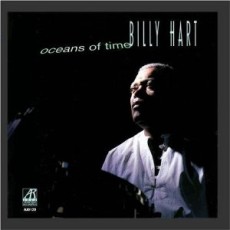
William “Billy” Hart was born November 29, 1940 in Washington, D.C. is a drummer who worked first with soul groups Sam & Dave and Otis Redding then later with locals Buck Hill and Shirley Horn. This led to work as a sideman with the Montgomery Brothers, Jimmy Smith, and Wes Montgomery prior to his death in 1968.
Hart moved to New York and started playing with Eddie Harris, Pharoah Sanders, Marian McPartland and recording with McCoy Tyner, Wayne Shorter and Zawinul. In 1969 he became a member of Herbie Hancock’s sextet followed by another stint with McCoy Tyner, then Stan Getz, Quest and Miles Davis along with extensive freelancing. In the nineties he worked with Charles Lloyd, Joe Lovano, Tom Harrell and performed with the Three Tenors – Dave Liebman, Joe Lovano and Michael Brecker.
Billy Hart is one of the most in-demand jazz drummers and educators alive and has recorded more than 500 albums as a sideman. Since the early 1990s has spent considerable time at the Oberlin Conservatory of Music, is an adjunct professor at the New England Conservatory of Music and at Western Michigan University. He conducts private lessons through The New School and New York University. He also often contributes to the Stokes Forest Music Camp and the Dworp Summer Jazz Clinic in Belgium, while leading a quartet Mark Turner, Ethan Iverson and Ben Street.
More Posts: drums
Daily Dose Of Jazz…
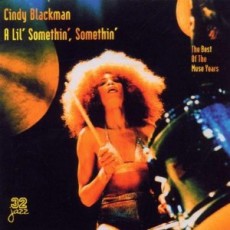
Cindy Blackman was born November 18, 1959 in Yellow Springs, Ohio into a musical family. Her mother and grandmother were classical musicians, an uncle was a vibraphonist and her dad was into jazz. Her first introduction to the drums happened when she was seven years old at a friend’s house she sat down at a drum set starting hitting and knew it was for her. Following this was joining the school band and convincing her parents to get a set of her own. By age 11 she was in Bristol, Connecticut, studying at the Hartt School of Music in Hartford and gaining an interest in jazz two years later after listening to Max Roach. It was at this time she got her first professional drum kit at fourteen.
One of her early influences was drummer Tony Williams who was the first drummer she ever saw perform live, later having the opportunity to participate in a William’s drum clinic. She soon moved to Boston, studying at the Berklee College of Music. She left after three semesters and moved to New York in 1982, became a street performer and got a chance to watch and learn from drummers like Billy Higgins, Elvin Jones, Roy Haynes, Philly Joe Jones and Art Blakey who became her mentor and major influence.
Blackman initially encountered resistance to a woman playing drums in the jazz world, both racial and gender prejudice along with her musical opinion and hairstyle. But persistence paid off in 1984 when she was showcased on Ted Curson’s “Jazz Stares of the Future”, then in 1987 her first compositions appeared on Wallace Roney’s Verses album, then Muse offered her a contract and in ’88 lead her debut session “Arcane” with Joe Henderson, Wallace Roney, Tony Williams, Clarence Seay, Kenny Garrett and Larry Willis.
Cindy has immersed herself in both jazz and rock leaving the former for a period recording and touring with Lenny Kravitz but returned to her love of jazz. She has recorded several straight-ahead jazz sessions since her 1994 release of “Telepathy” and continues to evolve the music playing with a who’s who list of luminary jazz musicians. In her own words, “To me, jazz is the highest form of music that you can play because of the creative requirements”.
More Posts: drums
Daily Dose Of Jazz…
Hampton Hawes was born November 13, 1928 in Los Angeles, California and his first experience at the piano was as a toddler sitting on his mother’s lap while she practiced. He was reportedly able to pick out fairly complex tunes by the age of three. Entirely self-taught and influenced by Earl Hines, Bud Powell and Nat King Cole, by his teens Hawes was playing with the leading jazz musicians on the West Coast, including Dexter Gordon, Wardell Gray, Art Pepper, Shorty Rogers and Teddy Edwards. His second professional job, at 19, was playing for eight months with Howard McGhee’s Quintet at the Hi De Ho Club, in a group that included Charlie Parker, who became a great influence on his playing.
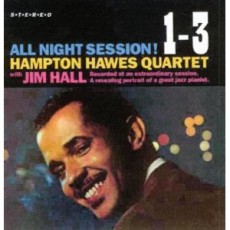
After serving in the U.S. army in Japan from 1952–1954, Hampton formed his own trio, with the bassist Red Mitchell and drummer Chuck Thompson. The subsequent three-record “Trio” sessions made by this group in 1955 for Contemporary Records were considered some of the finest records to come out of the West Coast at the time. The following year he added guitarist Jim Hall for the “All Night Sessions” that produced three records made during a non-stop recording session at the Contemporary Studios in Los Angeles.
In 1956, Hawes won the “New Star of the Year” award in Down Beat magazine, “Arrival of the Year” in Metronome magazine and the following year Hawes recorded in New York City with Charles Mingus on the album “Mingus Three”.
Struggled for many years with a heroin addiction and became the target of a federal undercover operation in Los Angeles in 1958. The DEA bargained that Hawes would inform on dealers in L.A. rather than risk a successful career. Coerced into selling a small amount of heroin to an undercover agent, he was arrested on his 30th birthday. Refusing to talk landed him a twice the mandatory minimum, ten-year sentence at Fort Worth Medical Facility, a federal prison hospital. However, after serving three years, in 1963 he was granted Executive Clemency by President Kennedy in 1963, the 42nd of only 43 such pardons given in the final year of Kennedy’s presidency.
After his release from prison, Hampton resumed playing and recording and during a world tour in 1967-68, the pianist was surprised to discover that he had become a legend among jazz listeners in Europe, Asia and the Middle East. During a ten-month period overseas he recorded nine albums, played sold out shows and concert halls in ten countries, and was covered widely in the press, appearing on European television and radio.
As a pianist Hawes’s style is instantly recognizable – for its almost unparalleled swing, unique approach to time and harmony, and its depth of emotional expression, particularly in a blues context. Hawes influenced a great number of other pianists including Andre Previn, Oscar Peterson, Horace Silver, Claude Williamson, Pete Jolly, Toshiko Akiyoshi and others.
Pianist Hampton Hawes died suddenly of a brain hemorrhage on May 22, 1977 at 48 years old. In 2004, the City Council of Los Angeles passed a resolution declaring November 13th “Hampton Hawes Day”.
More Posts: piano