

Daily Dose Of Jazz…
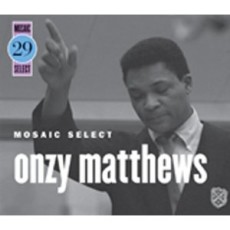
Onzy Matthews was born in Fort Worth, Texas on January 15, 1936, grew up in Dallas until he was 14, when his mother pulled up stakes and moved to Los Angeles for a better job. He graduated from high school at 16 and had already decided he wanted to sing. Nearly every day he walked to a nearby park, where he could play piano for hours in the recreation building.
Augmenting his early gospel roots with healthy doses of smooth California jazz and big band music, Matthews taught himself to accompany his singing on piano until he realized he needed arrangements.
He attended Westlake College of Music, studied ear training and harmony, started singing with a dance band and learning about arranging. After several years of performing, attending concerts and asking questions he had 21 original songs arranged for big band.
His musical career sprang from eight bars of music. As an aspiring singer, pianist and composer in 1963, a young Mr. Matthews gave his first professional arrangement to Les Brown for a tryout with the Band of Renown. Out of the arrangement came 8 bars that sounded good to Onzy and Les Brown advised him to take those 8 bars and start from there. Doing so he went on to become one of the most sought-after arrangers in jazz and pop music. It was later through Dexter Gordon that these first twenty-one were played by the best musicians in Hollywood that turned into a regular Wednesday night jam session. The word spread and he started getting courted by record labels to work with their artists.
Onzy’s first major arranging job was on Lou Rawls’ album Black & Blue, followed by his debut as a leader in 1964 on “Blues With A Touch Of Elegance” for Capitol. About a year later, with his career in full swing, he held a guest spot on a New York radio show hosted by mercer Ellington who introduced him to his dad, friendship was struck and four years later became collaborators, filling the void from Billy Strayhorn’s death.
Matthews tailors the arrangements according to the empathy of the artist by listening to the artist and arranging to bring out things in them they weren’t aware of. This was his magic. After Ellington death in ’74, he moved to Seattle, formed a big band for three years moved between Texas and New York and finally moved to Paris in ’79, put together another big band, played with Miles Davis and finally moved back to Dallas in 1994.
Onzy D. Matthews, whose 35-year career had him working with some of jazz’s most notables, was discovered in his Dallas apartment passed away at his typewriter by jazz singer Jeanette Brantley and her husband Hans Wango on November 15, 1997. He was 67.
Daily Dose Of Jazz…
John Scofield was born on December 26, 1951 in Dayton, Ohio but early in his life the family moved to Wilton, Connecticut and it was here that he discovered his interest in music. He attended Berklee College of Music but left to record with Chet Baker and Gerry Mulligan followed by joining the Billy Cobham/George Duke Band touring and recording for two years.
Affectionately known as “Sco”, he went on to record with Charles Mingus, replace Pat Metheny in Gary Burton’s band and in 1976 signed with Enja Records releasing his first album “John Scofield” the next year. He formed his own band with Steve Swallow and Adam Nussbaum in ’70 and joined Miles Davis for three and half years in 1982. Leaving Miles he formed the Blue Matter Band and released three albums, in the nineties he put together a quartet that included Joe Lovano, Charlie Haden and Jack DeJohnette and recorded several albums for Blue Note. Towards the end of his tenure with Blue Note, Scofield returned to a more funk and soul jazz-oriented sound, a direction that has dominated much of his subsequent output to the present.
Scofield has played and collaborated with Joe Henderson, Joey DeFrancesco, Herbie Hancock, Pat Metheny, Bill Frisell, Pat Martino, Mavis Staples, Medeski, Martin & Wood, Jaco Pastorious, John Mayer, Hal Galper and the Metropole Orchestra along with many other well-known artists.
Guitarist John Scofield is at ease in the bebop idiom as well as he is versed in Jazz-fusion, funk, blues, soul, rock and other forms of modern American music and currently is an adjunct professor at NYU’s Steinhardt School of Education.
More Posts: guitar
Daily Dose Of Jazz…
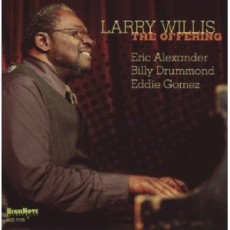
Lawrence Elliott Willis was born December 20, 1942 in Harlem, New York. He first got into music as a voice major at New York’s High School of Music and Art for gifted students and in his senior year he recorded an opera with the Music and Arts Chorale Ensemble under the direction of Leonard Bernstein.
Due to the barriers presented to Blacks in finding work in the classical arena, Willis changed directions, replacing voice with piano and concentrating on jazz. He taught himself to play piano and by the end of the winter was playing in a jazz trio with two of his classmates, Al Foster and Eddie Gomez.
He then entered and studied music theory at the Manhattan School of Music, was heard by Hugh Masekela and sent to John Mehegan for his first piano lessons ever, and by 19 began gigging regularly with altoist Jackie McLean and after graduating made his jazz recording debut on McLean’s “Right Now!” for Blue Note that featured two of Larry’s compositions.
Throughout his illustrious career pianist Larry Willis has performed and recorded as a leader and sideman on more than 300 recordings of bebop, avant-garde, jazz-fusion and rock with a wide range of musicians, Dizzy Gillespie, Lee Morgan, Carmen McRae, Clifford Jordan, Art Taylor, Shirley Horn, Stan Getz, Cannonball Adderley, Art Blakey, Woody Shaw and a stint of seven years beginning in 1972 as the keyboardist for Blood, Sweat & Tears.
He has composed and arranged for orchestras, big bands and symphonies for the Brooklyn Symphony with the Grammy-nominated Fort Apache Band, Roy Hargrove’s Grammy-winning Crisol Band, Vanessa Rubin and Joe Ford among others. He received the Don Redman award in 2011, and the Benny Golson Jazz Master Award at Howard University in 2012. He is currently still recording and touring around the world.
Daily Dose Of Jazz…
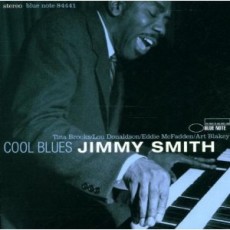
Jimmy Smith was born James Oscar Smith on December 8, 1925 in Norristown, Pennsylvania. He began as a pianist but switched to organ after hearing Wild Bill Davis, purchasing his first Hammond, renting a warehouse and emerging a year later with a fresh new sound. He was instrumental in revolutionizing the playing of the instrument. It only took one time for Alfred Lion to hear him play before signing him to Blue Note in 1956. It was the second album, “The Champ” that established him as a new star on the jazz scene, followed by “The Sermon”, “Home Cookin’” “Midnight Special” and “Back at the Chicken Shack”.
Forty sessions later Jimmy left Blue Note for Verve Records dropping his first album Bashin’ with a big band led by Oliver Nelson. With this album selling well he went on to collaborate over the next decade with Lalo Schifrin, Wes Montgomery, Kenny Burrell, Lou Donaldson, Lee Morgan, Stanley Turrentine, Grady Tate, Jackie McLean, George Benson and many other jazz greats of the day.
In the 1970s, Smith opened a supper club in Los Angeles where he played regularly; his career resurged in the 80s recording for Blue Note, Verve, Milestone and Elektra with Quincy Jones, Frank Sinatra, Michael Jackson, Dee Dee Bridgewater, B.B. King, Etta James and Joey DeFrancesco.
Smith’s virtuoso improvisation technique popularized the Hammond B3 and his style on fast tempo pieces combined bluesy “licks” with bebop-based single note runs, ballads had walking bass lines and up-tempo tunes he played the bass line on the lower manual with use of the pedals for emphasis of a string bass. He influenced the likes of Jimmy McGriff, Brother Jack McDuff, Richard “Groove” Holmes, Larry Goldings and Joey DeFrancesco as well as many rock keyboardists like Brian Auger or more recently The Beastie Boys.
Jimmy Smith, Hammond B3 pioneer in the hard bop, mainstream, funk and fusion jazz genres, was honored as an NEA Jazz Master shortly before his death on February 8, 2005 in Scottsdale Arizona.

More Posts: organ
Daily Dose Of Jazz…
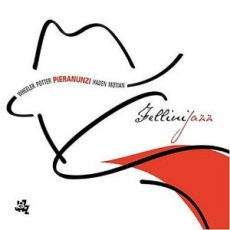
Enrico Pieranunzi was born December 5, 1949 in Rome, Italy. When he was only five and a half years old he began studying piano. At the same time his father, a guitarist, started introducing him to the wonders and challenges of jazz improvisation as well. From then on Enrico followed a double road in music developing his jazz style while studying classical piano.
At 19, Enrico began his professional career in Italy and since then he has worked with an abundance of bands, both Italian units and groups led by Americans. His wide-ranging experiences include collaborations with jazz luminaries such as Johnny Griffin, Chet Baker, Art Farmer, Lee Konitz, Jim Hall, Johnny Griffin, Phil Woods, Charlie Haden, Frank Rosolino, Mads Vinding, Lee Konitz, Billy Higgins and Kenny Clarke among others.
Since 1975 Pieranunzi has led his own groups, mostly trios, with which he has played clubs and festivals all over Europe and released his first album that year. He has performed as unaccompanied pianist and still does to this very day. As an educator he has taught both in the jazz and classical fields and is currently full professor of piano at the “Conservatorio di Musica” in Frosinone.
Pianist Enrico Pieranunzi is a very original musician and a talented composer, able to travel the high road with his own ideas and remarkable musical sensitivity. Voted “Musician of the Year” in the “Musica Jazz” critic’s poll in 1989, twice the recipient of the Djangodor Award “Best Jazz Musician” in 1992 & ’97 and the 2003 Django d’Or in Italy. In 2006 he started the Trans Alpine Jazz Project and since the beginning of his career has amassed a catalogue of fifty-one recordings as a leader. He continues to perform, tour and record.
More Posts: piano