

Daily Dose Of Jazz…
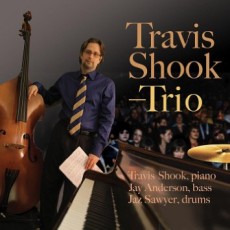
Travis Shook was born on March 10, 1969 in Oroville, California and started learning to play the piano at age seven. His family moved to Olympia, Washington when he was ten, spending his adolescent years in the Pacific Northwest. For a period of time he played rock guitar but soon realized jazz improvisation was his passion. At eighteen he enrolled at William Patterson College and studied under Mabern. After graduating he returned to Washington and joined bassist Buddy Catlett’s band where he learned a lot about the history of jazz.
In 1991 he won the Jacksonville Festival’s Great American Piano Competition that led to a contract with Columbia Records/Sony Music. Two years later he moved to New York City and recorded his debut with a quartet that included tony Williams and Bunky Green. Though receiving critical acclaim both in the U.S. and France for this first effort, it was a short-lived relationship when Sony purged a large percentage of the Columbia jazz roster upon acquiring the label in 1993.
After spending some time in obscurity after being attacked by New York Times critic Peter Watrous who criticized one of his performances, he entered a dark period in his life: alcoholism. A year later he got picked up by Betty Carter and went on tour through Europe, but he sunk deeper and added drugs to his plate of demons. Unemployable, he dropped out of the public eye for a number of years. Travis met, moved in with and ultimately married jazz singer Veronica Nunn who helped him overcome his demons and since 1998 he has been sober.
In 1999 Shook and his wife started their own record label, Dead Horse Records, which has released four recordings to date. Over the years he has performed with Reggie Workman, Eddie Harris, Joe Lovano, toots Thielemans, Rufus Reid, Chuck Israels, Ernestine Anderson, Branford Marsalis, Benny Golson and Clifford Jordan as well as Sonny Simmons, Michael Franks, Gino Vanelli, Bob Hope and Chris Botti among others.
His influences were Ahmad Jamal, McCoy Tyner, Duke Ellington, Harold Mabern, Herbie Hancock and Bill Evans but also John Coltrane, Miles Davis and Elvin Jones.Pianist Travis Shook continues to perform and record while building the catalogue of Dead Horse Records.

Jazz Is Global – Share
More Posts: piano
Daily Dose Of Jazz…
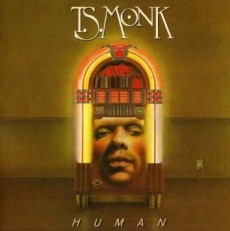
T. S. Monk was born Thelonious Sphere Monk, III on December 27, 1949 in New York City. He began his music career as a child when Max Roach gave him his first drum set before he turned 10. After graduating from school he joined his father’s trio touring with him until 1975. Leaving jazz for R&B, he toured with Natural Essence and then formed his own band with his sister.
By the 80s he was recording his debut album House of Music that charted several hits on Billboard, followed by the release of two more albums during the decade.
Shortly after his father died in 1982, in honor his father’s legacy and support the efforts of education, T. S. turned his attention toward forming the Thelonious Monk Institute of Jazz. As chairman, Monk has been at the forefront of helping to create a number of programs that range from sponsoring music education for students in the form of full scholarships to funding and supporting after-school athletic programs across the nation.
In the 1990s, Monk began his solo career taking a jazz-oriented direction and presented “A Celebration Of America’s Music” on ABC TV in 1996 and 1998 hosted by Bill Cosby and bringing together such artists as Natalie Cole, Jon Secada, Tony Bennett, k. d. lang, Herbie Hancock, Pat Metheny and Nnenna Freelon
T. S. has received the New York Jazz Awards First Annual “Recording of the Year” award and ‘Downbeat’s’ prestigious 63rd annual Album of the year Reader’s Choice Award for “Monk On Monk”. He continues in the tradition of creating great music as he performs, records and tours.
Give A Gift Of Jazz – Share
More Posts: drums,percussion
Daily Dose Of Jazz…
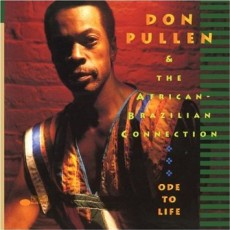
Don Pullen was born on December 25, 1941 and was raised outside Roanoke, Virginia and learned to play the piano at an early age. He played with the choir in his local church, was heavily influenced by his jazz pianist cousin, Clyde “Fats” Wright and took some lessons in classical piano. He knew little of jazz, concentrating mainly on church music and the blues.
Leaving Roanoke for Johnson C. Smith University in North Carolina to study for a medical career, Pullen soon realized that his true vocation was music. After playing with local musicians and being exposed for the first time to albums of the major jazz musicians and composers he abandoned medical studies for music.
By 1964 he was in Chicago with Muhal Richard Abrams, then moved to New York City and immersed in the avant-garde recording with Giuseppi Logan. Along with band mate Milford Graves formed a duo, started a small label and recorded his first sessions that did great in Europe. He turned to more profitable organ and during the 60’s and 70s played trio dates and backed such vocalists as Arthur Prysock, Irene Reid, Ruth Brown, Jimmy Rushing and Nina Simone. He held a brief position with Art Blakey and the Jazz Messengers in 1972.
Over the course of his career he would play with Charles Mingus, lead his own groups, form the George Adams/Don Pullen Quartet, put together the African Brazilian Connection, worked with Native American drummers and choir, and played with Nilson Matta, Carlos Ward, Gary Peacock, Tony Williams, Hamiet Bluiett, Bill Cosby, Jack Walrath, Maceo Parker, Roy Brooks, Jane Bunnett and David Murray among others.
Don Pullen jazz pianist, organist and composer of blues to bebop, who recorded over 30 albums as a leader and more than three dozen as a sideman, passed away of lymphoma on April 22, 1995.
Put A Dose In Your Pocket
Daily Dose Of Jazz…
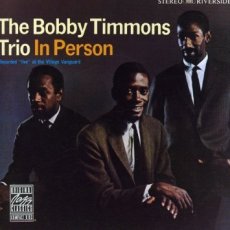
Bobby Timmons was born Robert Henry Timmons on December 19, 1935 in Philadelphia, Pennsylvania. Studying piano from the age of six by the age of 19 he was moving to New York, playing with the likes of Kenny Dorham’s Jazz Prophets, Chet Baker, Sonny Stitt and Maynard Ferguson. He became a member of Art Blakey’s Jazz Messengers from 58-59 touring Europe and became well known for his composition “Moanin”.
He joined Cannonball Adderley for a year, recorded two soul-jazz compositions that became hits “This Here” and “Dat Dere” and rejoined Blakey for a brief stint in the Sixties. Over the course of his career he recorded some 16 albums for Riverside, Milestone and Prestige record labels and recorded another twenty-three as a sideman with Art Blakey, Hank Mobley, Lee Morgan, Donald Byrd, Curtis Fuller, Nat Adderley, Kenny Burrell and the Young Lions.
However sophisticated and versatile a pianist he proved to be, Timmons’ success of his compositions, which have become jazz standards, could not compensate for his artistic frustrations and his battle with alcoholism. Pianist and composer Bobby Timmons passed away from cirrhosis at the age of 38 on March 1, 1974.
Jazz Is Global – Share
More Posts: piano,vibraphone
Daily Dose Of Jazz…
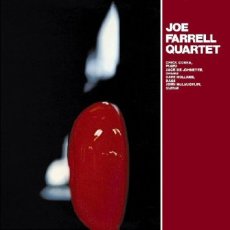
Joe Farrell was born Joseph Carl Firrantello on December 16, 1937 in Chicago Heights, Illinois and learned to play saxophone and flute. During the Sixties he played with The Thad Jones/Mel Lewis Orchestra and recorded with Charles Mingus, Andrew Hill, Jaki Byard, Players Association, and Elvin Jones.
In the 80s Joe released two albums with the group Fuse One, played sax and oboe on pop recordings by Hall & Oates, played with Airto and Flora Purim, his final recordings making their “Three-Way Mirror” project. He is best known for his series of albums as a leader for the CTI record label and for being an original member of Chick Corea’s Return To Forever.
Kanye West, Method Man, Redman and Common have sampled Farrell’s music “Upon This Rock”, without approval that subsequently resulted in a lawsuit by his daughter.
Tenor and soprano saxophonist and flautist Joe Farrell died of bone cancer on January 10, 1986 in Los Angeles, California at age 48.
Take A Dose On The Road