

Daily Dose Of Jazz…
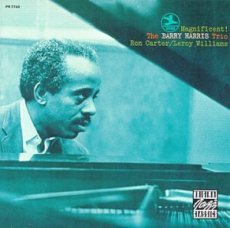
Barry Doyle Harris was born in Detroit, Michigan on December 15, 1929 and learned to play piano as a child. Mainly influenced by Art Tatum, Coleman Hawkins, Charlie Parker and Thelonious Monk, his playing style is similar to Bud Powell.
Moving to New York City in 1960, Harris played with Cannonball Adderley, Sonny Stitt, Coleman Hawkins, Illinois Jacquet, Dexter Gordon and Max Roach. During the 1970s, Harris lived with Monk and his family at the Weehawken, New Jersey home of the jazz patroness Baroness Pannonica de Koenigswarter. He performed piano duets with Tommy Flanagan in the 1989 Clint Eastwood documentary Thelonious Monk: Straight No Chaser and in 2000, he was profiled in the film Barry Harris – Spirit of Bebop.
As an educator Barry established the Jazz Cultural Theater teaching group music and piano lessons and hosting performances. Since 1991 he has collaborated with Toronto-based pianist and teacher Howard Rees in creating a series of videos and workbooks documenting his unique harmonic and improvisational systems and teaching process.
Barry Harris continues to perform and teach worldwide and holds weekly music workshop sessions in New York City for vocalists, students of piano and other instruments when not on the road.

Dose A Day – Blues Away
More Posts: piano

Daily Dose Of Jazz…
Azar Lawrence was born in Los Angeles, November 3, 1953 and started playing drums at the age of three. By five he began formal studies on piano and violin, encouraged by his mother, who was an elementary school music teacher. At 11, while performing with the USC Junior Orchestra, he became enamored with the sound of the alto saxophone and his father, a stalwart supporter of his son’s musical endeavors, promptly bought him a Selmer and his fate was sealed.
Playing in the Dorsey High Jazz Band, Lawrence met Herbert Baker, a piano prodigy who was playing with Freddie Hubbard. It was Baker who first introduced Lawrence to piano master Horace Tapscott, an important mentor who helped shape Lawrence’s musical philosophy and prepared him for the formidable task of playing with Elvin Jones.
Becoming a sideman with McCoy Tyner, replacing John Coltrane, he also worked with Miles Davis, Freddie Hubbard and Woody Shaw, released his album Bridge to the New Age in 1974 with Jean Carn, Julian Priester, Hadley Caliman and Ndugu Chancler followed by his sophomore project Summer Solstice working with Ron Carter and Albert Dailey.
He has release five albums as a leader and went on to work with Henry Franklin, Gene Harris, Patrice Rushen, Phyllis Hyman, Earth Wind & Fire, Lee Ritenour, Paul Jackson, Stanley Turrentine and Harvey Mason.
However, success has its monkey and Lawrence fell victim to drug abuse and all but disappeared from the jazz scene working only occasionally with Billy Higgins when he could borrow a saxophone. He eventually pulled himself into sobriety and embraced a new period of creativity releasing Mystic Journey in 2010 and the tenor saxophonist continues to perform.
Take A Dose On The Road
More Posts: saxophone
Daily Dose Of Jazz…
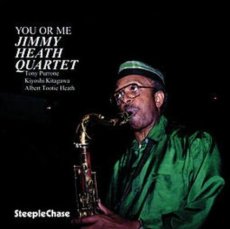
Jimmy Heath was born James Edward Heath on October 25, 1926 and he originally played alto saxophone until influenced by Charlie Parker’s work with Howard McGhee and Dizzy Gillespie, he switched to tenor.
He shared a short tenure with Miles Davis’s group in 1959, replacing John Coltrane, then also worked with Kenny Dorham and Gil Evans, and composed most of the 1956 Chet Baker/Art Pepper album Playboys. During the 1960s, he frequently worked with Milt Jackson and Art Farmer.
Jimmy recorded a string of impressive albums for Riverside and worked as a freelance sideman and arranger. He has recorded as a leader for Cobblestone, Muse, Xanadu, Landmark, and Verve. By 1975, he and his brothers formed The Heath Brothers with pianist Stanley Cowell.
As an educator, in the 1980s, he joined the faculty of the Aaron Copland School of Music at Queens College in the City University of New York. With the rank of Professor, he led the creation of the Jazz Program at Queens College along with teaching at Jazzmobile. He served on the Board of the Louis Armstrong Archives, and the restoration and management of the Louis and Lucille Armstrong Residence in Corona, Queens.
Tenor saxophonist, composer and arranger Jimmy Heath, nicknamed “Little Bird” is the brother of Percy and Albert and the father of James Mtume and is a 2003 recipient of the NEA Jazz Masters Award and honorary Doctorate in Human Letters.
Jazz Is Global – Share
More Posts: saxophone
Daily Dose Of Jazz…
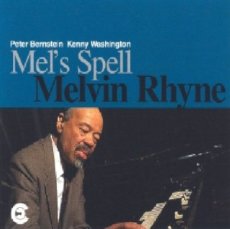
Melvin Rhyne was born on October 12, 1936 in Indianapolis, Indiana and started playing the piano shortly thereafter. By the time he turned 19 he was playing piano with then-unknown tenor saxophonist Rahsaan Roland Kirk but quickly switched to the Hammond B3 organ. His skills as a pianist fluidly translated to the organ fluently and he soon became a sideman for B.B. King and T-Bone Walker.
Melvin’s big break came in 1959 when he joined fellow Indianapolis jazz guitarist Wes Montgomery’s newly formed trio. Playing with Montgomery for five years, he recorded four sessions with the trio: Guitar on the Go, Round Midnight, Boss Guitar, and Portrait of Wes.
After the Montgomery years, Rhyne moved to Wisconsin and largely kept to himself for the next two decades. However, in 1991 Rhyne returned to the jazz scene in full force, playing on Herb Ellis’ album Roll Call, with Brian Lynch on At the Main Event, and his own comeback The Legend. Rhyne continued to be prolific in the years to come, releasing eight more solo albums for the Criss Cross jazz label.
In 2008 Rhyne teamed up with Rob Dixon forming the Dixon-Rhyne Project, a boundary-pushing jazz quartet and released Reinvention for Owl Studios in 2008. Melvin continues to perform live and record with his trio consisting of drummer Kenny Washington and guitarist Peter Bernstein. On March 5, 2013 hard bop organist, bandleader and composer Melvin Rhyne passed away in his hometown of Indianapolis at age 76.
Give A Gift Of Jazz – Share
Daily Dose Of Jazz…
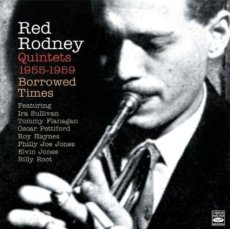
Red Rodney was born Robert Roland Chudnick on September 27, 1927 in Philadelphia, Pennsylvania. He became a professional musician at age 15 working in the mid-Forties Jerry Wald, Jimmy Dorsey, George Auld, Benny Goodman and Les Brown. Inspired by Dizzy Gillespie and Charlie Parker he turned to bebop and began playing with Claude Thornhill, Gene Krupa and Woody Herman.
Red joined Parker’s quintet in 1949 and was billed as Albino Red when playing in the racially segregated South. Leaving Parker he moved to join Charlie Ventura. Recording extensively over the next ten years he left jazz in 1958 due to diminishing opportunities, lack of acceptance as a white bebop trumpeter, and problems with the police about his drug addiction.
He continued to work in other musical fields and although he continued to be paid well, he supported his drug habit through theft and fraud, eventually spending 27 months in prison. In the early 1970s he was bankrupted by medical costs following a stroke and returned to jazz.
From 1980 to 1982, Rodney made five highly regarded albums with multi-instrumentalist Ira Sullivan, worked with The Rolling Stones drummer Charlie Watts, provided an early showcase for saxophonist Chris Potter, a member of his working group when Rodney recorded “Red Alert” in late 1990. Bebop and hard bop trumpeter Red Rodney passed away on May 27, 1994.
Give A Gift Of Jazz – Share
More Posts: trumpet