

Daily Dose Of Jazz…
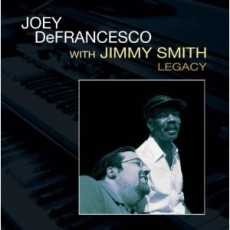
Joey DeFrancesco was born in Springfield, Pennsylvania on April 10, 1971 into a family of musicians – a multi-instrumentalist grandfather and Hammond B3 player father. Joey DeFrancesco started playing the piano at the age of four, switching to the B3 shortly after. By age six, he was sitting in on his father’s gigs; by ten playing out on his own and sitting in with organ legends like Jack McDuff and Richard “Groove” Holmes. He went to high school with bassist Christian McBride, where the two were often scolded for altering their big band charts.
At seventeen years old Miles Davis asked Joey to join his band, touring Europe and recording Amandla with Davis. He became well known in the 1990s, however, through his work with John McLaughlin’s trio Free Spirits. He has also played with jazz guitarists Pat Martino, Paul Bollenback, Jimmy Bruno, Dave Stryker, Danny Gatton as well as trumpet player Big Jim Henry and many others.
DeFrancesco’s career as a leader began with his first recordings on Columbia, and later with Muse, Big Mo, and HighNote. He listened to and learned from Jimmy Smith, ultimately paying homage with his 1999 release “The Champ”. In 2000 he recorded the album “Incredible!” with Jimmy and finished “Legacy” shortly before Smith’s passing in 2005. He has also paid tribute to Don Patterson with “Tribute to Don Patterson: The Philadelphia Connection” released in 2004.
Jazz organist, trumpeter and vocalist Joey DeFrancesco, who has been selected by the Down Beat Critics and Readers Poll as the top jazz organist every year since 2003 and who consistently played an average of 200 nights a year on the road with various musicians, transitioned on August 25, 2022 at the age of 51.
Put A Dose In Your Pocket
More Posts: hammond organ,keyboard,saxophone,trumpet,vocal
Daily Dose Of Jazz…
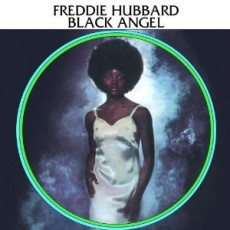
Frederick Dewayne Hubbard was born on April 7, 1938 in Indianapolis, Indiana and started playing the mellophone and trumpet in his school band at Arsenal Technical High School. Upon the recommendation of one-time Stan Kenton sideman, trumpeter Lee Katzman, he began studies at the Arthur Jordan Conservatory of music. During his teens he played with Wes and Monk Montgomery, bassist Larry Ridley and James Spaulding.
1958 saw a 20-year old Hubbard in New York working with the likes of Philly Joe Jones, Sonny Rollins, Slide Hampton, Eric Dolphy, J. J. Johnson and Quincy Jones. Three years later in ’61 he recorded his debut as a leader, Open Sesame with Tina Brooks, McCoy Tyner, Sam Jones and Clifford Jarvis. That same year he replaced Lee Morgan in Art Blakey’s Jazz Messengers and for the next five years played and recorded on a succession of albums. Leaving Blakey in 1966 he formed the first of several small groups with among others Kenny Baron and Louis Hayes.
Throughout his hard bop and post bop career he recorded profusely for Blue Note, Atlantic, CTI, Columbia and a host of subsidiaries and smaller labels playing with the likes of Ornette Coleman, John Coltrane, Wayne Shorter, Eric Dolphy, Don Cherry, Herbie Hancock, Oliver Nelson, Stanley Turrentine, George Benson, Richard Wyands, Eric Gale, Ron Carter, Jack DeJonette, Dexter Gordon, Curtis Fuller and the list goes on.
Freddie Hubbard, NEA Jazz Master, had an unmistakable and influential tone that greatly contributed to new perspectives for modern jazz and bebop. He passed away from a heart attack on December 29, 2008.
More Posts: cornet,flugelhorn,french horn,mellophone,trumpet
Daily Dose Of jazz…
Stanley William Turrentine was born in the Hill District of Pittsburgh, Pennsylvania on April 5, 1934 into a musical family. His father, Thomas Turrentine, Sr., was a saxophonist with Al Cooper’s Savoy Sultans, his mother played stride piano, and his older brother Tommy Turrentine became a professional trumpet player.
Turrentine began his prolific career with blues and rhythm and blues bands, and was at first greatly influenced by Illinois Jacquet. In the 1950s, he went on to play with the groups of Lowell Fulson, Earl Bostic and at the turn of the decade with Max Roach.
1960 saw Stanley marrying organist Shirley Scott and the two frequently played and recorded together. During this decade he also started working with organist Jimmy Smith, making several soul jazz recordings both with Smith and as a leader.
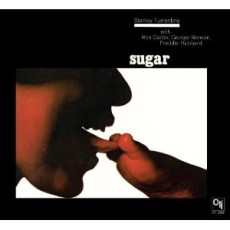
By the 1970s, after his professional and personal divorce from Scott, Turrentine left hard bop and soul jazz for jazz-fusion. He signed with Creed Taylor’s CTI label and released his debut album “Sugar” that became one of his biggest successes and a seminal recording for the label. He worked with Freddie Hubbard, Milt Jackson, Bob James, Richard Tee, Idris Muhammad, Ron Carter and Eric Gale, to name a few.
In the 80s and 90s Stanley returned to soul jazz though throughout his career along with his CTI releases, he recorded for Blue Note, Fantasy, Prestige, and Impulse record labels. Tenor saxophonist, bandleader and composer Stanley Turrentine passed away from a stroke in New York City on September 12, 2000.
More Posts: saxophone
Daily Dose Of Jazz…
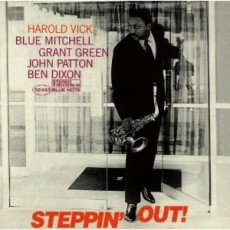
Harold Vick was born on April 3, 1936 in Rocky Mount, North Carolina. His uncle, reed player Prince Robinson gave him a clarinet when he was thirteen and two years later he switched to the tenor saxophone. He rose to prominence playing with organ combos in the mid-60s performing and recording with Jack McDuff, Jimmy McGriff and Big John Patton among others.
During this period in his career Harold also performed and recorded as a leader releasing eight albums between 1963 and 1977. He would work with the likes of Blue Mitchell, Ben Dixon, John Patton, Bobby Hutcherson, Walter Bishop Jr., Grady Tate and Teddy Charles, just to name a few. Also working as a sideman he performed and recorded with Grant Green, Shirley Scott, Nat Adderley, Aretha Franklin, Dizzy Gillespie, Mercer Ellington, Sarah Vaughan, Billy Taylor, Donald Byrd, Horace Silver, Ray Charles and Gene Ammons.
He played in films such as “Stardust Memories” and “Cotton Club”, in which he played a musician. He also was in the Spike Lee film “School Days” and was featured on the soundtrack for “She’s Gotta Have It”.
Harold Vick, tenor saxophonist and flautist in the hard bop and soul jazz genres passed away on November 13, 1987.
Daily Dose Of Jazz…
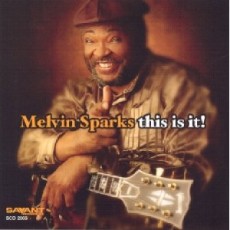
Melvin Sparks was born on March 22, 1946 in Houston, Texas. He got his first guitar when he was eleven and two years later he was sitting in with B.B. King. By 1963 he had joined the “Upsetters”, an R&B show band that backed Little Richard, Sam Cooke and other big names. Following this he did a year stint with Jack McDuff from 1966-67, then became quite in demand for his ability to improvise.
Sparks released his first album as a leader on Prestige in 1970 followed by a number of recording dates for the Prestige and Savant record labels and also appeared as a sideman and guest artist on several recordings with musicians including Lou Donaldson, Houston Person, Jimmy McGriff, Hank Crawford, Charles Earland, Sonny Stitt, Leon Spencer and Johnny Hammond Smith.
His Grant Green influenced guitar style placed him firmly in the soul jazz, hard bop and jazz blues genres. Melvin Sparks died on March 13, 2011 in Mount Vernon, New York from complications from diabetes.
More Posts: guitar