

Daily Dose Of Jazz…
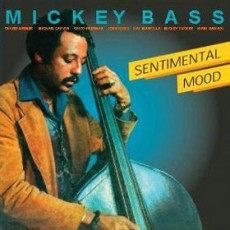
Mickey Bass was born in Pittsburgh, Pennsylvania on May 2, 1943. By the time he was nine years old he had just about every record that ‘Bird’ ever cut, not to mention living in an atmosphere that was permeated by ‘Dizzy Gillespie, Duke Ellington, Count Basie, Sarah Vaughan, Billie Holiday and Miles Davis.
1961 saw Bass matriculating through Howard University in an atmosphere hostile to jazz, failing along with classmates Harold Vick, Marion Brown and Charles Tolliver, due to the playing of jazz being forbidden on campus. Two years later he landed in New York City, getting his early breaks with Hank Mobley, Sonny Rollins and Bennie Green. His first session was with Lee Morgan on The Sixth Sense that included on of his compositions and arrangements of “Mickey’s Tune”.
As an educator from 1975 to 1978, Mickey taught Acoustic Bass & Jazz Improvisation at “The Ellington School of The Arts”, Washington, D.C. and Director of the Jazz Ensemble. He also taught in New York City for the Jazzmobile.
He has performed and recorded with John Coltrane, Charlie Parker, Freddie Hubbard, Art Blakey, Lee Morgan, Jackie McLean, Bobby Timmons, Gloria Lynne, Jimmy McGriff, Curtis Fuller, Hank Mobley, Billy Eckstine, Reuben Wilson, Chico Freeman and John Hicks among others. He led a sextet called The Cooperation, composed A Chant Blu, One For Trane, Meditation, Gayle’s Groove and Siempre Me Amor, and has cut three sessions as a leader for Chiaroscuro and Early Bird labels.
Hard bop bassist Mickey Bass, who was also an arranger and educator who also plays saxophone and has been active on the jazz scene for more than 40 years, continued to perform, compose and record until his transition on February 3, 2022.

More Posts: bass
Daily Dose Of Jazz…
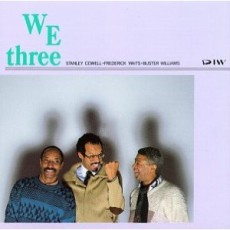
Freddie Douglas Waits was born on April 27, 1943 in Jackson, Mississippi. He played flute early on and majored in flute in at Jackson Street College but soon turned to drums as a profession. His earliest gigs were with blues artists including Memphis Slim and John Lee Hooker followed by performing soul music.
By 1962 Waits was in Detroit playing with the Jimmy Wilkins Orchestra, then the Johnny Winter band. A move to Los Angeles put him with the Gerald Wilson Orchestra before relocating to New York in the mid-‘60s. This period began some of his most important musical collaborations with Sonny Rollins, Andrew Hill, McCoy Tyner, Lee Morgan, Pharoah Sanders, Gene Harris and Max Roach.
Freddie was a founding member of M’Boom, the group Colloquim and during the Eighties played with Bill Dixon and Cecil Taylor. A respected sideman, he never led a recording session. However, he left a legacy of music along with his son, drummer Nasheet Waits.
Hard bop and post-bop drummer Freddie Waits passed away on November 18, 1989 in New York City.

Inspire A Young Mind
Daily Dose Of Jazz…
Charles Mingus Jr. was born on April 22, 1922 in Nogales, Arizona of Chinese, English, African and Swedish heritage. His mother allowed only church-related music in their home, but Mingus developed an early love for jazz, especially the music of Duke Ellington. He first studied trombone, later adding cello, which prepared him for the double bass in high school. He studied five years with H. Rheinshagen, principal bassist of the New York Philharmonic and compositional techniques with Lloyd Reese.
Beginning in his teen years, Mingus was writing quite advanced pieces incorporating elements of classical music. A number of them were recorded in 1960 with conductor Gunther Schuller and released as “Pre-Bird”, referring to Charlie “Bird” Parker. Mingus was one of many musicians whose perspectives on music were altered by Parker into “pre- and post-Bird” eras.
Gaining a reputation as a bass prodigy, his first major professional job was playing with former Ellington clarinetist Barney Bigard. This followed by a tour with Louis Armstrong in 1943 that led to his recording in a band led by Russell Jacquet that included Teddy Edwards and Chico Hamilton. He went onto record with Howard McGhee and into the late ‘40s played with Lionel Hampton’s band performing several of his pieces.
A popular Mingus trio had Red Norvo and Tal Farlow in tow in the early 50s with considerable acclaim but his mixed heritage caused problems with club owners and he left the group. Charles was briefly a member of Ellington’s band until his temper got him fired. He went on to record and play with Max Roach, Bud Powell, Dizzy Gillespie, Charlie Parker, Pepper Adams, Jaki Byard, Horace Parlan, Booker Ervin, John Handy, Charles McPherson, Eric Dolphy and Johnny Coles among others through the Sixties and into the next decade. By the mid-1970s, Mingus was suffering from Lou Gehrig’s disease that eventually stopped his playing, leaving him to continue composing and supervising recordings prior to his death on January 5, 1979 at age 56 in Cuernavaca, Mexico.
Composer, bandleader, bassist and civil rights activist Charles Mingus left a legacy of an autobiography, Mingus Big Band, Mingus Dynasty, Mingus Orchestra, the Charles Mingus High School Competition, the catalogue of Mingus compositions in the Music Division of the New York Public Library and the collected papers of Charles Mingus housed at the Library of Congress in Washington, DC.
Take A Dose On The Road
More Posts: bandleader,bass,composer
Daily Dose Of Jazz…
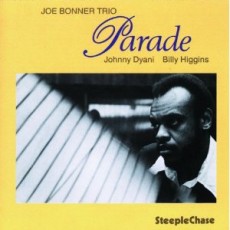
Joe Bonner was born on April 20, 1948 in Rocky Mount, North Carolina. He studied and earned a B.S. in Classical Music from Virginia State College in Petersburg. His early influences were McCoy Tyner and Art Tatum but he cites that he learned much from the musicians he worked with in the ‘70s including Freddie Hubbard, Billy Harper, Pharoah Sanders and Roy Haynes, who hired Bonner to replace Chick Corea.
Joe’s musical travels led him to Denmark where he joined or accompanied traveling jazz artists. Bonner has appeared on a long list of recordings as a bandleader or sideman, with titles released on Evidence, Muse, Capri, and ABC/Impulse! He has over a dozen sides out on the Steeplechase label recorded during his twelve-year stint in Europe, especially Copenhagen.
Since the turn of the new century Bonner has put out more fine records as his “Monkisms” and the highly acclaimed “The Art of Jazz Piano” that display his amazing knowledge of jazz piano structure and his ability to navigate the lucid joining of passionate solos, soulful harmonies, driving rhythms and orchestrating spirited improvised journeys into a celebration of rich modern jazz textures, rooted in bebop, gospel and blues.
Pianist Joe Bonner is known for playing hard bop and modal jazz, this enigmatic pianist has become a Denver jazz scene staple, currently leading the jazz quartet, The Bonner Party and for the past two decades has thrilled audiences with his virtuoso sensibility.
Inspire A Young Mind
More Posts: piano
Daily Dose Of Jazz…
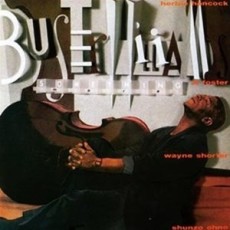
Charles Anthony Williams was born April 17, 1942 in Camden, New Jersey. His father was a bassist and his teacher, preparing lessons for him each day, stringing his bass and demanding practice everyday after school.
Nicknamed Buster, he started his professional career in Philadelphia in 1959 working with Jimmy Heath, then went on to play and record with the Gene Ammons – Sonny Stitt quintet from 1960-61. Leaving the quintet he moved to Los Angeles and played behind Betty Carter, Sarah Vaughan and Nancy Wilson through the decade. He also worked with The Jazz Crusaders, Bobby Hutcherson/Harold Land Quintet and Miles Davis.
In 1969, Williams moved to NYC, joined the Herbie Hancock Mwandishi Sextet and for the next three years doubled on acoustic and electric bass. In the ‘70s he worked with Mary Lou Williams and the Ron Carter Quartet and in 1975 released his debut album “Pinnacle”. Since the ’80s, Williams has appeared as a sideman on a significant number of sessions with notable jazz instrumentalists and vocalists, Chet Baker, Kenny Barron, Dexter Gordon, Carmen McRae, Illinois Jacquet, Frank Morgan, McCoy Tyner, Shirley Horn, Woody Shaw, Stanley Cowell and the list continues.
With opportunities to lead his own sessions being rare, in 2008 Buster began releasing a series of live albums exclusively for download through his company, Buster Williams Productions. A solid supportive player, he has made subtle swing, a precise rhythm and superb technique the landmark of his playing.
Put A Dose In Your Pocket
More Posts: bass