

Daily Dose Of Jazz…
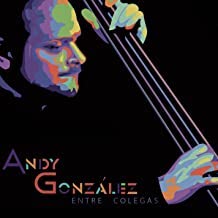
Andy González was born in The Bronx, New York on January 1, 1951. He and his brother Jerry González were founding members of Conjunto Libre and Grupo Folklórico y Experímental Nuevayorquíno, with whom he produced three albums: Concepts in Unity (1975), Lo Dice Todo (1976), and Homenaje a Arsenio (2011).
The band included Frankie Rodríguez, Milton Cardona, Gene Golden, Carlos Mestre, Nelson González, Manny Oquendo, Oscar Hernández, José Rodríguez, Néstor Torres, Gonzalo Fernández, Alfredo “Chocolate” Armenteros, Willy García, Heny Álvarez, Virgilio Martí, Marcelino Guerra, Rubén Blades, Orlando “Puntilla” Ríos, and Julito Collazo on the first two albums.
Over the course of his career, along with leading bands of his own, Andy worked with Dizzy Gillespie, Tito Puente, Eddie Palmieri, Kip Hanrahan and Astor Piazzolla.
Double bassist Andy González, who performed primarily in the Latin jazz and Afro-Cuban idioms, transitioned on April 9, 2020 from pneumonia and complications of diabetes in the Bronx.
More Posts: bass,history,instrumental,jazz,music

Daily Dose Of Jazz…
Ariel de la Portilla was born on November 10, 1975 in Matanzas, Cuba where he lived until immigrating with his parents to Miami, Florida when he was five. Growing up in the Little Havana neighborhood he was surrounded by the sounds of Cuban and Brazilian music as well as simultaneously experiencing American music and culture that gave his childhood a distinctly unique dichotomy that later proved to have become a crucial aspect of his life, education, and musical identity.
After graduating from high school in 1994, he left Miami to pursue his interests in the double bass. Awarded a music scholarship to the Cincinnati Conservatory of Music at the University of Cincinnati, he dedicated most of his time to studying classical bass and jazz. He remained at CCM until recruited by the University of Miami in 1996 to study under the instruction of Don Coffman, Matt Bonnelli and Lucas Drew.
Since arriving in New York City, he has performed with jazz and Latin musicians including Ray Vega, Dave Valentin, Patato Valdez, Candido Camero, Edy Martinez, Willie Martinez, Peter Erskine, Eddie Daniels, and Sonny Bravo.
Bassist Ariel De La Portilla is currently a member of the Ze Luis Quartet and a new conceptual guitar trio, Lengua Moderna.
More Posts: bandleader,bass,history,instrumental,jazz,music
Daily Dose Of Jazz…
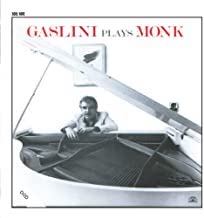
Giorgio Gaslini born October 22, 1929 in Milan, Italy. He began performing aged 13 and recorded with his jazz trio at 16. In the 1950s and 1960s, He performed with his own quartet. He was the first Italian musician mentioned as a “new talent” in the Down Beat poll and the first Italian officially invited to a jazz festival in the USA New Orleans 1976-77.
He collaborated with leading American soloists, such as Anthony Braxton, Steve Lacy, Don Cherry, Roswell Rudd, Max Roach, but also with the Argentinian Gato Barbieri and Frenchman Jean-Luc Ponty. He also adapted the compositions of Albert Ayler and Sun Ra for solo piano, which the Soul Note label issued. He also composed the soundtrack of Michelangelo Antonioni’s 1961 La notte (The Night).
From 1991 to 1995, Gaslini composed works for Carlo Actis Dato’s Italian Instabile Orchestra, and was the first to teach jazz courses at the Santa Cecilia Academy of Music in Rome in 1972. In the Seventies he scored ten films between 1970 to 1977.
Pianist, composer and conductor Giorgio Gaslini, who composed symphonic works, operas, and ballets, passed away on July 29, 2014 at 84 in Borgo Val di Taro, Italy in the province of Parma.

More Posts: bandleader,composer,conductor,history,instrumental,jazz,music,piano
Daily Dose Of Jazz…
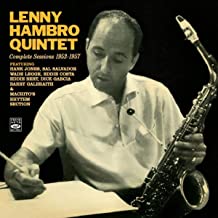
Lenny Hambro was born on October 16, 1923 in the Bronx, New York, the younger of two children. As a teenager, his brother-in-law introduced the 15 year old to woodwinds, giving him a soprano saxophone and introductory music lessons and taking every music class in which he could enroll. While in high school he took private lessons from Bill Sheiner, one of the leading music teachers and session musicians in New York City. During his later high-school years, Hambro played alto sax, tenor sax, clarinet, and flute in an assortment of teen dance bands, including a summer in the Catskills.
During the Second World War, at just 18, Hambro auditioned and got the empty seat in Gene Krupa’s band in 1942. However, he left the band in December of that year for the Army, there joining Ivan Mogul, Shorty Rogers and approximately 40 other musicians from the Bronx who had agreed to man the 379th Army Service Forces Band in Newport News, Virginia, where he stayed for three years. Post war he worked and recorded with Billy Butterfield and Bobby Byrne, before rejoining Gene Krupa as lead alto sax and featured jazz soloist through 1950.
He would go on to play and /or record with the Latin jazz ensembles of Vincent Lopez, Pupi Campo, Machito and his Afro-Cuban Orchestra, Ray McKinley Band. the Chico O’Farrill Orchestra, tour with The Gene Krupa Orchestra, Charlie Ventura’s Orchestra and Joe Loco’s band. He did studio work, worked as a music copyist, and taught private lessons.
In 1954 he formed the Lenny Hambro Quintet, and in 1955 he again played in and managed the Ray McKinley Band, and toured the United States routinely during this period as well as England, Poland, Iron Curtain Europe, and North Africa in 1957 and 1958. He was a booking agent, opened up an advertising company, then returned to music. He recorded his final tracks at the Clinton Recording Studio at 653 10th Avenue in New York City in February, 1995 for Chico O’Farrill’s album, Pure Emotion for Milestone Records.
Lenny Hambro, who played alto, baritone and tenor saxophone, flute, and clarinet, passed away of a blood clot following open heart surgery on September 26, 1995, at Shore Memorial Hospital, Somers Point, New Jersey, a month shy of his 72nd birthday.
More Posts: bandleader,clarinet,flute,history,instrumental,jazz,music,saxophone
Daily Dose Of Jazz…
Francis Williams was born September 20, 1910 in McConnell’s Mill, Pennsylvania. His first gigs were with Frank Terry’s Chicago Nightingales in the 1930s.
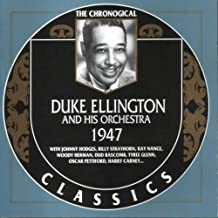
In 1940 he moved to New York City, and in the first half of the decade played in the bands of Fats Waller, Claude Hopkins, Edgar Hayes, Ella Fitzgerald, Sabby Lewis, and Machito. From 1945 to 1949, and again in 1951, he played and recorded extensively as a member of Duke Ellington’s orchestra.
Williams worked primarily with Latin jazz ensembles and New York theater bands in the 1950s and 1960s, and played with Clyde Bernhardt and the Harlem Blues and Jazz Band. In addition to working with his own quartet, near the end of his life he worked with Panama Francis.
Trumpeter Francis Williams, who was a single father of two, had one son, actor Greg Morris, passed away on October 2, 1983 in Houston, Texas.

More Posts: bandleader,history,instrumental,jazz,music,trumpet