

Daily Dose Of Jazz…
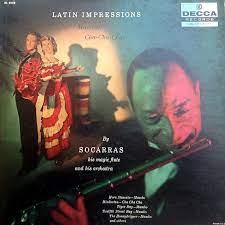
Alberto Socarrás Estacio was born in Manzanillo, Cuba on September 19, 1908 and started learning the flute at age seven with his mother and later joined the provincial music conservatory at Santiago de Cuba. He completed his studies at the Timothy Music Conservatory in New York, gaining the equivalent title to a doctorate in music. In the middle 1920s he moved to Havana to join the theatre orchestra of Arquimedes Pous, where his sister Estrella was playing the violin. He also played in one or two early Cuban jazz bands before moving to the United States in 1927.
Once stateside he recorded with Clarence Williams with his first flute solo taking place on Shooting the Pistol on the Paramount label, making him the earliest known jazz flute soloist. He played with The Blackbirds revue between 1928 and 1933, and played on Lizzie Miles’s 1928 recording You’re Such a Cruel Papa to Me.
During the Thirties he played with Benny Carter, led the all-female Cuban band Anacaona on a tour of Europe, played with Sam Wooding and Erskine Hawkins. He made one recording in 1935, with four numbers, then went on to record for RCA Victor, SMC Pro-Arte and Decca.
In the 1950s he took part in Rod Serling’s The Twilight Zone, concerts of cult music at the Carnegie Hall in New York, and in the 60s he dedicated himself to teaching.
Flautist Alberto Socarras, who in 1983 was filmed by Gustavo Paredes playing the flute in a TV documentary Música, passed away on August 26, 1987 in New York City.

More Posts: bandleader,flute,history,instrumental,jazz,music

Daily Dose Of Jazz…
Pedro Iturralde Ochoa was born in Falces, Spain on July 13, 1929. He began his musical studies with his father and performed in his first professional engagements on saxophone at age eleven. GraduatING from the Royal Conservatory of Music in Madrid, he had studied clarinet, piano, and harmony.
When he was 20 years old he composed Czárdás for saxophone and dedicated the present version of the work, orchestrated by his brother Javier, to a friend, saxophonist Theodore Kerkezos. He went on to lead his own jazz quartet at the W. Jazz Club in Madrid, Spain and experimented with the combined use of flamenco and jazz, and making recordings for the Blue Note label.
In 1972 he undertook further study in harmony and arranging at the Berklee College of Music in Boston, Massachusetts. He taught saxophone at the Madrid Conservatory from 1978 until his retirement in 1994. He appeared in Spain and abroad as a soloist with the Spanish National Orchestra under the baton of Frühbeck de Burgos, Celibidache, Markevitch, and others.
He made recordings with the renowned flamenco guitarists Paco de Lucia, Paco de Algeciras and Pepe de Antequerra, and Paco Cepero. He also recorded with jazz vocalist Donna Hightower on her I’m In Love with Love album and arranged/conducted on her El Jazz y Donna Hightower album.
Saxophonist, teacher and composer Pedro Iturralde Ochoa passed away on November 1, 2020. in Madrid on November 1, 2020.

More Posts: bandleader,history,instrumental,jazz,music,saxophone
Daily Dose Of Jazz…
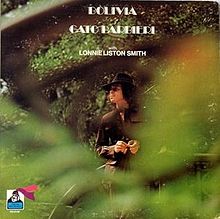
Jean-François “J.F.” Jenny-Clark was born July 12, 1944 in Toulouse, France. Together with drummer Aldo Romano he provided the rhythm section for Don Cherry’s 1965 European quintet of 1965. During the Seventies he recorded with Steve Lacy, performed in concerts with Keith Jarrett (around 1970) and for Jasper van’t Hof’s Pork Pie group and played with Charlie Mariano.
As a member of Diego Massons ensemble Musique Vivante he was interpreting contemporary music compositions by John Cage, Luciano Berio, Mauricio Kagel, Karlheinz Stockhausen, Pierre Boulez, or Vinko Globokar.
Along with Albert Mangelsdorff he led the German-French Jazz Ensemble from 1984 to 1987. Since 1985 Jenny-Clark was mainly working in an acclaimed trio with German pianist Joachim Kühn and Swiss drummer Daniel Humair.
His recording as a leader was minimal but as a sideman he recorded over a hundred albums. Double bassist Jean-François Jenny-Clark, one of the most important bass players of European jazz, passed away on October 6, 1998 in Paris, France.
More Posts: bandleader,bass,composer,history,instrumental,music
Daily Dose Of Jazz…
Frank Emilio was born Francisco Emilio Flynn Rodríguez on April 13, 1921 in Havana, Cuba to an American father and Cuban mother. Despite being blinded at birth due to damage to his eyes by the doctor’s forceps, unable to distinguish shapes as a child he became totally blind by his late teens. Orphaned at age five he was raised by his aunt and uncle. At 13 years old, he won an amateur music contest and shortly after began to play danzones by Antonio María Romeu. In 1938 he interrupted his career to complete his studies at a school run by Cuba’s National Association for the Blind.
During the 1940s, Flynn became part of the filin music scene which comprised jazz-influenced bolero composers. He accompanied singer Miguel de Gonzalo. In 1946 he founded the Loquibambia ensemble together with guitarist and composer José Antonio Méndez, and they started to work for the Mil Diez radio station. By 1949 they accompanied the famous Conjunto Casino in the recording of their song Átomo. Two years later he founded Los Modernistas, and played at Radio Cadena Habana, toured the island before disbanding. Flynn then joined a son ensemble, Alejandro y sus Muchachos, and in 1955 he recorded four songs with Arcaño y sus Maravillas.
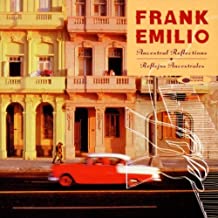
By the late Fifties he would go on to pioneer small-ensemble Cuban jazz. After the Cuban Revolution, the members of the Quinteto Instrumental remained in Havana, playing and recording. In the late 1970s and 1980s, his band expanded and recorded their debut album. During the 1990s Flynn recorded several albums including Barbarísimo, Tribute to Ernesto Lecuona and A Tiempo de Danzón for Milan/RCA Records, and Ancestral Reflections for Blue Note. In 1998 he made his American debut, with Los Amigos, in a Jazz at Lincoln Center gig and the following year he reunited with his American relatives.
Between 2000 and 2001 he spent much of his time with his relatives in California, where he played live occasionally and gave lectures at California State University, Los Angeles. Pianist Frank Emilio, who played danzas, danzones, filin, descarga, and Afro-Cuban jazz, passed away on August 23, 2001 in Havana.
More Posts: bandleader,history,instrumental,jazz,music,piano
Daily Dose Of Jazz…
Oliver Edward Mitchell was born April 8, 1927 in Los Angeles, California. He was the son of Harold Mitchell, lead trumpeter for MGM Studios, who taught him to play the trumpet.
Mitchell would go on to play in big bands for Harry James, Buddy Rich and Pérez Prado, among others, as well as the NBC Symphony Orchestra. In the 1960s, he joined The Wrecking Crew, a group of studio and session musicians who played anonymously on many records for popular singers of the time, as well as theme songs for television, film scores, and advertising jingles.
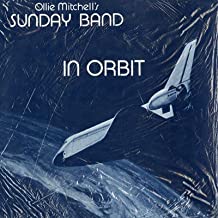
Mitchell was an original member of Herb Alpert’s Tijuana Brass. He would go on to have his own bands, Ollie Mitchell’s Sunday Band, and the Olliephonic Horns
Moving to Puako, Hawaii in 1995 he founded the Horns. In 2010, he published his memoir, Lost, But Making Good Time: A View from the Back Row of the Band. He stopped playing the trumpet toward the end of his life, due to macular degeneration and hand problems from an automobile accident.
Trumpeter Ollie Mitchell, who recorded with Chet Baker, Harry James, Stan Kenton, Irene Kral, Shorty Rogers, Pete Rugolo, Dan terry and Gerry Wilson among others, suffered from cancer and passed away on May 11, 2013.
More Posts: bandleader,history,instrumental,jazz,music,trumpet