

Daily Dose Of Jazz…
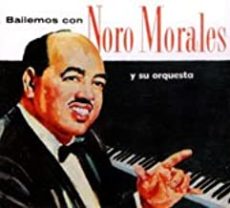
Noro Morales was born into a family with a long musical tradition in Puerta de Tierra, San Juan, Puerto Rico on January 4, 1911. As a child, he studied trombone, saxophone, and drums, finally settling on the piano. In 1935 he moved to New York City in search of a professional career and played with different bands including Alberto Socarras and Augusto Coén.
1937 saw him creating his own orchestra together with his brother Ismael, featured flutist, which competed with the likes of Tito Puente, Machito Grillo, the brothers Tito and Johnny Rodríguez, Davilita, and José Esteves known as Joe Loco. They began to record their first disc for Columbia and Decca Records and in a short time, Noro and their band became a staple on the New York City Latin music scene. The orchestra frequently performed in important clubs such as El Morocco, the Conga, and Copacabana. In 1942 with the Xavier Cugat Orchestra popularizing rumba, Morales got the opportunity to play for the first time, the prestigious dance of Harvest Moon organized by the Daily News newspaper.
At the time of the great mambo and swing bands, Morales was able to consolidate a unique style and original, and in the late 1940s and early 1950s, he achieved commercial success with several albums produced by the CODA label. His most famous compositions recorded were Rumba Rhapsody, Cute Woman, Nothing Is True, Palm Trees, Ponce, Cursed Jealousy, Rhythmic Serenade, and 110th Street & 5th Avenue.
Suffering from glaucoma, diabetes, and joint problems, in 1960 he decided to return to Puerto Rico, where he put together another band, consisting among others percussionist Ana Carrero and singer Vitín Avilés.
Composer, arranger, and pianist Noro Morales, who was a pioneer in the introduction of the Latin musical element in New York City, passed away on January 14, 1964 in San Juan.

More Posts: bandleader,composer,history,instrumental,jazz,music,piano

Daily Dose Of Jazz…
Rafael Antonio Cortijo was born on December 11, 1928 in Santurce, Puerto Rico and as a child became interested in Caribbean music and enjoyed the works of some of the era’s most successful Bomba y Plena music musicians. Throughout his life, he had a chance to meet and work with some of them and learned how to make his own congas and pleneras, the handheld drums used in bomba y plena music.
He met salsa composer and singer Ismael Rivera when both were youngsters growing up in the Villa Palmeras neighborhood. They became lifelong friends and Rivera impressed with his friend’s conga-playing skills, asked him to join his orchestra, which played at Fiestas patronales all over Puerto Rico.
Becoming well known across Latin America, Rafael attributed his success to the sound of his percussion, as Afro-Caribbean music was known worldwide. As a member of the Conjunto Monterrey, based in Monterrey, Mexico, he later toured with Daniel Santos’ orchestra and worked on radio.
By 1954, as a member of El Combo, Cortijo’s big break came when El Combo’s leader and pianist Mario Román left the band to him. Ismael Rivera, then the lead singer of Lito Peña’s Orquesta Panamericana, joined Cortijo’s orchestra known as Cortijo y su Combo in 1955. From then until 1960, his orchestra played live on Puerto Rican television shows, and sometime during the 60s, they became the house band at La Taberna India.
The orchestra virtually disbanded in 1962 when Ismael Rivera was arrested for drug possession in Panama. Rafael and the other bandmates went on to found Puerto Rico’s salsa group, El Gran Combo. He went on to create another orchestra, El Bonche, where he was joined by his adopted niece, Fe Cortijo, who would become a well-known singer on her own. He and Rivera went on to live in New York City but he soon returned impoverished to Puerto Rico, where he forged a friendship with composer Tite Curet Alonsothe who helped produce a comeback album. In 1974, Coco Records reunited all the former members of “Cortijo y su Combo” orchestra for a one-time-only concert and a subsequent studio recording issued a few months afterward.
Their friendship was so important to Rivera, that when orchestra leader, musician, and composer Rafael Cortijo passed away of pancreatic cancer on October 3, 1982 at his sister Rosa Cortijo’s apartment in the Luis Llorens Torres public housing project in Santurce, Rivera said he would no longer sing.
More Posts: bandleader,conga,history,instrumental,jazz,music
Daily Dose Of Jazz…
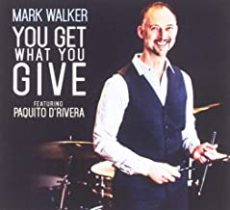
Mark Walker was born on October 16, 1961 in Chicago, Illinois and began playing drums at age ten. He played his first professional club, concert, and recording gigs barely out of high school. After studying with Roy C. Knapp, he gained valuable experience performing a wide range of styles in the Chicago, area and later became a first-call session drummer and percussionist, playing on film scores, jingles, and record dates.
Moving to New York in 1995, he easily entered the jazz culture and performed and recorded extensively with Michel Camilo, Dave Samuels, Andy Narell, WDR Big Band, NDR Big Band, Grace Kelly, Eliane Elias, Lyle Mays, Dave Liebman, Regina Carter, Joao Bosco, Dianne Reeves, Cesar Camargo Mariano, and Rosa Passos, among numerous others. He has been earned several Grammy nominations and in 2008 he was nominated for a Grammy for Best Instrumental Composition.
Walker has worked on Grammy~winning albums with Oregon, Donato Poveda, Paquito D’Rivera, the Caribbean Jazz Project and has also earned Indy and Jazz awards. He appeared on Late Night with David Letterman, The Rosie O’Donnell Show, PBS Presents, BET On Jazz, and with Paquito D’Rivera in Fernando Trueba’s Latin jazz documentary Calle 54.
As an educator, Mark is a professor in the Percussion Department at Berklee College of Music where he has taught drummers, percussionists, and ensembles since 2001. He has served on the faculty at New York City’s Drummers Collective and has conducted master classes, clinics, and workshops in South America, North America, and Europe. He has published two books, World Jazz Drumming and Killer Grooves, an instructional drum set book.
Grammy Award-winning drummer, percussionist, author, and educator Mark Walker continues to tour with Oregon and Paquito D’Rivera. He writes for and leads Rhythm of the Américas, a jazz octet incorporating Caribbean and South American rhythms.

More Posts: bandleader,composer,drums,history,instrumental,jazz,music
Daily Dose Of Jazz…
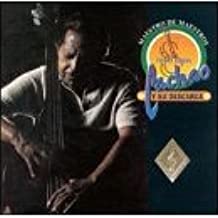
Israel López Valdés was born into a family of musicians on September 14, 1918 in Havana, Cuba. Better known as Cachao, a nickname and stage name given to him by his grandfather, as an 8-year-old bongo player, he joined a children’s son Cubano septet directed by a 14-year old Roberto Faz. A year later, already on double bass, he provided music for silent movies in his neighborhood theater, in the company of a pianist who would become a true superstar, the great cabaret performer Ignacio Villa, known as Bola de Nieve.
His parents made sure he was classically trained, first at home and then at a conservatory. In his early teens, Lopez was already playing contrabass with the Orquesta Filarmónica de La Habana, of which Orestes was a founding member. Under the baton of guest conductors such as Herbert von Karajan, Igor Stravinsky, and Heitor Villa-Lobos, he played with the orchestra from 1930 to 1960.
He and his older brother Orestes were the driving force behind one of Cuba’s most prolific charangas, Arcaño y sus Maravillas. As members of the Maravillas, Cachao and Orestes pioneered a new form of ballroom music derived from the danzón, the danzón-mambo, which subsequently developed into an international genre, mambo.
In the 1950s, Cachao became famous for popularizing improvised jam sessions known as descargas. In 1961, Cachao went into exile. He crossed the Atlantic by boat, reaching Madrid thanks to Ernesto Duarte, who demanded him to play with his orchestra–Orquesta Sabor Cubano–and where he spent a few years touring the country until the orchestra finally broke up in 1963. Moving to the United States that same year, Cachao became a session musician and was one of the most in-demand bassists in New York City, along with Alfonso “El Panameño” Joseph and Bobby “Big Daddy” Rodríguez.
Joseph and López substituted for each other over a span of five years, performing at New York City clubs and venues such as the Palladium Ballroom, The Roseland, The Birdland, Havana San Juan and Havana Madrid. While Cachao was performing with Machito’s orchestra in New York, Joseph was recording and performing with Cuban conga player Cándido Camero. When Joseph left Cándido’s band to work with Charlie Rodríguez and Johnny Pacheco, it was Cachao who took his place in Cándido’s band. In the 1970s, Cachao fell into obscurity after moving to Las Vegas, Nevada and then later Miami, Florida releasing albums sporadically as a leader.
The 1990s saw his re-discovery by actor Andy García, who brought him back to the forefront of the Latin music scene with the release of a documentary and several albums. Throughout his career, he performed and recorded in a variety of music styles ranging from classical music to salsa.
Double bassist and composer Cachao Lopez, who rose to prominence during the boogaloo years, who recorded sixteen albums as a leader and another twenty as singles, collaborator, and sideman, passed away in Coral Gables, Florida at age 89 on March 22, 2008.

More Posts: bandleader,bass,composer,history,instrumental,jazz
Daily Dose Of Jazz…
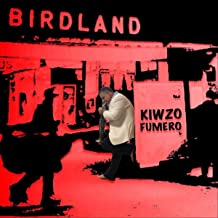
Kiwzo Fumero was born on July 12, 1972 in Marianao, Havana, Cuba. A trumpeter from his youth, he began his professional career in 1991 with the creation of the first youth mariachi band in Cuba, of which he was its creator and director, and who is currently El Mariachi Real Jalisco De La Habana.
In 2000 Kiwzo settled in Miami, Florida. where he has participated with several orchestras and has accompanied Gilberto Sta Rosa, Huey Dumbar, Thalia, Tito Nieves, Rey Ruiz, Jose Jose, and many more. He has performed with the Willy Chirino Orchestra, La Sonora Carruseles, the tour “Embrace Me Very Strong”, Tropicana All-Stars, Celia Cruz, and Cachao.
As an educator Fumero has also had the honor of sharing a lectern with world-class musicians such as Arturo Sandoval, Paquito D’Rivera, John Fadis, Israel López Cachao, Jimmy Bosch, Andy García, Chocolate Armenteros, Patato Valdez among many others.
Winner of 2 Grammy Awards with 6 nominations, he has performed for President Bush in 2007, and has recorded nine albums. Kiwzo Fumero, one of the most recognized and influential Cuban trumpeters of his generation, continues to perform, record and tour.

More Posts: bandleader,history,instrumental,jazz,music,trumpet