Daily Dose Of Jazz…
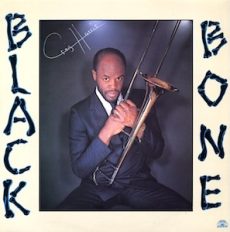
Craig S. Harris was born September 10, 1953 in Hempstead, New York. He graduated from the music program at State University of New York at Old Westbury and was influenced by its founder and director Makanda Ken McIntyre. He moved to New York City in 1978 established him with trombonists Ray Anderson, Joseph Bowie, and George E. Lewis.
He first played alongside another of his teachers at SUNY, baritone saxophonist Pat Patrick, in the Sun Ra Arkestra for two years. Harris then embarked on a world tour in 1979 with South African pianist Abdullah Ibrahim, formerly known as Dollar Brand. While on tour in Australia, he discovered the indigenous Australian wind instrument the didgeridoo, and added it to the collection of instruments he plays.
Craig subsequently performed with progressive musicians David Murray, Beaver Harris, Don Pullen, Sam Rivers, Lester Bowie, Cecil Taylor, Muhal Richard Abrams, Charlie Haden and many others, He also played in Lena Horne’s Broadway orchestra for a year. Along with Mark Isham composed the soundtrack for the 2021 film Judas and the Black Messiah.
He led his own ensembles, performed internationally and has recorded several albums. As leader, Harris. For the latter, he recorded with two groups. The Tailgater’s Tales was a quintet with clarinetist Don Byron, trumpeter Eddie Allen, Anthony Cox on double bass, and Pheeroan akLaff on drums. Harris’s large ensemble Cold Sweat was a tribute to the music of James Brown.
Trombonist Craig Harris, who has recorded since 1983 for India Navigation, Soul Note and JMT, continues to pursue his career.

More Posts: bandleader,history,instrumental,jazz,music,trombone
Daily Dose Of Jazz…
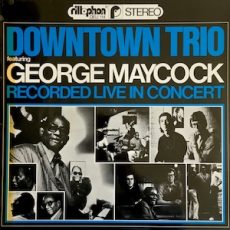
George Maycock was born on September 9, 1917 in Colón, Panama. He played in Panama with his band Chimbombo Swingjazz since 1940. With the dance and show music of Cuban Jaime Camino, he and his band came to Spain in 1949.
Together with the trumpeter Boogie Sergeant and drummer Big Fletchit, who played at Camino and stayed in Europe, they became the Chic Combo with the Jamaican bassist Noel George Gillespie. They operated from Basel, Switzerland then from Cologne, Germany to go on tour. On occasion saxophonist Jack Poll played with the quartet, before Wilton Gaynair joined in 1956, creating the George Maycock Quintet.
This band played modern jazz and continued to perform regionally and was rated the best black combo in this country by the 1980 Rheinische Post 1980. Later, Maycock moved to Düsseldorf, Germany where he was in the center of the local jazz scene. In the 1960s he had increasingly begun playing in dance bands. During the Seventies he toured with Fletchit and Ali Haurand in the trio and played with Jörn Behrens and Ralph Kleine-Tebbe in the Düsseldorf area.
Pianist George Maycock, who was one of the first Black musicians to perform authentic jazz in Central Europe after the Second World War, not on concert tours, but through intimate performances in jazz clubs, died on August 20, 1979 in New York City, New York.
More Posts: bandleader,history,instrumental,jazz,music,piano
Daily Dose Of Jazz…
Harry Percy South was born on September 7, 1929 in Fulham, London, England. He came to prominence in the 1950s, playing with Joe Harriott, Dizzy Reece, Tony Crombie, and Tubby Hayes. In 1954, he was in the Tony Crombie Orchestra with Dizzy Reece, Les Condon, Joe Temperley, Sammy Walker, Lennie Dawes, and Ashley Kozak.
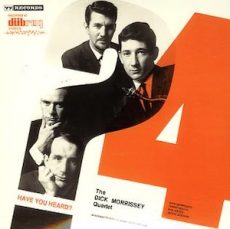
Returning from a Calcutta, India tour with the Ashley Kozak Quartet, he spent four years with the Dick Morrissey Quartet, where he both wrote and arranged material for their subsequent four albums. He formed the Harry South Big Band in 1966 with Latin, ballads and straight-forward swingers.
By the mid-1960s, he began working with British rhythm & blues singer and organist Georgie Fame, recording the album Sound Venture. He composed and arranged for Humphrey Lyttelton, Buddy Rich, Sarah Vaughan, and Jimmy Witherspoon and was musical director and arranger for Annie Ross.
He branched out into session work, writing themes for television and music libraries. He is credited with the arrangements used for Emerson, Lake & Palmer’s Works Vol. 1 (1977). In 1981, he again arranged for Annie Ross and Georgie Fame in a collaboration on what was to be Hoagy Carmichael’s last recording, In Hoagland.
Pianist, composer and arranger Harry South, who was honored with an album released by the National Youth Jazz Orchestra, died on March 12, 1990 in Lambeth, London at the age of 60.
More Posts: arranger,composer,history,instrumental,jazz,music,piano
Daily Dose Of Jazz…
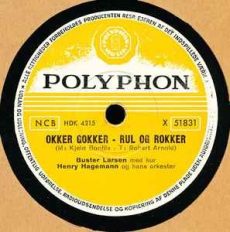
Henry Hagemann was born on September 6, 1910 in Copenhagen, Denmark He became a professional musician in 1931 and played primarily saxophone and clarinet. Throughout his career, he played with Kai Ewans, Winstrup Olesen and Leo Mathisen, among others.
From 1944 to 1949 he led his own ensemble. Afterward he performed as a theater musician, first with Hans Schreiber in the Fiffer revues and later in the Circus revue . He has also been engaged at the New Scala, where he regularly served as bandmaster.
Saxophonist and clarinetist Henry Hagemann died April 5, 1964.
More Posts: bandleader,clarinet,history,instrumental,jazz,music,saxophone
Daily Dose Of Jazz…
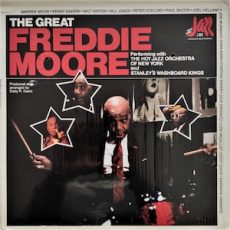
Freddie Moore was born on August 20, 1900, in Washington, North Carolina. Here’s some more information about Freddie Moore: He began playing drums in 1912 at the age of 12 and started his career in traveling shows, picking up much experience in variety shows and on vaudeville. He was with Charlie Creath in 1927 in St. Louis, Missouri and recorded with King Oliver from 1929-30, touring with him from 1931-32. He played in New York City with Wilbur Sweatman from 1928-31.
He went on to lead his own band with Peter Brown and Don Frye in Detroit, Michigan from 1933 to 1937. He feelanced for the next 20 years with Sidney Bechet, King Oliver, Art Hodes, Eubie Blake, John Kirby, Bob Wilber and Conrad Janis along with many others. The drummer was with Wilbur DeParis’ New New Orleans Jazz Band from 1952-54 and played in Europe with Mezz Mezzrow from 1954-55. He had associations with Sammy Price, Tony Parenti and even Roy Eldridge in 1971.
In the 1980s and the early 1990s he stayed active, playing with various bands in the New York area and often doubled on washboard. He was a colorful performer, often mugging and adding showbiz effects to the music. Moore, who appeared on a Rahsaan Roland Kirk record playing Sweet Georgia Brown, led his only record date for the New York Jazz label in 1981.
Drummer and singer Freddie Moore, whose long career finally came to an end after seven decades of playing with so many notable musicians, died on November 3, 1992 in New York.