

Daily Dose Of Jazz…
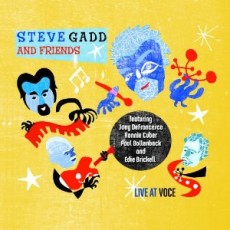
Steve Gadd was born April 9, 1945 in Irondequoit, New York and when he was seven his drummer uncle encouraged him to take lessons. By eleven he had sat in with Dizzy Gillespie. After graduating from Irondequoit’s Eastridge High, he attended the Manhattan School of Music for two years before transferring to the Eastman School of Music in Rochester, playing in wind ensembles and concert bands.
After matriculation in the late ’60s, Steve played regularly with Chuck and Gap Mangione, making his recording debut on Gap’s solo album, “Diana in the Autumn Wind” in 1968. Drafted into the Army he spent the next three years drumming in the Army Music Program as a part of the Jazz Ambassadors. Discharged, Gadd returned to Rochester, formed a band and traveled to New York City where eventually the trio split. Gadd stayed on finding work as a studio musician that led to his short tenure with Chick Corea and Return To Forever.
During the ’70s and ‘80s, he toured internationally, recorded with Paul Simon and also with Al Di Meola’s Electric Rendezvous Band. In 1976, Gadd and other session musicians in New York City, including Richard Tee, Eric Gale and Cornell Dupree formed the group Stuff. Their work included appearances on NBC’s Saturday Night Live.
By the end of the 1970s, Steve Gadd was an accomplished drummer bringing orchestral and compositional thinking, great imagination and a great ability to swing to his playing. In 2005 he was awarded an honorary Doctor of Music degree from Berklee College of Music for outstanding contributions to contemporary music. He is one of the highest paid session drummers in popular music.

Give The Gift Of Kno
More Posts: drums,percussion
Daily Dose Of Jazz…
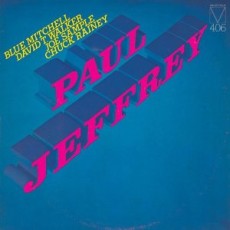
Paul Jeffrey was born in New York City on April 8, 1933 and started learning to play the saxophone as a child. After graduating from Kingston High School in 1951, he received his B.S. in music education at Ithaca College in 1955. He spent the late 1950s touring with Illinois Jacquet, Elmo Hope, Big Maybelle, and Wynonie Harris. In 1960 Jeffrey toured the US with B.B. King, and freelanced around New York City and toured with bands led by Howard McGhee, Clark Terry, and Dizzy Gillespie.
1968 marked Paul’s first studio work as a leader, recording the “Electrifying Sounds” for Savoy Records. He toured with the Count Basie Orchestra, began working with Thelonious Monk from 1970-1975, was hired by George Wein to organize a 15-piece band for a tribute concert to Monk at Carnegie Hall in 1974 at which Monk made a surprise appearance, replacing Barry Harris on the piano.
Jeffrey also enjoyed a lasting association with Charles Mingus throughout the 1970s while making three additional studio recordings as leader on the Mainstream Records label. He also enjoyed a prolific career as an educator teaching saxophone, arranging and jazz history at Columbia University, Jersey City State College, Livingston College of Rutgers University, as jazz ensemble director at the University of Hartford, and artist in residence and director of jazz studies at Duke University; a position he held until his retirement in 2003.
He also organized the NC/Umbria Jazz Festival and the Mary Lou Williams Jazz Festival while serving on the NC Council of the Arts and the Durham Arts Council. In 2009, tenor saxophonist and arranger Paul Jeffrey recorded a tribute to Thelonious Monk for the French label Imago Records.
More Posts: saxophone

Daily Dose Of Jazz…
Horace Tapscott was born Horace Elva Tapscott in Houston, Texas, the son of a jazz musician mother on April 6, 1934. When he turned nine his family moved first to Fresno, California, eventually settling in Los Angeles. Reaching maturity at a critical time in the history of L.A. jazz, he was privy to the like of Dexter Gordon, Art Tatum and Coleman Hawkins who were playing the Central Avenue clubs in the late ‘40s.
In 1961 Horace formed the Pan Afrikan Peoples Arkestra, also known as P.A.P.A., or The Ark in 1961 and led the ensemble that included at one time or another Arthur Blythe, Stanley Crouch, Butch Morris, Wilbur Morris, David Murray and Jimmy Woods through the 1990s. In 1968 he composed and arranged saxophonist Sonny Criss’ critically acclaimed “The Birth of the New Cool”. He followed this with a decade long performance of his own works, a succession of recordings for the Nimbus label and a growing reputation and flourishing creativity that eventually leading to the recognition he deserved.
His powerful and percussive approach to playing coupled with a highly individual bop-tinged style with avant-garde leanings became somewhat of an inspiration to a new generation of L.A. based free jazz players. Horace Tapscott and his work are the subjects of the UCLA Horace Tapscott Jazz Collection. The composer and pianist passed away of lung cancer on February 27, 1999 in Los Angeles, California.
More Posts: piano
Daily Dose Of jazz…
George “Buster” Cooper was born on April 4, 1929 in St. Petersburg, Florida and took up the trombone. He played in a Texas territory band with Nat Towles in the late 1940s, and gigged with Lionel Hampton in 1953.
During the mid-1950s he played in the house band at Harlem’s Apollo Theater in New York City followed by playing with Benny Goodman. By the late 1950s, he and his brother Steve had formed The Cooper Brothers Band but by the early Sixties through the decade Buster was a trombone fixture in Duke Ellington’s Orchestra.
In 1973 he moved to Los Angeles and played in various jazz orchestras there over the next several decades; among them were “The Juggernaut” and “Bill Berry’s L.A. Band”.
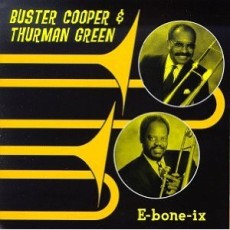
Over the course of his career, Buster Cooper, the extroverted trombonist with a witty style that often involved hitting repeated, humorous high notes at the conclusion of a song never recorded as a leader until he paired with trombonist Thurman Green and released E-Bone-ix in 1997. At 85 years, he currently leads the Buster Cooper Trio, playing The Garden Restaurant in his hometown of St. Petersburg.
More Posts: trombone
Daily Dose Of Jazz…
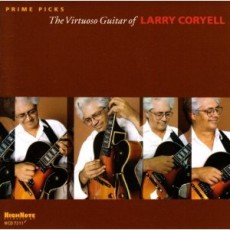
Larry Coryell was born April 2, 1943 in Galveston, Texas moved to Washington as a child. After graduating from Richland High School in eastern Washington, he moved to Seattle to attend the University of Washington.
In 1965, Coryell moved to New York City where he became part of Chico Hamilton’s quintet replacing Gabor Szabo. In the Sixties he recorded with Gary Burton, played with The Free Spirits and extended his musical landscape to include influences of rock, jazz and eastern music.
He formed his own group, “The Eleventh House” in 1973 and following the break-up of this band, Coryell played mainly acoustic guitar but returned to electric guitar later in the 1980s.
In 1979, Coryell formed “The Guitar Trio” with jazz-fusion guitarist John McLaughlin and flamenco guitarist Paco de Lucia. The group toured Europe, released “Meeting of Spirits” recorded at Royal Albert Hall in London, however, his drug addiction led to his being replaced by Al Di Meola.
By the turn of the century he settled back into a more mainstream style of playing releasing “Cedars of Avalon”, “Monk, Trane, Miles & Me”, “Tricycles”, and “Power Trio: Live In Chicago”. In 2007, Coryell published an autobiography titled “Improvising: My Life in Music”. Guitarist Larry Coryell remains active in the music industry performing, touring and recording.
More Posts: guitar