

Daily Dose Of Jazz…
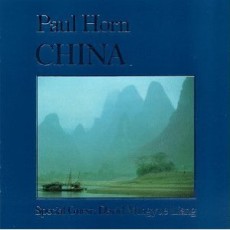
Paul Horn was born March 17, 1930 in New York City and began playing piano at the age of 4 and the saxophone at 12. He studied the flute in 1952 at the Oberlin Conservatory of Music in Ohio and then earned a master’s degree from the Manhattan School of Music.
Moving to Los Angeles in 1956 Paul played with Chico Hamilton’s Quintet till 1958 and two years later recorded his debut album “Something Blue”. By now an established West Coast session player he played on the Duke
Ellington Orchestra’s Suite Thursday and during this period worked with Nat King Cole, Tony Bennett and others. In 1970, he moved Vancouver Island, formed his own and has recorded film scores for the National Film Board of Canada.
Widely known for his innovations on both metal and traditional wood flutes, Horn has recorded some truly exotic albums. Perhaps most famous of these are his “Inside” recordings, which feature airy, echoing sounds created in places of spiritual importance. While he is undoubtedly a jazz musician, many of his works defy categorization. As well as the Inside series, he has recorded other albums of jazz with musicians from a range of cultures and backgrounds including China and Africa. He continues to perform and record.
Daily Dose Of Jazz…
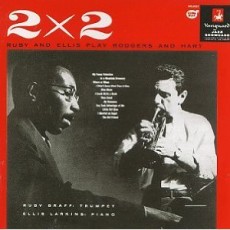
Reuben “Ruby” Braff was born on March 16, 1927 in Boston, Massachusetts He began playing in local clubs in the 1940s and in 1949, and he was hired to play with the Edmond Hall Orchestra at Boston’s Savoy Cafe. Ruby teamed up with Pee Wee Russell when the clarinet was making a comeback and they recorded several sessions for Savoy Records.
Relocating to New York in 1953 Braff easily fit into a variety of Dixieland and mainstream settings becoming in demand for band dates and recordings. He recorded as both leader and sideman working with such names as Vic Dickinson, Buck Clayton, Urbie Green, Ellis Larkins and Benny Goodman.
In the Sixties he was a member of George Wein’s Newport All-Stars but for a number of years work was hard to come by for the Dixieland player until the 70s when he formed a quartet in 1973. Following this he freelanced in different small combos and duets ultimately recording with Scott Hamilton’s quintet and sparring with guitarist Howard Alden.
Ruby Braff, cornetist and trumpeter who played in the genres of Dixieland, mainstream jazz and swing passed away on February 10, 2003 in Chatham, Massachusetts.
Daily Dose Of Jazz…
Roy Owen Haynes was born March 13, 1925 in the Roxbury section of Boston, Massachusetts and made his professional debut at the age of seventeen in his native Boston. He began his full time professional career in 1945. From 1947 to 1949 he worked with Lester Young, and from 1949 to 1952 was a member of Charlie Parker’s quintet. He recorded at the time with Bud Powell, Wardell Gray and Stan Getz.
In 1953 Roy toured with Sarah Vaughan for the next five years and then went on to work with more experimental musicians, like John Coltrane, Eric Dolphy, Andrew Hill and Chick Corea.
Haynes extracted the rhythmic qualities from melodies and created unique new drum and cymbal patterns in an idiosyncratic, now instantly recognizable style. Rather than using cymbals strictly for effect, Haynes brought them to the forefront of his unique rhythmic approach. He also established a distinctively crisp and rapid-fire sound on the snare; this was the inspiration for his nickname, “Snap Crackle”.
Over the course of his 60+ career of hard swinging since 1944, Roy is among the most recorded drummers in jazz playing in a wide range of styles ranging from swing and bebop to jazz-fusion and avant-garde. He has recorded or performed with Gary Burton, Miles Davis, Dizzy Gillespie, Christian McBride, Jackie McLean, Pat Metheny, Thelonious Monk, Gerry Mulligan, Art Pepper, Sonny Rollins, Horace Tapscott and many, many others.
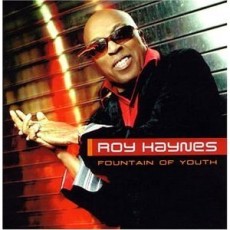
As a bandleader Haynes has also led his own groups, some performing under the name Hip Ensemble and his most recent recordings as a leader are “Fountain of Youth” and “Whereas”, both of which have garnered Gammy nominations. In 2010, the National Academy of Recording Arts and Sciences bestowed upon him a Grammy Lifetime Achievement Award. Drummer, percussionist and bandleader Roy Haynes continues to record and perform worldwide.
More Posts: composer,drums,percussion
Daily Dose Of Jazz…
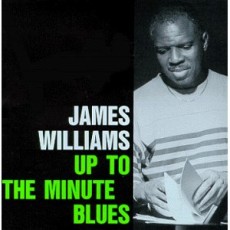
James Williams was born on March 8, 1951 in Memphis, Tennessee and grew up listening to the sounds of Ray Charles, Stevie Wonder, Marvin Gaye and King Curtis. He started playing piano at age 13 and hometown hero Phineas Newborn was his primary influences of jazz piano. He served as organist at the Eastern Star Baptist Church for six years early in his career. He went on to matriculate through Memphis State University with fellow piano students Mulgrew Miller and Donald Brown. It was here that he began playing jazz.
After graduating he immersed himself in the city’s jazz community, performing with Frank Strozier, Jamil Nasser, George Coleman, Harold Mabern, Jr., and other local greats. In 1973 he became a faculty member at the Berklee College of Music, played with Alan Dawson’s group alongside visiting musicians such as Milt Jackson, Art Farmer and Sonny Stitt. His first album as a leader came in 1977 and the next year he joined Art Blakey’s Jazz Messengers, remaining there for four years.
In the early 1980s in Boston he played with Thad Jones, Joe Henderson, Clark Terry, Chet Baker and Benny Carter but by 1984 James was in New York City gigging with Dizzy Gillespie, Freddie Hubbard and Kenny Burrell, Ray Brown, Tony Williams, Elvin Jones and Art Farmer, to name a few.
He would form his own group, the “Intensive Care Unit”, with Christian McBride, Billy Pierce and Tony Reedus. It was during this period in 1984 that he penned and recorded one of his most famous jazz compositions on the Sunnyside label is “Alter Ego”.
By 1999 he was Director of Jazz Studies at William Paterson University, where he remained until his death of liver cancer on July 20, 2004, age 53.
More Posts: piano
Daily Dose Of Jazz…
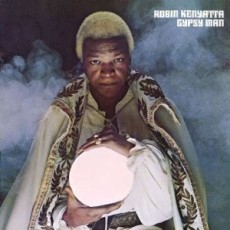
Robin Kenyatta was born Robert Prince Haynes on March 6, 1942 in Moncks Corner, South Carolina but grew up in New York City, learning to play the alto saxophone. He played with Bill Dixon in the 1960s and playing with his project “The October Revolution in Jazz”. Later that decade he played with Jazz Composer’s Orchestra, Roswell Rudd, Sonny Stitt, Archie Shepp and Buddy Miles among others.
By the 1970s he was playing with Alan Silva and Andrew Hill; for a brief time he experimented with instrumental pop music during this decade as well. He moved to Europe during the Seventies, finding it easier to make a living as a jazz musician.
Later in his career he would play with musicians such as Dizzy Gillespie, B. B. King, Dr. John and George Benson; played the Montreux Jazz Festival and went with his own groups on a European tour.
Kenyatta would go on to lead a jazz school in Lausanne, Switzerland during this period. In 2002 Kenyatta returned to the USA becoming active as a director of music in Boston. He died on October 28, 2004 at the age of 62 in Lausanne, leaving behind a catalogue of thirteen albums as a leader and eight as a sideman.
More Posts: saxophone