

Daily Dose Of Jazz…
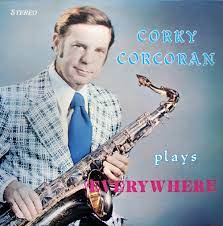
Corky Corcoran was born Gene Patrick Corcoran on July 28, 1924 in Tacoma, Washington and was considered a child prodigy. He began performing in bands at the age of 16.
Corcoran first played professionally in 1940 with Sonny Dunham, then joined Harry James’s ensemble from 1941 to 1947. Leaving James for a short time, Corky led his own ensemble and worked briefly in Tommy Dorsey’s band before rejoining James in 1949. He continued to work with James until 1957, playing concurrently with his own ensembles. Returning to James in 1962, he stayed almost up to his death.
Tenor saxophonist Corky Corcoran transitioned on October 3, 1979 in his hometown.

More Posts: bandleader,history,instrumental,jazz,music,saxophone

Daily Dose Of Jazz…
George “Geordie” Hormel was born on July 17, 1928 in Austin, Minnesota. He was the grandson of George A. Hormel, the founder of Hormel Foods. He claimed to have invented the corn dog when he was a teenager growing up in Minnesota.
In the 1950s and 1960s, Hormel composed music for numerous television shows including The Fugitive, Lassie, Naked City and The Adventures of Rin Tin Tin. He also sang as part of The Utility Muffin Research Kitchen Chorus on Frank Zappa’s triple album Joe’s Garage in 1979. He’s also done music for Capitol Records, most importantly the Hi-Q production music library.
In 1968 Geordie bought the Masonic Temple for $125,000 and founded a major independent studio, The Village Recording Studio, in Los Angeles, California of which he was proprietor until his death. It was one of, if not the first 24 track studio and Dolby Sound. He owned the Wrigley Mansion in Phoenix, Arizona and the Wrigley Mansion Club housed within it.
Geordie Hormel, who was a pianist, composer, record company owner, equipment dealer and always, ahead of his time,. transitioned on February 12, 2006 in Paradise Valley, Arizona at 77 years old.

More Posts: bandleader,history,instrumental,jazz,music,piano

Daily Dose Of Jazz…
Anthony John Archer was born July 14, 1938 in Dulwich, London, England and studied cello as a schoolboy before settling on upright bass.
He joined Don Rendell’s group in 1961, then went with Roy Budd and Eddie Thompson before beginning work with Tony Lee. He collaborated with Lee for many years as part of Lee’s trio, particularly at The Bull’s Head and Ronnie Scott’s Jazz Club.
He later played with Brian Lemon, Sandy Brown, Harold McNair, John Dankworth, and in the Best of British Jazz group with Kenny Baker and Don Lusher.
Double-bassist Tony Archer, who continued to work with Lee nearly until Lee’s death in 2004, is still active in the music scene at 85 years old.
More Posts: bass,history,instrumental,jazz,music
Daily Dose Of Jazz…
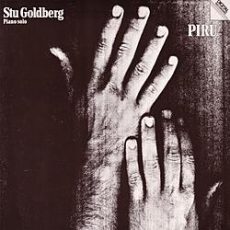
Stuart Wayne Goldberg was born on July 10, 1954 in Malden, Massachusetts but was raised in Seattle, Washington. He attended the University of Utah, taking his bachelor’s in music in 1974, then relocated to Los Angeles, California.
The following year Goldberg played with the Mahavishnu Orchestra and subsequently worked through the 1970s with Al Di Meola, Freddie Hubbard, Alphonse Mouzon, Michal Urbaniak, and Miroslav Vitous.
Booking a European tour in 1978 as a solo keyboardist, Stu released several albums under his own name and with Toto Blanke’s Electric Circus. Returning to Los Angeles in 1985 he worked extensively in film soundtracks with Lalo Schifrin and Ira Newborn. He also worked as a studio musician.
Keyboardist Stu Goldberg, who played with Ray Brown at the Monterey Jazz Festival in 1971, continues to perform and record.
More Posts: bandleader,history,instrumental,jazz,keyboard,music
Daily Dose Of Jazz…
Ron Rubin was born in Liverpool, London, England on July 8, 1933, to David and Louise Rubin. Music was important to the family and he learned piano from an early age. Becoming interested in jazz in his early teens while attending Liverpool College school, he was suspended for playing jazz on the school piano. Not being put off, he studied law under his uncle but it wasn’t for him and he signed up for the Royal Army Service Corps for a two year stint.
In the army he played piano with the Rhine River Jazz and Germany Rhine bands in Germany where he was stationed. After his service, in 1953 he picked up some gigs around Merseyside, London where he was playing guitar and clarinet at this time. Ron practiced hard on the piano and found solo work at clubs in London’s Soho. Taking up the double bass in 1955 and within a few weeks he was playing gigs with Ralph “Bags” Watmough and Tony Davis’s Gin Mill Four. In 1957 he played opening night at the Cavern Club with the Merseysippi and Watmough bands.
Moving to London in the 60s Ron played with a wide variety of bands on piano and double bass with Glyn Morgan, Dick Williams, Brian Leake, the Fairweather-Brown band, Mike Taylor, Group Sounds Five, the Ronnie Selby Trio, Fat John Cox and Bruce Turner. He accompanied visiting musicians Bill Coleman, Henry “Red” Allen and Ray Nance and with groups like those of Long John Baldry and the Hoochie-Coochie Men, and Manfred Mann.
Through the 1970s Rubin toured with the Lennie Best Quartet, Sandy Brown, Keith Ingham, Alex Welsh, Colin Purbrook, and accompanied Billy Eckstine. He had his own band at the Roundhouse Bar and was with the John Picard Band for three years and recorded regularly. The Eighties saw him touring with Wild Bill Davison and playing with Fatty George, Geoff Simkins, Keith Smith and Oscar Klein, George Howden, Brian Leake and Earl Okin.
By the end of the decade he was playing bass with the Bruce Turner Quartet before joining George Melly and John Chilton’s Feetwarmers. The following decades he played with Campbell Burnap’s band, then joined George Melly and John Chilton again and continued playing and touring. After surviving cancer in 2001 he slowed down to playing occasionally. In his later years Ron spent many happy hours writing his Jottings From A Jazzman’s Journal, a record of his life as a musician.
Pianist, bassist and poet Ron Rubin, who for many years was at the centre of the British jazz scene, transitioned on April 14, 2020 at the age of 86.