

Daily Dose Of Jazz…
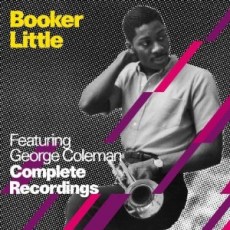
Booker Little, Jr. was born in Memphis, Tennessee on April 2, 1938. He studied trumpet and music at the Chicago Conservatory from 1956 to 1958 during which time he worked with local musicians like Johnny Griffin. A move to New York offered him the opportunity to work with Max Roach and Eric Dolphy, recording with the later on the 1960 Far Cry session and leading a residency at the Five Spot in 1961. This collaboration would produce three classic albums for Prestige Records.
It was during this stint that he began to show promise of expanding the expressive range of the “vernacular” bebop idiom started by Clifford Brown in the mid-1950s. As a leader he recorded four albums and recorded another eleven as a sideman with Dolphy, Max Roach, John Coltrane, Slide Hampton, Bill Henderson, Abbey Lincoln and Frank Strozier during his short four years from 1958-1961.
Little made an important contribution to jazz as one of the first trumpeters to develop his own voice post Clifford Brown, though stylistically, he is rooted in Brown’s crisp articulation, burnished tone and balanced phrasing. Trumpeter and composer Booker Little died of complications resulting from uremia due to kidney failure at the age of 23 on October 5, 1961 in New York City.
More Posts: trumpet
Daily Dose Of Jazz…
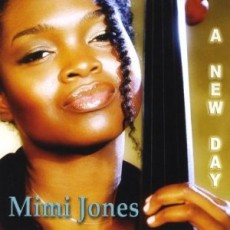
Mimi Jones was born Miriam Sullivan in New York City on March 25th and grew up in the Bronx. Influenced by everyone from Sinatra to the Beatles to Earth Wind & Fire, The Doors, Miles Davis, Gene Ammons, Gloria Lynne and John Coltrane, her compositional style is reflective.
By the age of twelve she was studying guitar with her first teacher, Jim Bartow, taking classes in dance, chorus, drums, music theory, piano and composition at the Harlem School of the Arts which all helped her secure a spot at Fiorello La Guardia High School of Music and Performing Arts. Realizing there was no guitar program Jones switched to cello and eventually was given the bass spot in the jazz band. It was during this time she discovered her musical voice.
Mimi began her relationship with the bass by receiving classical lessons, attended the Jazz Mobile Workshop, and studied with bassist Lisle Atkinson who gave her first bass, a Juzak. She went on to receive a full scholarship to the Manhattan School of Music Conservatory where she studied with saxophonist Charles Davis, Barry Harris, Ron Carter, Milt Hinton, Dr. Billy Taylor, Yusef Lateef, Max Roach, and Latin bass techniques with Guillermo Edgehill while matriculating to degree in music.
As a leader her debut “A New Day” is filled with seamless original compositions and as a sideman she has performed and toured with such luminaries as Lionel Hampton, Roy Hargrove, Sean Jones, Kenny Barron, Kevin Mahogany, Onaje Alan Gumbs and Ravi Coltrane among others. The multi-talented bassist, vocalist and composer continues to bring her elegant sound is an eclectic mix of genres based on a strong jazz foundation to the world stage.
Daily Dose Of Jazz…
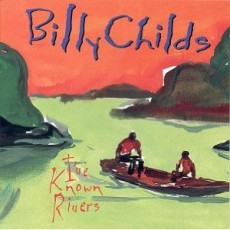
Billy Childs was born William Edward Childs on March 8, 1957 in Los Angeles, California and began piano lessons when he was six. By age 16 he started attending the Community School of the Performing Arts, a prestigious music program sponsored by the University of Southern California, in which he ultimately attended in 1975.
Playing professionally as a teenager, he made his recording debut in 1977 with the J. J. Johnson Quintet’s Yokohama Concert during a tour of Japan. He would gain significant attention during his six-year stint playing with trumpeter Freddie Hubbard’s group from 1978 to ’84.
His early playing influences were Herbie Hancock, Keith Emerson and Chick Corea and in his composing came by Paul Hindemith, Maurice Ravel and Igor Stravinsky. Adept in both the jazz and classical idioms, Childs develop his own voice with an original conception near the start of his career. His solo recording career began in 1988 with the release of Take for Example, This… the first of four critically Windham Hill Jazz label. He would go on to record two albums for Stretch/GRP and Shanachie.
In 2000 Childs arranged, orchestrated and conducted for Dianne Reeves’ project The Calling: Celebrating Sarah Vaughan that won a Grammy for Best Jazz Vocal. He has also arranged for Sting, Yo-Yo Ma, Chris Botti, Gladys Knight, Michael Bublé, David Foster, Phil Ramone and Claudia Acuna.
Billy’s 2005 “Lyric, Jazz-Chamber Music, Vol. 1”, a jazz chamber music ensemble recording, influenced by the Laura Nyro-Alice Coltrane collaboration, garnered three Grammy nominations. He has received a Guggenheim Fellowship, and Chamber music grant, and has been commissioned for more than a dozen jazz and classical compositions and arrangements.
Pianist Billy Childs has been nominated for seven Grammys, of which he has won six. He has fifteen albums to his leader roster with his latest album, The Winds Of Change, was released in 2024. He continues to make music on stage and in the studio.
More Posts: piano
Daily Dose Of Jazz…
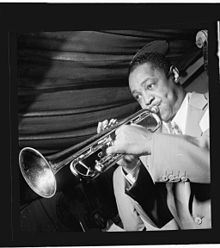
Walter “Rosetta” Fuller was born on February 15, 1910 in Dyersburg, Tennessee, first learning to play the mellophone as a child before settling on trumpet. He played in a traveling medicine show from age 14, then played with Sammy Stewart in the late 1920s.
Fuller In 1930 he moved to Chicago and played with Irene Eadie and Her Vogue Vagabonds. In 1931 he began a longtime partnership with Earl Hines, remaining with him until 1937, when he left to join Horace Henderson’s ensemble. After a year with Henderson he returned to Hines’ band but once again left Hines in 1940 to form his own band, playing at the Grand Terrace in Chicago and the Radio Room in Los Angeles. Among his sidemen were Rozelle Claxton, Quinn Wilson, Omer Simeon and Gene Ammons.
Fuller got the nickname “Rosetta” based on his singing on the 1934 Hines recording of the song of the same name. He would lead bands on the West Coast for over a decade and play as a sideman for many years afterward. On April 20, 2003 trumpeter and vocalist Walter Fuller passed away in San Diego, California.
Daily Dose Of Jazz…
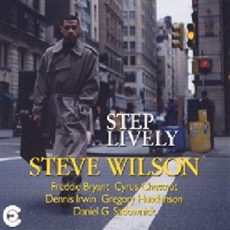
Steve Wilson was born February 9, 1961 in Hampton, Virginia. As a teenager, Wilson played in various R&B and funk bands and after a year of playing with Stephanie Mills he attended Virginia Commonwealth University. By 1987 he moved to New York, where he established himself as a sideman performing with American Jazz Orchestra, the Mingus Big Band and the Smithsonian Jazz Orchestra among others.
Wilson toured Europe in 1988 with Lionel Hampton and was a member of “Out Of The Blue”, an ensemble featuring young Blue Note musicians. An accomplished flautist and alto and soprano saxophonist, he also plays the clarinet and piccolo and has played and recorded with the Dave Holland Quintet, the Chick Corea Origin Sextet, with Japanese composer Yoko Kanno, has been a member of the Seatbelt’s New York Musicians, the Blue Note 7 and has performed as a soloist for Queen Elizabeth II and Prince Philip.
In 1997 he formed the Steve Wilson Quartet and has performed together for over a decade and produced two CDs. He also heads a larger ensemble, Generations, which performs jazz classic and original compositions.
He has held teaching positions in several schools and Universities, as well as holding jazz clinics, notably at the Manhattan School of Music, SUNY at Purchase, Columbia University, has been artist-in-residence at Hamilton College, Old Dominion and University of North Carolina and continues to maintain a busy career as a session musician both in studio and on tour.