

Daily Dose Of Jazz…
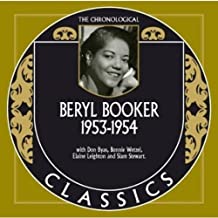
Bonnie Wetzel was born Bonnie Jean Addleman on May 15, 1926 in Vancouver, Washington. She learned violin as a child, and was an autodidact on bass. She played with Ada Leonard in an all-female ensemble, and soon after worked in a trio with Marian Grange.
Marrying trumpeter Ray Wetzel in 1949, the pair worked in the Tommy Dorsey Orchestra in 1951. She went on to play in Beryl Booker’s trio with Elaine Leighton in 1953, touring Europe in 1953-54 and recorded for Discovery Records.
She also played with Herb Ellis, Charlie Shavers, Roy Eldridge, and Don Byas. Later in the 1950s she freelanced in New York City. Double bassist Bonnie Wetzel passed away on February 12, 1965 at the age of 38.

More Posts: bass,history,instrumental,jazz,music
Daily Dose Of Jazz…
Billy Munn was born William on May 12, 1911 in Glasgow, Scotland. He studied at the Athenaeum School of Music before moving to London, England and joining the band of Jack Hylton from 1929 to 1936.
During the Thirties he played on recordings with Spike Hughes and Benny Carter. Following these engagements Billy then played with Sydney Lipton from 1936 to 1940, and concomitantly played with Louis Armstrong and Coleman Hawkins on their tours of England, as well as with Wingy Manone in the United States.
He played with Stephane Grappelli in 1943 and George Chisholm in 1944, then led his own ensemble at the Orchid Room in Mayfair from 1945 to 1948. He co-founded the BBC program Jazz Club in the 1940s with producer Mark White and clarinettist Harry Parry.
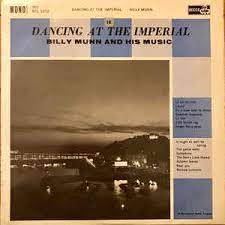
From 1948 to 1949, Munn directed the Maurice Winnick Orchestra at Ciro’s club in London, England and subsequently led the house band at the Imperial Hotel in the seaside resort town of Torquay, England for three decades, from 1949 to 1979. He recorded several times with this group. After 1979 he played solo, mostly locally in Torquay.
Pianist and arranger Billy Munn passed away on May 2, 2000 in Ayrshire, Scotland, a few days shy of his 89th birthday.
More Posts: arranger,bandleader,history,instrumental,jazz,music,piano
Daily Dose Of Jazz…
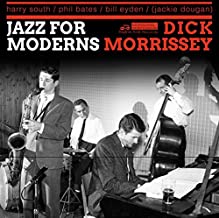
Richard Edwin Morrissey was born on May 9, 1940 in Horley, Surrey, England. Self-taught, he started playing clarinet in his school band, The Delta City Jazzmen, at the age of sixteen with fellow pupils. He then joined the Original Climax Jazz Band before going on to join trumpeter Gus Galbraith’s Septet, where alto saxophonist Peter King introduced him to Charlie Parker’s recordings, Shortly afterward he began specializing on tenor saxophone.
Making his name as a hard bop player, Morrissey appeared regularly at the Marquee Club in 1960, and recorded his first solo album It’s Morrissey, Man! in 1961 at the age of 21 for Fontana Records. Spending most of 1962 in Calcutta, India as part of the Ashley Kozak Quartet, they played three 2-hour sessions seven days a week. Upon returning to the UK he formed his quartet and recorded three LPs, Have You Heard?, Storm Warning!, and Here and Now & Sounding Good!.
He went on to play regular gigs in London and during this time Dick also played extensively in bands led by Ian Hamer and Harry South, including The Six Sounds. He also played briefly in Ted Heath’s Big Band, Johnny Dankworth and his Orchestra, the Harry South Big Band. and Eric Burdon and The Animals’ Big Band.
The mid-1960s, saw Dick played with Brother Jack McDuff, Jimmy Witherspoon, J. J. Jackson and Sonny Stitt together with guitarist Ernest Ranglin recorded with him during the Sixties and early Seventies.
In 1969, Morrissey by thenwas a many-time winner and runner-up of the Melody Maker Jazz Poll, and teaming up with another Melody Maker award-winner, guitarist Terry Smith, with whom he had worked in J. J. Jackson’s Band, to form an early jazz-rock group, If.
When If disbanded in 1975, he toured Germany and the United States, recording with the Average White Band, before meeting up with Glaswegian guitarist, Jim Mullen. With some of the members of AWB, together they formed Morrissey–Mullen, recording their first album, Up in 1976) in New York. On returning to Great Britain, Morrissey–Mullen formed another band which rapidly became Britain’s most highly acclaimed jazz-fusion band of the day. They ultimately recorded seven albums over the 16 years they were together, with Morrissey and Mullen collaborating on each other’s solo albums.
He went on to have numerous collaborations with Tubby Hayes, Bill Le Sage, Roy Budd, Ian Hamer, Ian Carr, Tony Lee, Tony Archer, Michael Garrick, Spike Robinson, Allan Ganley, Peter King, Ray Warleigh, and Hoagy Carmichael among others. Tenor and soprano saxophonist, flautist, and composer Dick Morrissey passed away on November 8, 2000.
More Posts: bandleader,flute,history,instrumental,jazz,music,saxophone
Daily Dose Of Jazz…
Herbert Bickford Steward was born May 7, 1926 in Los Angeles, California.
He recorded six albums as a leader and worked as a sideman with Serge Chaloff, Zoot SimsAl Cohn and Stan Kenton.
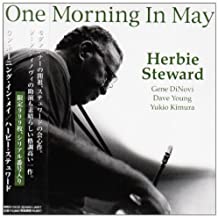
Saxophonist Herbie Steward, widely known for being one of the tenor saxophone players in Four Brothers, part of Woody Herman’s Second Herd, passed away on August 9, 2003 in Clearlake, California.
More Posts: bandleader,history,instrumental,jazz,music,saxophone
The Quaratined Jazz Voyager
Still not all that anxious to mingle as safeguards are being lifted and society is comfortable in bigger groups. I am staying to my schedule of grocery, doctor visits, home.
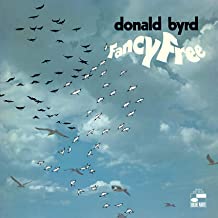
The album I’ve chosen for this week is the 1970 Blue Note album Fancy Free by trumpeter Donald Byrd. It was recorded May 9, and June 6, 1969 at Van Gelder Studio in Englewood Cliffs, New Jersey. The album was produced by Duke Pearson.
This album has Byrd leading a large ensemble that prominently featured Frank Foster on tenor, Lew Tabackin and Jerry Dodgion on flute, along with several percussionists. This date has Duke Pearson playing electric piano and marks the first time Byrd utilized the instrument. On this project the trumpeter concentrated more on grooves and beats, accompanying them on his trumpet rather than being driven by them.
Track Listing | 39:10- Fancy Free (Donald Byrd) ~ 12:06
- I Love the Girl (Donald Byrd) ~ 8:48
- The Uptowner (Mitch Farber) ~ 9:16
- Weasil (Charles Hendricks) ~ 9:00
- Donald Byrd – trumpet
- Julian Priester – trombone
- Frank Foster – tenor and soprano saxophone
- Jerry Dodgion (#1, 3) – flute
- Lew Tabackin (#2, 4) – flute
- Duke Pearson – electric piano
- Jimmy Ponder – guitar
- Roland Wilson – bass guitar
- Joe Chambers (#2, 4), Leo Morris (#1, 3) – drums
- Nat Bettis – percussion
- John H. Robinson Jr. – percussion
More Posts: adventure,album,club,genius,jazz,museum,music,preserving,restaurant,travel,trumpet