

Daily Dose Of Jazz
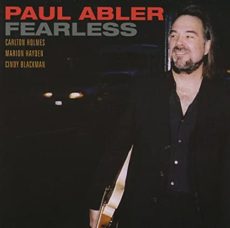
Paul James Abler was born April 3, 1957 in Saginaw, Michigan but grew up in Pontiac, Michigan. He first came into contact with jazz as a child when his grandfather played drums on recordings of Stan Getz, Dave Brubeck and Duke Ellington. Influenced by Jimi Hendrix, he turned to the guitar and in 1982 he moved to Los Angeles, California where he studied with Joe Diorio, Carl Schroeder and Ron Eschete at the Musicians Institute (Guitar Institute of Technology). In 1988 he moved to Boston, Massachusetts where he took improvisation lessons with Jerry Bergonzi.
1990 saw Paul moving back to Michigan where he played in Detroit with Marcus Belgrave, Harold McKinney, James Carter, David McMurray, Roy Brooks, Straight Ahead, and Leonard King. By 2003 he was living in New York permanently and has worked with Cindy Blackman, Allen Farnham, Joe Lee Wilson, Charles Davis, Cameron Brown, Guilherme Franco, Yusef Lateef, the Mingus Big Band, Ted Curson, David Ruffin and The Funk Brothers, among others.
In 2005, Abler released the album In the Marketplace as a leader under his own name, in which Marion Hayden, Cindy Blackman, William Evans, and Robert Pipho had worked. In addition, he worked with his own formations, which in various formations, among others Bobby Battle, Gerald Cleaver, Craig Taborn, Ugonna Okegwo, Helio Alves, Santi Debriano, Adriano Santos and Harvie S belonged.
Abler wrote over 150 compositions, some of which were used in films and television series such as Madam Secretary, Breaking Bad, 20/20, The Big Bang Theory and Mad Men. Abler, who most recently lived in New Jersey, was involved in six recording sessions from 1991 to 2013. On March 3, 2017 in Livingston, New Jersey guitarist and film composer Paul Abler passed away at the age of 69.

More Posts: bandleader,composer,guitar,history,instrumental,jazz,music
Daily Dose Of Jazz…
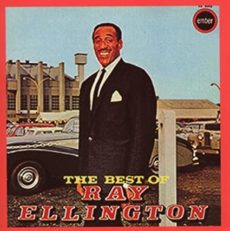
Ray Ellington was born Henry Pitts Brown on March 17, 1916 at 155 Kennington Road, Kennington, London, England, the youngest of four children. His father, a Black music-hall comedian, and entertainer, his mother a Russian Jew. When his father died when he was four years old, he was brought up as an Orthodox Jew and attended the South London Jewish School before entering show business at the age of twelve, when he appeared in an acting role on the London stage.
His first break came in 1937 when he replaced Joe Daniels in Harry Roy and His Orchestra as the band’s drummer. His vocal talents were put to good use too, from the time of his first session when he recorded Swing for Sale. Ellington was called up in 1940, joined the Royal Air Force (RAF) as a physical training instructor where he served throughout the war. He played in various service bands including RAF Blue Eagles.
After demobilisation, Ellington resumed his career, fronting his own group, playing at The Bag O’Nails club. Early in 1947, he rejoined the Harry Roy band for a few months. The Ray Ellington Quartet was formed in the same year, specializing in jazz, while experimenting with many other genres. His musical style was heavily influenced by the comedic jump blues of Louis Jordan. His band was one of the first in the UK to feature the stripped-back guitar/bass/drums/piano format that became the basis of rock and roll, as well as being one of the first groups in Britain to prominently feature the electric and amplified guitar of Lauderic Caton. The other members of his quartet were pianist Dick Katz and bassist Coleridge Goode until 1955 when the players changed.
Vocalist, drummer and bandleader Ray Ellington passed away from cancer on February 27, 1985.

More Posts: bandleader,drums,history,instrumental,jazz,music,vocal
Daily Dose Of Jazz…
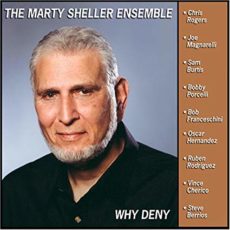
Marty Sheller was born March 15, 1940 in Newark, New Jersey and initially studied percussion, but switched to trumpet as a teenager. He first played with Hugo Dickens in Harlem, and arranged for Sabu Martinez, and began working with Afro-Latin percussionists such as Louie Ramirez and Frankie Malabe.
In 1962 he became a trumpeter in Mongo Santamaria’s band, and worked with Santamaria for more than forty years as a composer and arranger. He also had an extensive association with Fania Records as a house arranger, working with Joe Bataan, Ruben Blades, Willie Colon, Larry Harlow, Hector Lavoe, and Ismael Miranda.
Outside of Fania, he arranged for musicians such as George Benson, David Byrne, Jon Faddis, Giovanni Hidalgo, T.S. Monk, Idris Muhammad, Manny Oquendo, Dave Pike, Tito Puente, Shirley Scott, Woody Shaw, Lew Soloff, and Steve Turre.
In the 2000s, he led his own ensemble, which included the sidemen Chris Rogers, Joe Magnarelli, Sam Burtis, Bobby Porcelli, Bob Franceschini, Oscar Hernández, Ruben Rodriquez, Vince Cherico, and Steve Berrios. Trumpeter Marty Sheller continues to perform and arrange.
More Posts: arranger,history,instrumental,jazz,music,trumpet
Daily Dose Of Jazz…
Johnny Williams, Jr. was born on March 13, 1908 in Memphis, Tennessee he learned to play the violin as a child, switched to tuba as a teenager, playing both tuba and the stand-up bass while playing in regional territory bands in the southern states.
A move to New York City in 1936, had him working with jazz luminaries such as Red Allen, Buster Bailey, Sidney Bechet, Benny Carter, J.C. Higginbotham, Billie Holiday, Harry James, James P. Johnson, the Mills Blue Rhythm Band, Frankie Newton, and Teddy Wilson.
In the early 1940s he also played in the bands of Coleman Hawkins and Louis Armstrong before joining Teddy Wilson’s band once again. He and Edmond Hall recorded together in 1944 and worked together until 1947. Following this collaboration, Williams played with Tab Smith and then with Johnny Hodges in the mid-1950s.
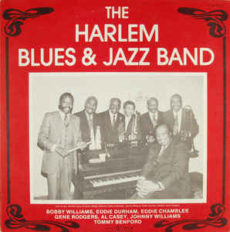
From the 1960s onward, Williams was less active, though he worked occasionally with musicians such as Buddy Tate in 1968, Red Richards in the Seventies, and Bob Greene from 1978 to 1982. Tubist and double-bassist Johnny Wiliams Jr. performed with the Harlem Blues and Jazz Band from 1978 to1998 until he had a stroke and passed away later that year on October 23, 1998 in New York City.

Daily Dose Of Jazz…
Ofer Assaf was born in Israel on March 10, 1976 and started learning to play the saxophone as a youth. He attended the Thelma Yellin High School of the Arts dividing his time between his two passions ~ music and dance the latter actually training as a professional ballet dancer at the age of eight before switching over to a full-time jazz career. As a member of the Air Force and IDF Orchestras of the Israeli Army, he performed for former President Bill Clinton, former Prime Minister Yitzhak Rabin, for Jerusalem’s 3,000th-anniversary celebration. During the Nineties, he was a member of the Tel Aviv Big Band as well as performing on a diverse array of national TV and radio shows.
After moving to New York City, he entered The New School University’s jazz program and studied with tenor saxophonist Billy Harper, bassist Reggie Workman, pianist Richie Beirach, trumpeter Jimmy Owens, percussionists Bobby Sanabria and Jamey Haddad. In 2002 upon graduation he performed with Wayne Shorter and Herbie Hancock at Carnegie Hall as part of the JVC Jazz Festival.
In 1991 he won the Israeli National Competition in Jazz and Contemporary Music for young musicians, received scholarships and awards from the Eubie Blake National Jazz Institute from 1999 to 2001, and was pre-nominated for the Grammy Awards in the “Best Jazz Instrumental Album” category in 2009 for his debut album Tangible Reality on Summit Records. He was joined by trumpeter Jim Rotondi, Don Pate and Essiet Essiet on the bass and drummer Bruce Cox. With the Bernie Worrell Orchestra, he was awarded “Best Funk/Fusion/Jam Song of the Year” at the 12th annual Independent Music Awards in 2013. Tenor saxophonist, composer and educator Ofer Assaf continues to perform and record.
More Posts: bandleader,history,instrumental,jazz,music,saxophone